



The tax dispute involving PT CCI against the Directorate General of Taxes (DJP) provides a crucial lesson regarding the limits of deductible promotional expenses within a multi-tiered manufacturing business scheme. In this Tax Court Decision, the Panel of Judges rejected PT CCI's appeal and maintained a positive fiscal correction amounting to over IDR 250,742,325,831.00 on promotional and marketing expenses for the 2020 Tax Year. This case highlights the complexity of applying the matching cost against revenue principle in intra-group transactions of multinational corporations.
The core issue began when PT CCI, acting as a licensee of TCCC, expensed massive promotional costs for various beverage brands such as Fanta, Sprite, and Minute Maid. PT CCI argued that as a producer of beverage base, its business sustainability heavily relied on the sales of finished bottled beverage products conducted by the distributor (PT CCDI). According to PT CCI, the promotion of finished products would automatically increase the demand for beverage base, thus the expenses met the 3M requirements (Getting, Collecting, and Maintaining income). PT CCI viewed its business ecosystem as a unified entity where upstream and downstream sectors are interdependent.
However, the DJP held a different and more technical view. The tax authority argued that PT CCI only sold raw materials, not finished products. The trademark and product image were attached to the finished goods sold by PT CCDI. Therefore, the promotional benefits in the form of brand awareness and increased sales were directly enjoyed by PT CCDI or the brand owner, not PT CCI. Charging the advertising costs of finished products to the books of a raw material producer was considered a violation of the matching cost against revenue principle. Furthermore, the DJP found other incriminating facts: PT CCI expensed promotions for the "Frestea" brand which turned out not to be owned by TCCC or PT CCI, and expensed promotions for Ades and Aquarius products even though there were no sales of raw materials for those products in 2020.
The Panel of Judges of the Tax Court fully sided with the DJP in their deliberations. The Judges emphasized the substance over form approach by looking at the reality of the transaction. The Judges assessed that substantially, the advertised products (ready-to-drink beverages) were different from the products sold by PT CCI (raw materials). This mismatch caused the promotional expenses to be non-deductible from gross income. This decision also reaffirmed that economic interdependence relationships within a business group do not necessarily nullify the obligation of separate entity separation in the recognition of costs and revenues.
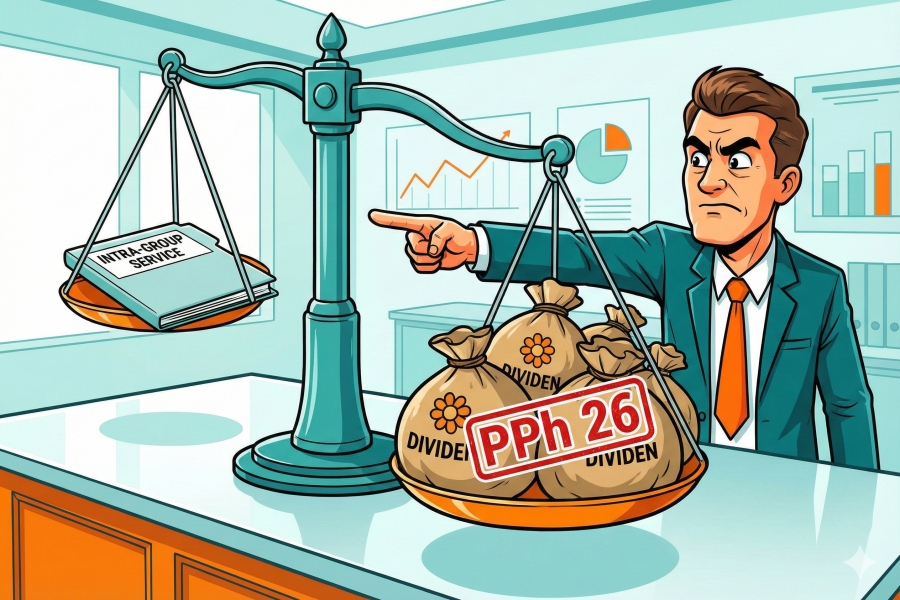
The implications of this decision are significant for manufacturing companies operating within integrated group structures. Companies must be extremely cautious in bearing marketing costs if their position in the supply chain is merely as a provider of raw materials or components, not the seller of the final product. This decision sets a precedent that "indirect economic benefit" arguments often lose to "direct transactional relationship" arguments in the eyes of the tax court. Taxpayers are advised to restructure intra-group agreements, for example through a marketing cost reimbursement mechanism to the brand owner, to avoid similar corrections in the future.
A Comprehensive Analysis and the Tax Court Decision on This Dispute Are Available Here


















 tpc.consulting
  tpc.consulting
  info@taxindo.co.id