



The financial services sector, particularly multifinance companies like PT Transpacific Finance (PT TF), faces highly specific tax regulations, especially concerning loss deductibility. This Corporate Income Tax (PPh Badan) dispute for the Tax Year 2018 is a crucial case study on how the Tax Court (Pengadilan Pajak) interprets and applies the formal requirements for Uncollectible Receivables (Bad Debt), and how the Panel of Judges (Majelis Hakim) can utilize legal exceptions to revoke the Directorate General of Taxes (DJP)'s corrections.
In the financing industry, Uncollectible Receivables represent a major expense. Its deduction as a business loss is strictly governed by Article 6 paragraph (1) letter h of the Income Tax Law, which stipulates requirements such as the publication of the receivables list and the submission of that list to an authorized institution. Alternatively, the debt must originate from a small debtor (the limit of which is regulated by the Minister of Finance Regulation/PMK). In its correction, the DJP challenged PT TF's deduction, arguing that the Taxpayer failed to meet the formal legal procedures because the required evidence was unavailable during the audit and was not attached when submitting the Annual Tax Return (SPT).
PT TF countered the correction by focusing on proving that, both substantially and formally, the receivables list had met the required conditions. PT TF successfully presented evidence that formally, they had carried out the mandated steps (such as publication in mass media and submission of the receivables list) even though this evidence was only comprehensively submitted at the dispute level. PT TF argued that the Taxpayer's compliance should not be invalidated merely due to administrative reporting deficiencies, as long as valid supporting documents could be presented during the Appeal process.
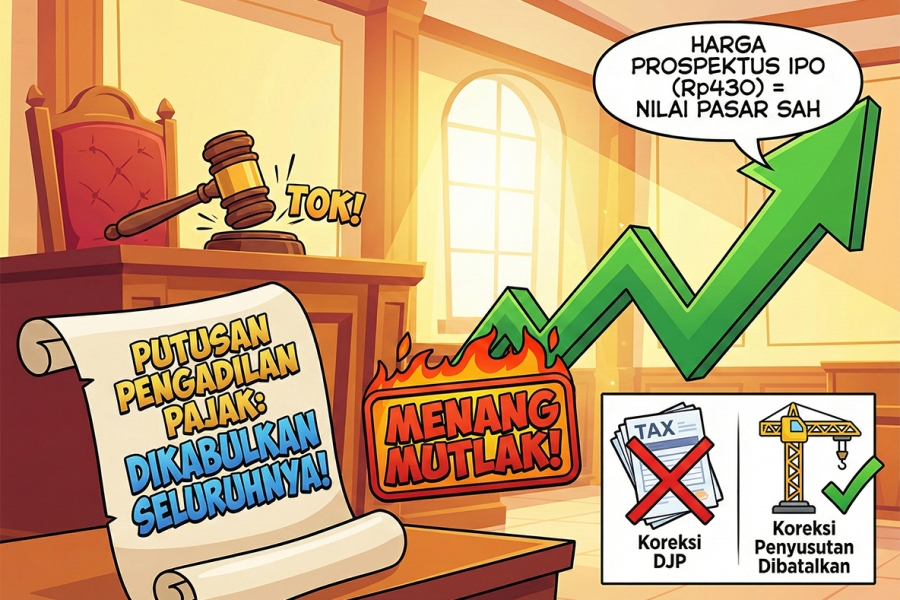
The Tax Court's decision in PT TF's case serves as an important lesson on the strength of evidence presented subsequently and the Majelis's interpretation of the PMK. The Panel of Judges decided to cancel the DJP's Uncollectible Receivables correction because, in addition to PT TF successfully presenting authentic evidence before the Majelis, the list of receivables that were written off was classified as small debtor receivables in accordance with Government Regulation Number 130 of 2000, thereby not being required to fulfill all administrative prerequisites.
For Taxpayers in the financial sector, this decision provides two key legal affirmations. First, the Majelis is willing to accept evidence of the fulfillment of formal requirements (publication, submission of the receivables list) presented at the dispute level, provided the evidence is valid. Second, the small debtor classification is the determinant of victory. Even though the Taxpayer did not make it their primary argument, the Majelis can utilize this legal exception to cancel the DJP's correction, confirming that the exception regulated by the PMK for small debtors is a very strong defense against strict formal procedures.














 tpc.consulting
  tpc.consulting
  info@taxindo.co.id