



Recently, the Directorate General of Taxes (DJP) has continued to strengthen its tax base extensification and fiscal law enforcement, utilizing both digital and conventional approaches. Several strategic steps are being taken, ranging from an ultimatum to large palm oil companies suspected of illegal practices, the expansion of mandatory financial reporting to include small companies, to the preparation for collecting Coal Export Duty next year. Simultaneously, the DJP is also driving service modernization through the development of a tax payment feature using QRIS to simplify the process for Taxpayers (WP). These measures reflect a simultaneous effort to enforce the law, strengthen the revenue base, and improve the quality of tax administration services.
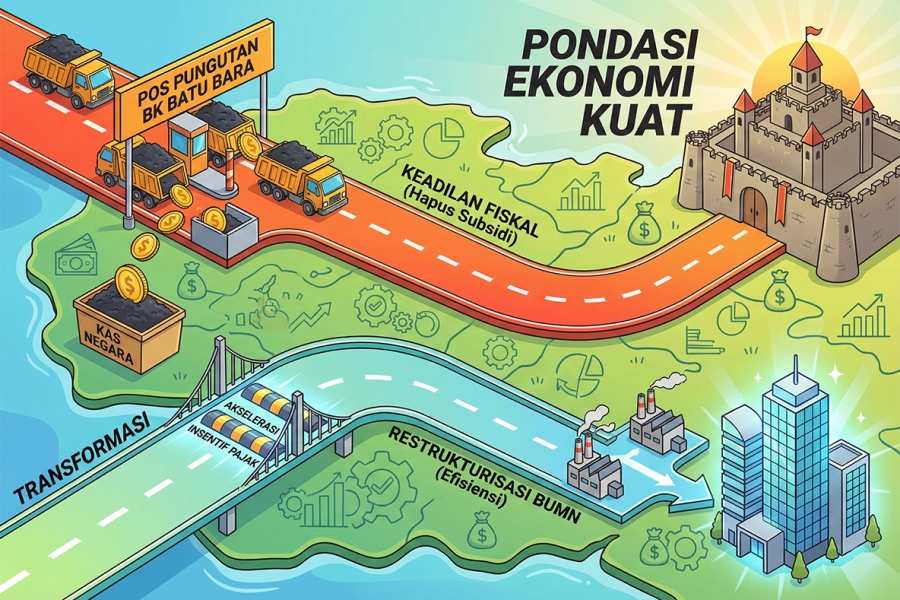
The DJP intensified fiscal law enforcement by issuing a firm ultimatum to 137 giant palm oil companies who are strongly suspected of engaging in underinvoicing practices and/or using fictitious invoices. This ultimatum demonstrates the authority's seriousness in eradicating illegal practices that harm state revenue from the commodity sector. Simultaneously, the DJP is conducting tax base extensification and tightening data oversight by targeting data from the Directorate General of Mineral and Coal (Minerba) ESDM in line with the planned implementation of the Coal Export Duty (BK) starting in 2026. The purpose of this step is to ensure the accuracy of export data and prevent underinvoicing practices so that the potential revenue from this Export Duty can be maximized.
In an effort to strengthen transparency and Taxpayer (WP) supervision, the Ministry of Finance (Kemenkeu) expanded the mandate for companies to report their financial statements (lapkeu) centrally, which now includes small companies in addition to jumbo corporations. This step aims to enhance data transparency and facilitate WP supervision, regardless of the business scale.
Beyond regulatory tightening, the DJP is also focusing on digital innovation to boost state revenue. The DJP is currently preparing a feature for tax payments that can be made through Quick Response Code Indonesian Standard (QRIS). This expansion of tax payments via QRIS is expected to be effective because the ease and accessibility offered are hoped to increase voluntary compliance and accelerate cash flow into the state treasury.
This policy direction carries significant implications for the business environment and fiscal governance. The DJP's ultimatum to the 137 palm oil giants creates major legal pressure for commodity WPs to immediately revise reporting and tighten compliance. The expansion of mandatory financial reporting to small companies increases the administrative burden but, simultaneously, strengthens the national tax database, which is essential for equity. Meanwhile, the preparation for collecting Coal Export Duty in synergy with Minerba ESDM data ensures an accurate tax base. On the ease-of-service side, QRIS implementation will accelerate and modernize tax services, encourage cashless transactions, and increase tax collection efficiency.
Overall, today's news shows that the DJP is implementing a "carrot and stick" strategy: strict law enforcement tightening through the ultimatum to palm oil giants and expanded mandatory reporting, balanced with service innovation through QRIS implementation. The focus on underinvoicing data and Minerba data synergy affirms the government's commitment to securing revenue from the commodity sector. Business actors, both large and small, must adapt to an increasingly transparent and stringent regulatory environment, while also utilizing the digital payment convenience provided.
















 tpc.consulting
  tpc.consulting
  info@taxindo.co.id