



Issues of fiscal reform, revenue optimization, and strengthening institutional integrity dominate the tax news today. Economists assess that deregulation and tax incentives are needed to boost investment recovery, which remained sluggish throughout 2025, while the OECD recommends expanding the VAT base as a strategic step to increase state revenue. On the customs side, business players respond to the idea of Customs freezing by emphasizing the importance of system refinement, not institutional change. Amidst these dynamics, there is a positive signal from the increasing revenue of Jakarta Customs and Excise, which has reached Rp11.4 trillion and is deemed likely to exceed the 2025 target.
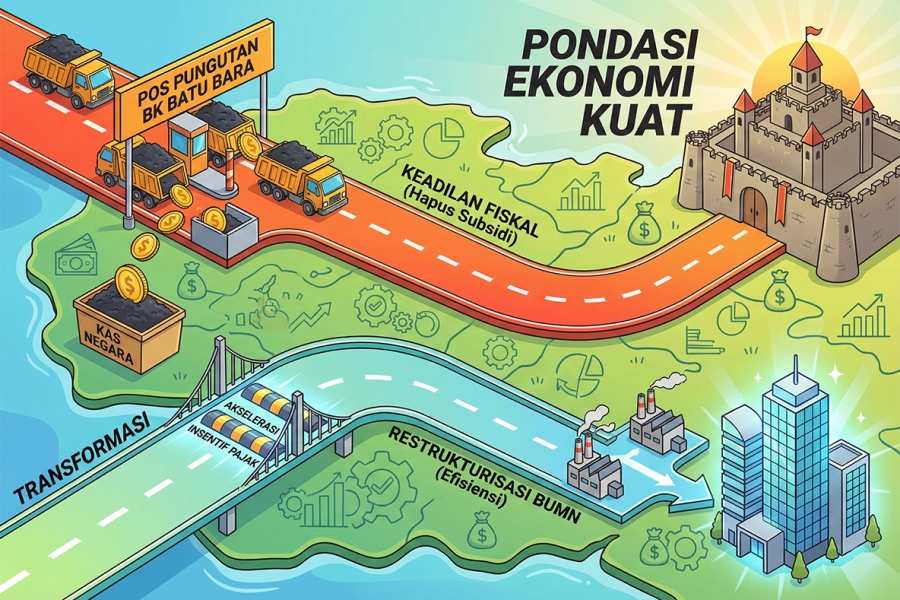
Economists assessed that investment in 2025 tended to be sluggish. Therefore, they encouraged deregulation and the provision of more effective tax incentives as the key to reviving investment momentum amidst these challenges. To increase state revenue, the Organisation for Economic Co-operation and Development (OECD) recommended cutting subsidies and expanding the Value Added Tax (VAT) base as the main prescriptions. Additionally, Mandiri Economists provided four strategic suggestions to the government focusing on improving administration and tighter supervision to boost tax collection.
On the customs side, the Jakarta Customs and Excise Regional Office reported revenue that has reached Rp11.4 trillion. This achievement indicates that the 2025 revenue target is potentially surpassed, showing positive performance despite institutional issues.
Regarding the issue of institutional reform, Business Owners responded to the threat of Customs freezing. They demanded that the government should not replace the institution, but rather improve the existing system. This demand emphasizes that the root problem lies in internal governance and not the existence of the institution itself, which the government needs to address seriously.
Today's developments carry significant implications for fiscal policy and the investment climate. The OECD's recommendations and Mandiri Economists' suggestions create a roadmap for the government to optimize revenue through VAT expansion and subsidy efficiency. However, the push for deregulation and tax incentives signals that the government needs to respond to the sluggish investment condition with pro-business policies. Meanwhile, the business response to the Customs issue emphasizes focusing repairs on the internal system and governance, urging the government to implement structural reform rather than just personnel changes. The high achievement of Jakarta Customs and Excise demonstrates the significant revenue potential if institutional performance can be maintained.
Overall, Indonesia's fiscal policy is facing two major demands: increasing revenue through reform suggestions from the OECD and Economists, while also improving the sluggish investment climate through deregulation and tax incentives. On the institutional side, the government must heed the demands of business owners to reform the Customs system deeply and structurally, rather than merely replacing the institution, especially considering the high revenue potential demonstrated by Jakarta Customs and Excise.
















 tpc.consulting
  tpc.consulting
  info@taxindo.co.id