


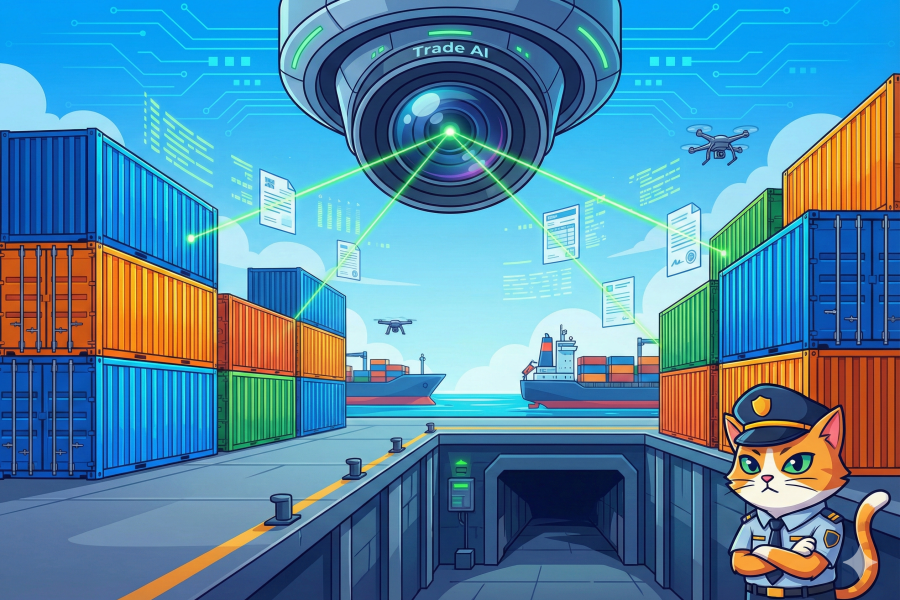
Today’s tax policy focus highlights the integration of advanced technology and aggressive law enforcement to secure state revenue. The Finance Minister is pursuing a dual strategy by strengthening oversight at the nation’s entry points through Artificial Intelligence (AI) and implementing harsh legal measures against domestic tax non-compliance. These efforts range from using automated detection systems to monitor international trade transactions to physical actions against stubborn tax evaders. This summary reviews the implementation of technology in customs and the intensive efforts of the Directorate General of Taxes (DJP) to meet collection targets.
The Finance Minister will deploy a special unit called "watchcats" across various illegal entry points (locally known as "rat paths") to prevent the entry of illegal imported goods and close smuggling loopholes in hard-to-reach border areas. Simultaneously, the Finance Minister inaugurated the use of container scanners integrated with the Trade AI system to prevent leaks in state revenue. This new infrastructure is expected to accelerate the physical inspection of goods without compromising the oversight accuracy of customs authorities at ports.
This technological reinforcement also covers administrative aspects, where the Finance Minister claims that the use of the Trade AI system has successfully secured Rp1.2 billion in state revenue from the examination of only 145 import documents. Furthermore, the Finance Minister is now operating an advanced system capable of automatically detecting under-invoicing practices or invoice value manipulation on imported commodities. The system functions to ensure that the customs value reported by importers remains consistent with actual market prices.
While border oversight is being tightened, the DJP is taking extreme steps to pursue collection targets by conducting tax hostaging (gijzeling) and even criminalizing non-compliant taxpayers. These firm actions are part of the tax authority's final efforts to enforce fiscal discipline against tax defaulters. This entire series of policies demonstrates the government's commitment to combining technological modernization and the supremacy of law to guarantee the security of the state treasury.
These strengthening measures for oversight and enforcement have direct implications for the integrity of the fiscal system and public compliance. The use of Trade AI and under-invoicing detection systems implies an increase in the accuracy of collecting import duties and import taxes, which automatically closes the space for document fraud. The deployment of special units at illegal border points implies a decrease in the volume of illegal goods entering the domestic market, thereby protecting local industries. On the other hand, the hostaging and criminalization actions by the DJP imply an increased deterrent effect for tax evaders, while simultaneously implying the need for legal certainty to avoid causing excessive concern among compliant business actors.
Overall, the government is showing an uncompromising stance against all forms of state revenue leakage, both at the borders and domestically. The synergy between modernized surveillance technology (Trade AI) and strict legal supremacy (taxpayer hostaging) has become the primary instrument in securing the state treasury. This focus reflects the fiscal authority's transition toward a monitoring system that is more precise, transparent, and authoritative to ensure all tax obligations are met to the fullest extent.

















 tpc.consulting
  tpc.consulting
  info@taxindo.co.id