



The taxation and customs sectors are once again under the spotlight following issues of institutional integrity and the stringency of fiscal law enforcement. The Directorate General of Taxes (DJP) is escalating efforts to collect massive tax receivables, while the Finance Minister's statement has once again touched upon the Tax Amnesty program amidst the legal process involving a former official. Simultaneously, the discourse on Customs reform is strengthening after the revelation of certain industrial operations without official supervision a phenomenon that is not unprecedented in history. The main focus of these developments concerns the effectiveness of receivables collection, the post-Tax Amnesty evaluation, and the future direction of fiscal institutional overhaul.
The DJP is undertaking a series of firm efforts to collect accumulated tax receivables amounting to nearly Rp140 trillion, following a surge in the national tax receivables balance to almost that figure. These collection efforts include account blocking, asset seizure, and travel bans against major tax delinquents who contribute significantly to the receivables, which pose a serious burden on state revenue and fiscal health.
Amidst the receivables collection push, Finance Minister Purbaya revisited the topic of the Tax Amnesty program following the examination of former Director General of Taxes Suryo Utomo by the Attorney General’s Office (Kejagung). This scrutiny demands transparency and integrity in tax policy implementation.
Regarding institutional reform, Finance Minister Purbaya also acknowledged that the airport in the Morowali Industrial Park (IMIP) operates without Customs and Excise presence there, highlighting a potential customs oversight gap. Purbaya stated his readiness to dispatch Customs officials to the site to strengthen supervision. Furthermore, the issue of freezing the Directorate General of Customs and Excise (DJBC) is not new in Indonesian history, as a similar event occurred during the New Order Era, indicating that radical steps to improve institutional integrity and efficiency have a political precedent.
These measures and disclosures carry crucial implications for governance integrity and law enforcement. The jumbo tax receivables reaching nearly Rp140 trillion necessitate vigorous collection action from the DJP, potentially creating legal pressure for defaulting taxpayers and increasing state cash liquidity. The Finance Minister's acknowledgment regarding the IMIP airport operating without Customs underscores the need for stricter oversight in Special Economic Zones to prevent potential revenue losses. Meanwhile, the mention of Tax Amnesty post-examination of the former official creates legal uncertainty for program participants and emphasizes the importance of integrity within the tax authority. Finally, the Customs freezing issue, which has a historical precedent, affirms the urgency of reform that cannot be delayed to improve logistics efficiency and eradicate maladministration.
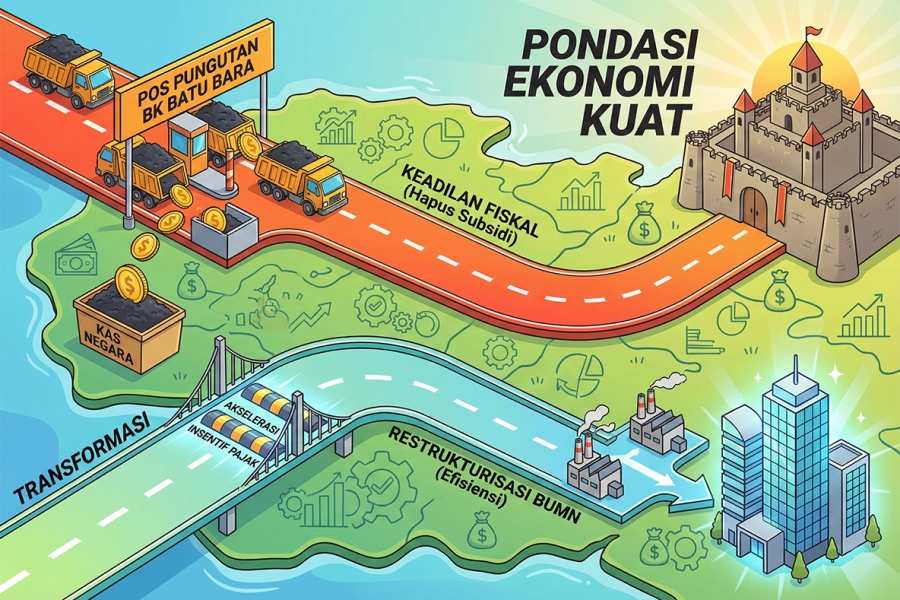
Overall, today's news indicates that Indonesia's fiscal authorities are in a phase of tightened law enforcement and institutional reform. The DJP is determined to resolve the massive tax receivables problem through firm collection measures. On the other hand, the Ministry of Finance and Customs and Excise are confronted with the urgency of governance improvement, highlighted by the Tax Amnesty issue and the oversight gap at IMIP. Business actors must pay attention to this tightening of law enforcement and ensure tax compliance to avoid severe penalties, while the government must pursue structural reform in Customs to create a more equitable and efficient fiscal system.
















 tpc.consulting
  tpc.consulting
  info@taxindo.co.id