


The dynamics of national taxation in mid-December focus on the fiscal authority's efforts to balance the settlement of state obligations to taxpayers with the pursuit of revenue targets that still show a significant gap. The government is currently relying on the readiness of a new administrative system to increase compliance while simultaneously tightening field oversight to mitigate state revenue leakages. This report reviews the challenges of tax realization against the annual outlook, the readiness of digital taxation infrastructure, and law enforcement measures in the excise and individual tax sectors.
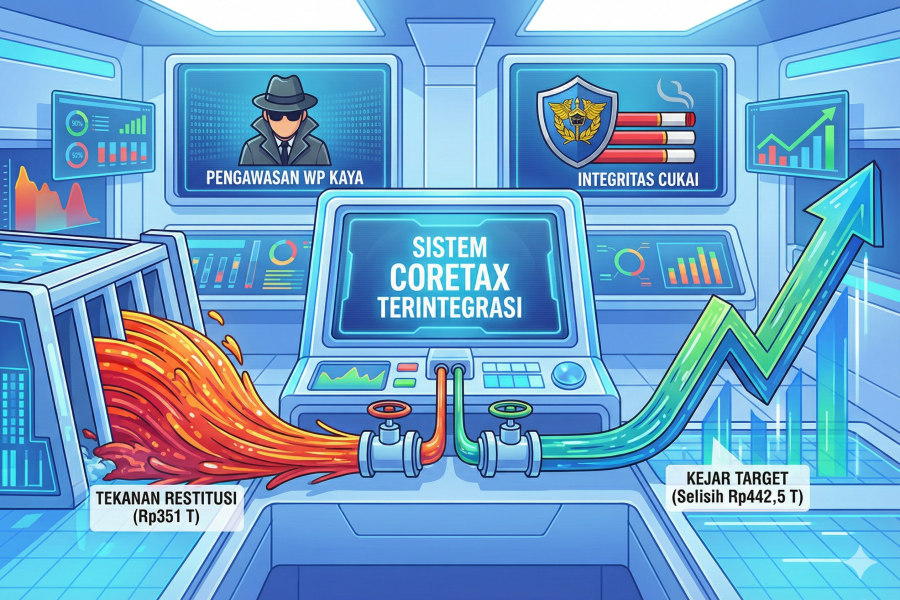
The Ministry of Finance indicates tax revenue data that still shows a shortfall of IDR 442.5 trillion from the annual outlook figure as of late November 2025. This large gap serves as a heavy burden for the Directorate General of Taxes (DJP) to chase the remaining revenue target within the final month of the fiscal year. Amidst these pursuit efforts, the Director General of Taxes states that the testing phase of the Coretax system has been fully completed to serve 2025 Annual Tax Return (SPT) reporting with more accurate and transparent data integration.
While authorities prepare the new system, business actors are claiming the return of tax overpayments, or restitutions, which have reached a value of IDR 351 trillion. This high restitution figure reflects liquidity pressures for corporations that rely heavily on the speed of the fund refund process from the state treasury. To balance these cash flow needs, tax authorities are becoming increasingly aggressive in summoning several high-net-worth individuals (crazy rich) for clarification to ensure that tax contributions from the high-end individual sector remain at an optimal level.
Beyond the focus on income tax, the Minister of Finance asserts that the integrity of Customs and Excise officers is now strengthening, making bribery practices difficult for any party to carry out. This is proven by the relevant agency through a surge in illegal cigarette enforcement cases across various regions of Indonesia during the current year. These firm excise security efforts contribute significantly to minimizing state losses while strengthening the oversight of illegal excisable goods amidst the government's efforts to patch the overall national revenue shortfall.
The correlation between restitution payables and the pursuit of tax targets carries direct implications for state cash management and business confidence. A target gap of IDR 442.5 trillion implies an increase in active collection intensity by tax officers across all regions of Indonesia during the remainder of December. Conversely, the jumbo restitution of IDR 351 trillion implies additional pressure on the State Budget (APBN), as the government must manage cash flow so that these tax refunds do not disrupt the financing of other priority programs. Meanwhile, Coretax system readiness implies potential administrative ease in the future, but the aggressiveness in summoning individual taxpayers implies a need for further transparency to avoid causing excessive concern that could hamper domestic investment.
In broad terms, the government is currently striving to complete a major transition toward a digital taxation system amidst challenging fiscal targets. The commitment to integrity in the excise sector and the courage in conducting oversight of large taxpayers demonstrate a seriousness in maintaining the prestige of financial institutions. The success in bridging the need for entrepreneur restitution and achieving revenue targets at year-end will serve as a primary indicator of national economic fundamental health before entering next year's tax reporting cycle.
















 tpc.consulting
  tpc.consulting
  info@taxindo.co.id