


In the latest economic developments, the spotlight is on the dual risks threatening stability: external pressure from global trade dynamics and an internal problem involving losses from illegal mining. The disaster in Sumatra and the potential imposition of tariffs by Donald Trump overshadow Indonesia's 2026 economic targets. Analysts warn that the cancellation of the RI-US tariff deal could disrupt economic stability and the Rupiah exchange rate. Responding to this threat, business actors are pushing for the strengthening of the domestic market. At the same time, the DPR (House of Representatives) revealed state losses from illegal mining estimated to reach thousands of trillions of Rupiah. Amid these pressures, there is a positive sign: retail sales are projected to increase due to improving public purchasing power.
Indonesia's 2026 economic targets are overshadowed by two main risks: the impact of natural disasters in Sumatra and the threat of tariff implementation by President Donald Trump. Analysts warn that the cancellation of the RI-US tariff deal has the potential to disrupt national economic stability and put pressure on the Rupiah exchange rate..
Responding to the threat from this uncertainty in RI-US trade, business owners are pushing for the domestic market to be strengthened as the main pillar of economic growth. Amid external concerns, there is a positive signal from domestic consumption: retail sales are predicted to increase, due to improving public purchasing power.
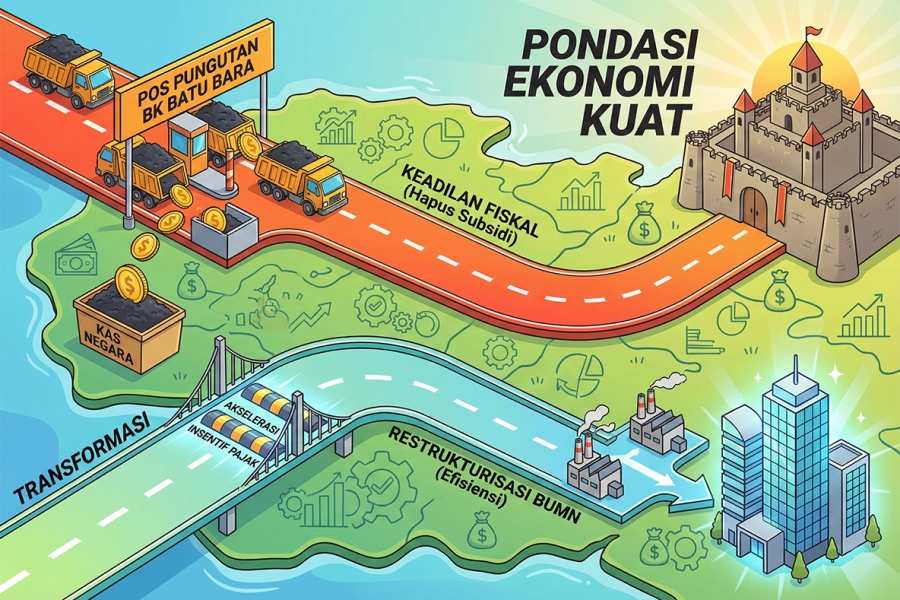
However, fiscal stability remains questioned by internal problems. The House of Representatives (DPR) revealed that illegal mining activities are causing state losses estimated to reach thousands of trillions of Rupiah. This figure indicates a massive fiscal leakage, demanding law enforcement to secure state revenue.
The latest news has broad implications for monetary stability, trade strategy, and fiscal integrity. The potential cancellation of the RI-US deal and the threat of Trump tariffs imply increased Rupiah volatility and the need for export market diversification. The concern from business owners pushing for domestic market strengthening implies the importance of pro-consumption and domestic industry policies. Meanwhile, the loss of thousands of trillions from illegal mining revealed by the DPR implies the need for massive law enforcement and improved governance in the natural resources sector to plug revenue leaks. Amidst the risks, the prediction of increased retail sales implies optimism in the consumption sector and GDP growth.
In general, the Indonesian economy is under double pressure: external risk from US trade uncertainty and domestic risk from massive illegal mining losses. The Government is required to mitigate the Rupiah risk from the potential cancellation of the trade deal and plug the fiscal leakage from illegal mining. The strategy of strengthening the domestic market, pushed by business owners, is key to maintaining the growth momentum currently supported by improving purchasing power and increasing retail sales.
















 tpc.consulting
  tpc.consulting
  info@taxindo.co.id