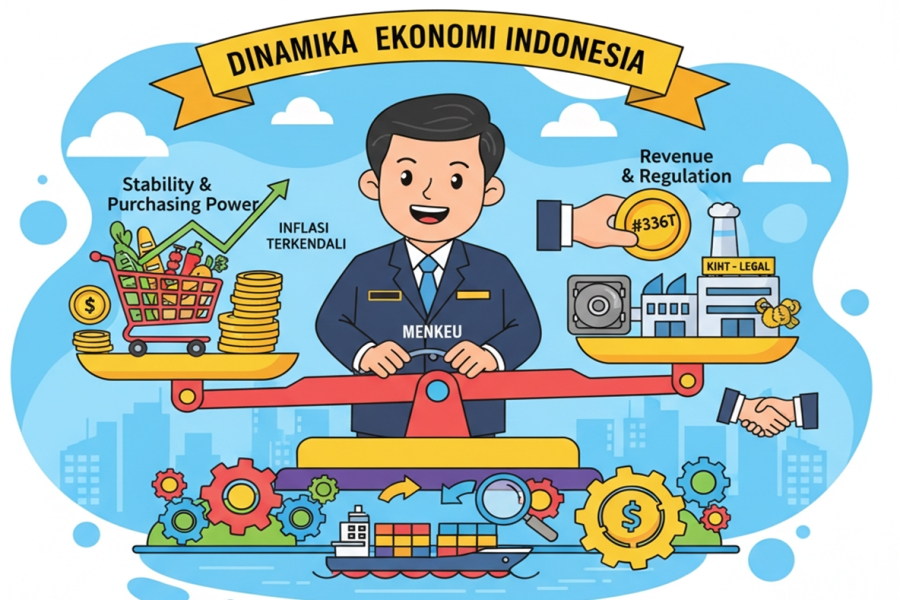
The Indonesian government is undertaking a resolute dual strategy: focusing on domestic price control while simultaneously implementing unconventional customs and excise strategies. While the Central Statistics Agency (BPS) noted a slight increase in the September 2025 inflation rate, Finance Minister Purbaya Yudhi Sadewa released extreme policies targeting import supervision and the legalization of illegal cigarette producers, signaling the government’s intensive efforts to stabilize the economy and optimize state revenue.
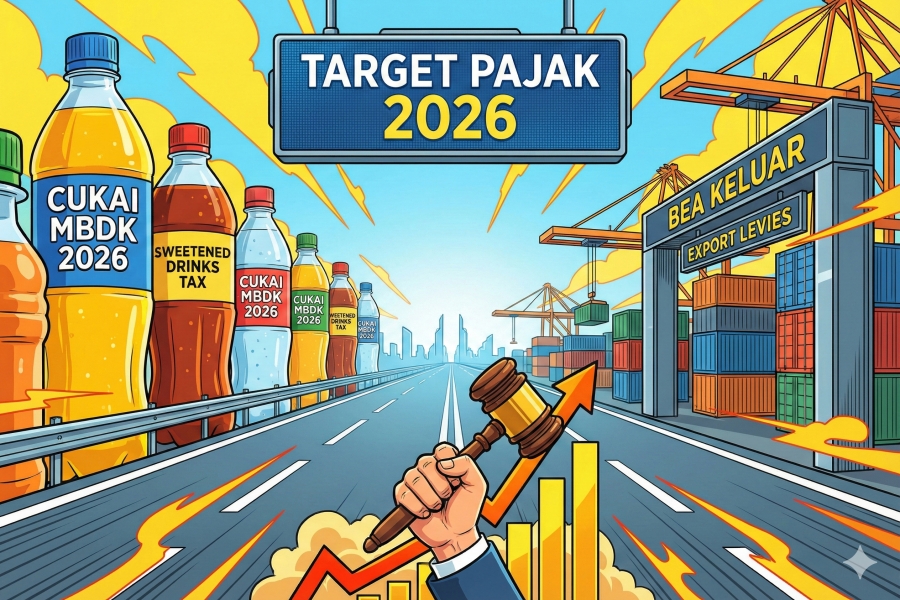
The government, through Finance Minister Purbaya Yudhi Sadewa, made the strategic decision not to increase the Excise on Tobacco Products (CHT) tariff in 2026. This move aims to provide business certainty for the cigarette industry, despite the ambitious 2026 State Budget (APBN) customs and excise revenue target of Rp336 trillion. To secure this target without raising the tariff, the government is formulating a strategy to tighten excise revenue security by optimizing law enforcement and massively eradicating the circulation of illegal cigarettes. Concurrently, it is developing the Integrated Tobacco Product Industrial Zone (KIHT) as a "one-stop service" to attract illegal producers toward compliance.
On the domestic tax revenue side, the Directorate General of Taxes (DJP) faces a challenge, projecting a decrease in the number of Taxpayers (WP) filing their 2025 Annual Tax Returns (SPT) to approximately 14 million, down from the previous year. DJP is currently analyzing the cause of this declining compliance, particularly among Individual Taxpayers, while continuously preparing the Core Tax system to improve future reporting processes. In parallel, Indonesia's global commitment is evident: the country is taking an active role in the UN Global Tax Cooperation Convention, highlighting four main issues, including efforts to combat tax evasion and optimize digital economy tax collection, showcasing Indonesia's fight for international tax justice.
Meanwhile, the business sector is facing potential new hurdles from the customs side, where entrepreneurs express concerns about the authorities' plan to tighten goods inspection on the import lanes. Business owners assess that this tightening measure potentially disrupts the smooth flow of logistics and increases costs, ultimately threatening the competitiveness of domestic products due to potential delays in raw material supply. Therefore, these entrepreneurs are urging port and customs authorities to align the tightening with efficient import processes so that the supervision goal can be achieved without harming the business climate.
The September inflation increase demands that Bank Indonesia (BI) and the government maintain cautious monetary and food policies to keep price stability preserved until the end of the year, which directly impacts people's purchasing power. On the other hand, Minister Purbaya’s decision to randomly check the green lane creates increased caution for importers, although the goal is positive: to curb illegal goods and protect legal industries. The extreme measure of building a special industrial zone and offering amnesty to illegal cigarette producers is a unique incentive with huge potential to increase state revenue from the CHT and save jobs in the small-scale industry sector, provided this legalization transition program is executed effectively and fairly.
The government’s efforts to stabilize the economy are now moving along two axes: price stability through inflation control and state revenue optimization through industry discipline. Minister Purbaya’s proactive maneuvers—to legalize illegal producers and tighten customs supervision—are crucial steps that all business actors must heed. Understanding inflation dynamics and compliance with the new regulations—both in the excise and import sectors—will be the key determinant of business success in the latter half of this year.


















 tpc.consulting
  tpc.consulting
  info@taxindo.co.id