



The complexity of the Ministry of Agriculture Regulations concerning palm oil partnerships consistently leads to debate, especially in determining the Cost of Goods Sold (COGS) and the treatment of costs by the core company. The case of PT TBSM highlights a fundamental dispute over the deductibility of plasma estate management costs, which directly impacted the 2021 Corporate Taxable Income. The dispute centered on a Corporate Income Tax (CIT) correction that resulted in a Tax Overpayment Assessment Letter (SKPLB) of Rp. 143,462,786.00 where the Tax Authority’s (DJP) focus was shifting costs booked as Plasma Receivables to Business Revenue, followed by Fiscal Adjustments.
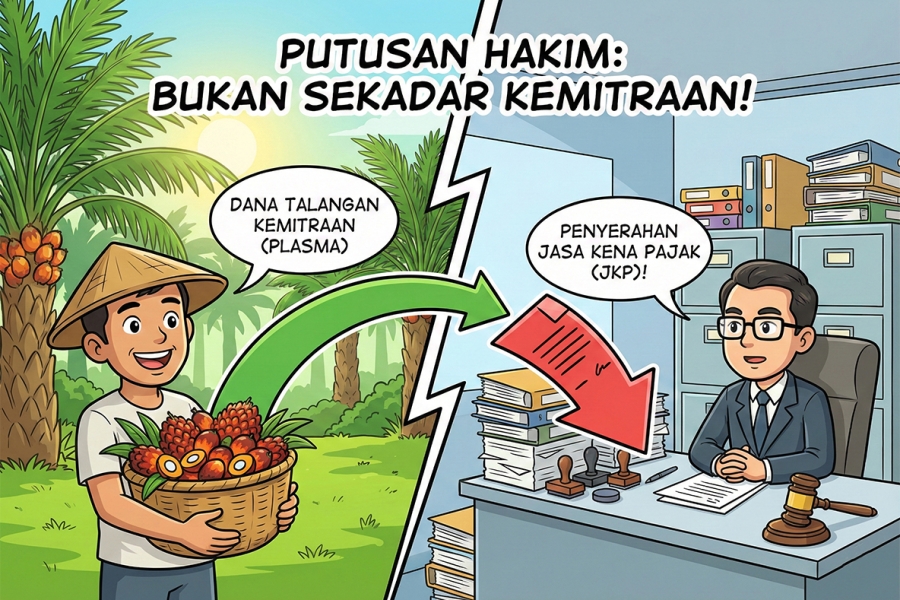
The core conflict in this case is the differing interpretation of the accounting treatment for plasma costs. The DJP, in an effort to apply the matching cost against revenue principle, argued that the plasma estate management costs—including asset depreciation, raw material usage, bonuses, and donations totaling Rp. 13,111,055,101.00—should have been fully expensed as commercial COGS. However, PT TBSM contended that these costs were legitimate transactions with third parties and had been recorded according to the partnership mechanism, namely as Plasma Receivables that would be billed later. The DJP was deemed mistaken for correcting this COGS item into Business Revenue, which substantially altered PT TBSM's revenue recognition without adequate proof.
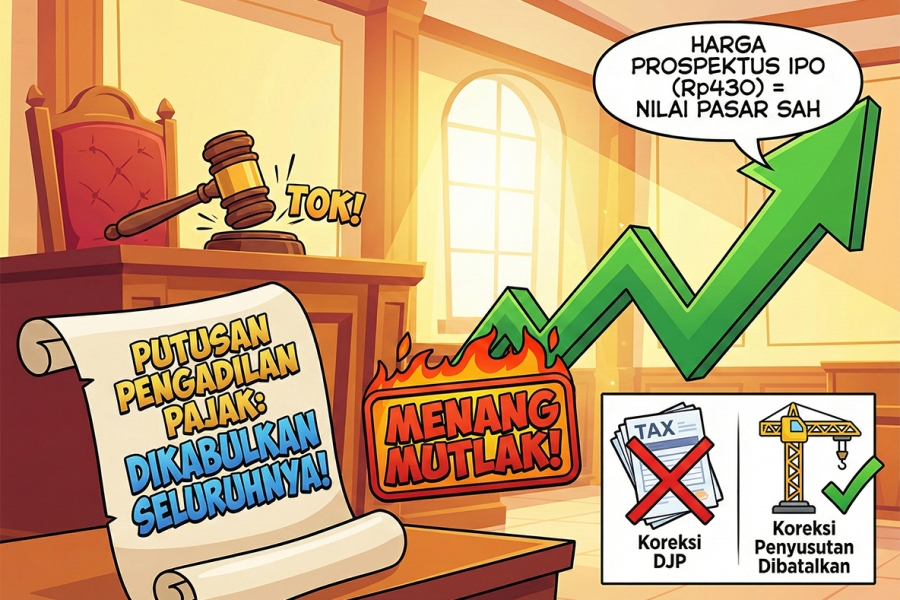
The resolution of this conflict was decided by the Panel of Judges, who concluded to grant PT TBSM's appeal in its entirety. The Judges determined that the DJP failed to provide convincing evidence, both legally and factually, to overturn PT TBSM's cost and COGS recording. The correction that reversed COGS to Business Revenue was deemed unfounded. Thus, the Panel upheld PT TBSM’s argument that the costs incurred were reasonable and deductible expenses, and the subsequent Fiscal Adjustments derived from the main COGS correction were also legally invalid.
The Analysis and Impact of this Decision reaffirms the importance of a strong burden of proof on the Directorate General of Taxes (DJP) when making fundamental corrections, especially those touching upon the Taxpayer's commercial accounting treatment for complex partnership schemes like plasma estates. The Taxpayer's victory sets an important precedent for the plantation sector, particularly for palm oil companies, regarding the validity of recording plasma costs as Receivables, provided it is supported by robust contractual documentation and accounting coherence. The DJP's failure to prove that these Plasma Receivables constituted unrecorded revenue was key to the Taxpayer's success. Consequently, Taxpayers must always ensure coherence between their partnership agreements, commercial books, and fiscal adjustments.
The Conclusion is that Taxpayers must be cautious in the accounting-fiscal treatment of plasma schemes and be ready to defend their books with undeniable documentation. This decision serves as a reminder to the DJP to formulate correction arguments supported by strong evidence, not solely based on the interpretation of the matching principle.
A Comprehensive Analysis and the Tax Court Decision on This Dispute Are Available Here












 tpc.consulting
  tpc.consulting
  info@taxindo.co.id