



PT STL is a rubber processing company (SIR 10 and SIR 20 commodities) that sells most of its products to affiliated parties both domestically and abroad. Pricing is based on global market prices, namely SICOM. In addition, the company also borrows funds from affiliates for working capital. The main points of dispute consist of two corrections made by the DGT, namely a Business Turnover Correction of IDR 48.1 billion and Other Business Expense Correction of IDR 3.7 billion.
The first correction, amounting to IDR 48.1 billion, was due to a difference in the calculation of the fair market value of sales to affiliated parties by the DGT. The DGT argued that the external CUP method using SICOM (Singapore Commodity Exchange) data used by PT STL in its transfer pricing documentation to determine the fair market value of sales to affiliated parties was inappropriate, because SICOM prices are “best prices” and are only reference price data. Therefore, if SICOM data is used for comparability analysis, adjustments to the terms and conditions are required, which will reduce the reliability and accuracy of the fairness aspect.
Considering that the DGT is of the opinion that PT STL should only use internal comparative data (Internal CUP method) because any adjustments would be easier to make, resulting in a more transparent and objective level of comparability.
PT STL believes that the internal method cannot be used due to several factors, including differences in contract dates, product quality (SIR 10 vs. SIR 20), customer type (affiliates are resellers, while independent parties are end users/tire manufacturers), contract terms, delivery periods, payment periods, business risks, and market dynamics.
Considering that based on the facts and descriptions above, The Tax Court Panel of Judges is of the opinion that the scope of PT STL's business is in the field of manufacturing, processing, and sales of crumb rubber, mixed materials, and technically specified rubber (TSR) with the Indonesian standard being Standard Indonesian Rubber (SIR), which is divided into two classes, namely SIR 10 and SIR 20. The products sold by PT STL are commodity products whose local and export sales prices are determined by referring to global rubber prices such as SICOM, taking into account commercial factors such as economic conditions, sales volume, sales, and relationships with end users.
That the majority (more than 90%) of PT STL's sales to affiliated parties are sales of rubber products with SIR 20 grade, so it is reasonable for PT STL to use SICOM data for SIR 20 grade as comparative data. Therefore, the DGT's opinion that all sales to overseas affiliates are rubber products with SIR 10 grade is questionable because the DGT did not mention the source of the data. Meanwhile, PT STL can show valid documents stating that there are SIR 20 grade rubber products that are exported.
That PT STL, in its Transfer Pricing Document, has taken into account adjustments to commercial factors affecting the selling price in comparison with the external CUP price;
That the DGT, in calculating the comparability of internal CUP prices, did not take into account the differences in the characteristics of overseas customers and domestic customers, and therefore did not make adjustments in calculating price comparability; that the opinions and corrections made by the DGT were not based on strong evidence and were not in accordance with the facts.
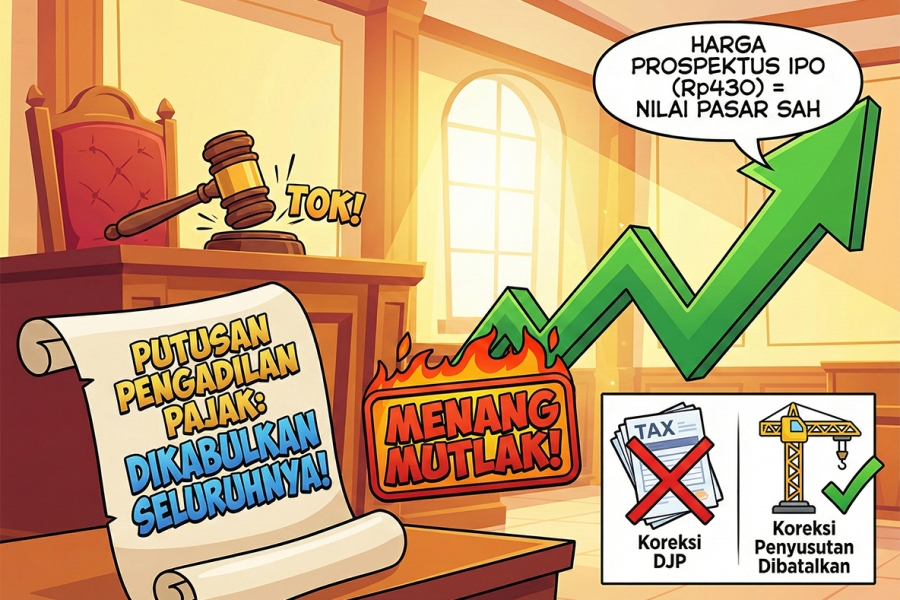
Considering that, based on the above opinion, The Tax Court Panel of Judges has concluded to grant in full the appeal of PT STL amounting to 48.1 billion Rupiah and to cancel the DGT's correction;
The second dispute in this ruling centers on the correction of interest expenses amounting to IDR 3.7 billion. This correction arose from differences in opinion between the DGT and PT STL regarding the reasonableness of the interest rate on loans received by PT STL from its affiliates.
The DGT initially based its interest expense adjustment on the assumption that PT STL had excess funds in 2017 from bank loans, so that according to the DGT, loans from affiliates in 2020 were deemed unnecessary. However, the Council firmly rejected this argument, stating that the basis for the DGT's adjustment was based solely on assumptions and did not reflect the actual financial condition of PT STL in the 2020 Tax Year.
In the arm's length principle recalculation, the DGT compares the affiliate loan interest rate with the average interest rate of foreign banks and a mix of foreign currencies in USD, for working capital only for the period January to September 2020. On the other hand, PT STL in its Transfer Pricing Document (TP Doc.) uses the average interest rate for working capital and investment, for the period January to December 2020.
The Tax Court Panel of Judges found two fundamental flaws in the DGT's approach. (1) Inappropriate Comparison Period: According to the Council, affiliate loans are essentially one-year loans. Therefore, limiting the comparison period to September 2020 is considered inaccurate and does not represent the interest rate for the entire tax year. (2) Loan Purpose Not Considered: The DGT uses only working capital interest rates as a comparison. However, the affiliate loan was intended to support working capital and business expansion. The Tax Court Panel of Judges assessed that the DGT's use of a narrow benchmark reduced the reliability of its calculations.
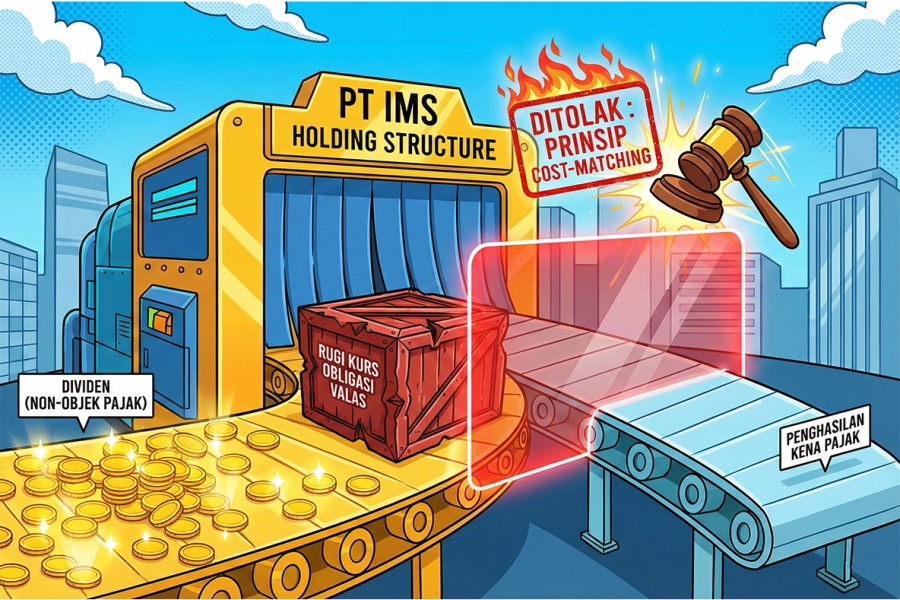
Based on these facts, The Tax Court Panel of Judges concluded that the DGT's corrections and opinions were not based on strong, relevant, and factual evidence. PT STL is considered to have successfully proven the reasonableness of the interest rate on loans to affiliated parties through its Transfer Pricing Document. Therefore, The Tax Court Panel of Judges decided to grant PT STL's appeal in its entirety and cancel the interest expense correction of IDR 3.7 billion.
This case provides two important lessons for taxpayers, especially those with affiliated transactions (1) For commodity-based companies, the use of global price benchmarks such as SICOM is very reasonable in the external CUP method. However, it is important to ensure the suitability of the product type (grade/quality), relevant terms and conditions adjustments, and strong supporting documentation as evidence of comparability, because otherwise, the DGT may question its reliability. (2) Economic Justification for Affiliate Loans: in determining the reasonableness of interest expenses, the economic substance must be demonstrated through actual funding needs and comparative data according to the period and purpose of the loan. Corrections based solely on assumptions, without considering the taxpayer's actual financial condition, are potentially weak at the level of further examination or dispute. Complete Transfer Pricing Documentation, based on actual facts and accountable analysis, is the key to successfully defending arm's length disputes.
A Comprehensive Analysis And The Tax Court Decision On This Dispute Are Available Here












 tpc.consulting
  tpc.consulting
  info@taxindo.co.id