



Executive Summary:
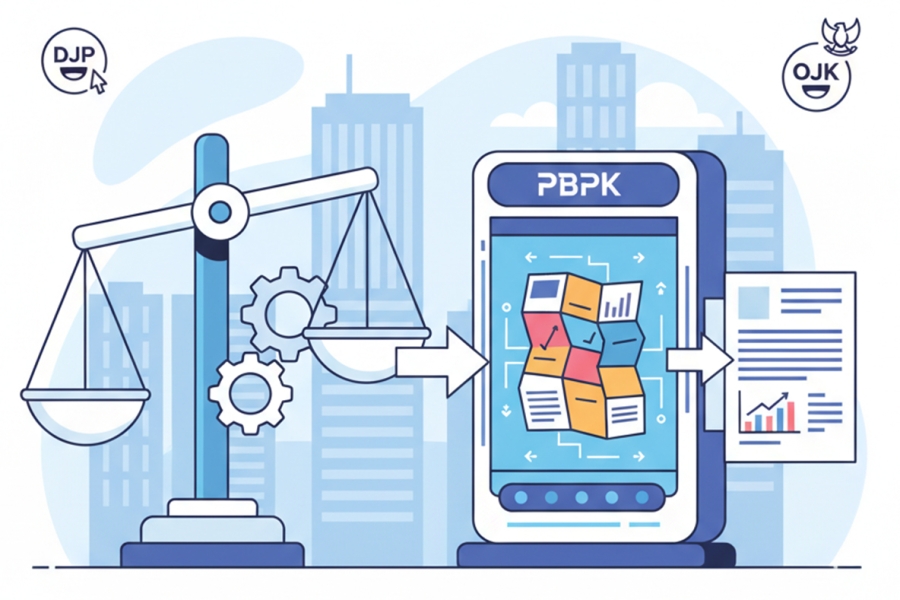
Transfer pricing regulations, particularly with the issuance of the Minister of Finance Regulation (PMK) Number 172 of 2023, often feel incredibly complex for business owners and finance professionals. Thick rulebooks and technical jargon can make anyone feel overwhelmed.
However, beyond the obvious regulations, there are several crucial principles that are often overlooked yet have a significant impact on a Company’s tax compliance. Understanding these nuances is key to avoiding the risk of major tax corrections.
This article will distill that complexity and present the four most surprising and impactful facts regarding Indonesia's transfer pricing rules into a concise and easy-to-understand list.
1. The Method Hierarchy is Rigid: Companies Cannot Simply Choose the Easiest Option
Many assume that a Company is free to choose the Transfer Pricing Method (TP Method) for which data is most easily readily available. In reality, PMK 172 establishes a strict hierarchy or order of priority.
Simply put, methods that most directly compare prices or transactions, such as the Comparable Uncontrolled Price (CUP) and Comparable Uncontrolled Transaction (CUT), are given the highest priority. Subsequently, gross profit-based methods like the Resale Price Method (RPM) and Cost Plus Method (CPM) take precedence over net profit-based methods like the Profit Split Method (PSM) and Transactional Net Margin Method (TNMM).
The bottom line is that a Company cannot immediately use TNMM simply because it is considered easier or because the data is more available. The Company must first prove and document why higher-priority methods (such as CUP, CUT, RPM, or CPM) cannot be applied or do not possess an equivalent level of reliability.
This rule is emphasized in the regulation:
If the CUP or CUT Method and other methods can be used and possess equivalent reliability, then the CUP or CUT Method takes precedence over the other methods.
This hierarchy forces Companies to base their pricing analysis on the most direct and relevant market evidence, not just broader profitability metrics. This makes the analysis more robust and accountable. This means finance teams must be proactive in searching for and testing evidence of comparable transactions (CUP/CUT) before considering profit-based analysis—a shift from "finding easy data" to "finding the most accurate evidence."
2. The Best Comparable Might Be "In-House"
When conducting transfer pricing analysis, Companies often immediately look for comparable data from similar external companies. However, there is a surprising rule that is frequently overlooked: the best comparable might already exist within the Company’s own financial statements.
This is called an "Internal Comparable"—transactions conducted by the Company itself with independent third parties. The regulation asserts that if a reliable internal comparable is available, its use must be prioritized over external comparables.
This key principle is stated very clearly:
Internal comparables must be selected and used as benchmarks in cases where both internal and external comparables are available with the same degree of comparability and reliability.
The reasoning behind this rule is very logical. Internal comparables are considered superior if the level of comparability is equal, because these transactions occur under the exact same business and economic conditions as the affiliated transaction being tested. This eliminates many complex variables (such as market differences, business strategies, or operational efficiencies) that often require complicated adjustments when using external comparables.
3. TP Doc Obligations Can Arise from Unexpected Transactions
The obligation to prepare Transfer Pricing Documentation (TP Doc) is often associated with company size, specifically a total annual gross turnover above IDR 50 Billion. While true, this is not the only trigger. There are two other triggers, based on data from the previous tax year, that often surprise many businesses:
The impact is massive. Many small to medium-scale enterprises may have unwittingly violated this obligation because they focused solely on total annual revenue and were unaware of these specific transaction-based triggers.
4. It’s Not Just About Accounting, It’s About Economic Substance
PMK 172 emphasizes that transfer pricing is not merely an accounting issue, but a proof of the economic substance of an affiliated transaction. One of the clearest manifestations of this principle is the obligation to present segmented financial statements.
This obligation primarily applies if the Company has more than one business activity with different characterizations (for example, running a manufacturing segment alongside a distribution segment). In this case, the Company is required to "dissect" its income statement. The Company must separate every financial item (Sales, COGS, Operating Expenses, etc.) into columns for Affiliated Transactions and Independent Transactions.
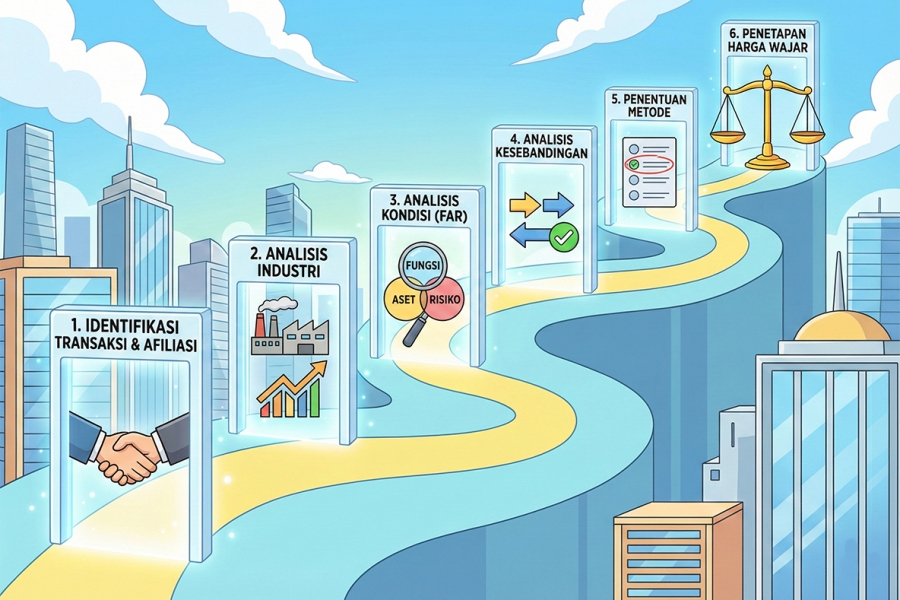
This segmentation requirement is not a mere administrative burden; it is the absolute data foundation necessary to conduct a credible Functional, Asset, and Risk (FAR) Analysis. Without accurate separation between affiliated and independent transactions, any claim regarding value creation in the FAR Analysis will collapse because it is not supported by solid financial data.
It is this FAR Analysis that determines where value creation actually occurs. In fact, this analysis considers non-financial assets such as "market access and level of market dominance in Indonesia" as part of the evaluation.
Substance Over Form
Compliance with modern transfer pricing rules under PMK 172 is about demonstrating real economic substance, not just ticking formality compliance checklists. This regulation contains various nuances—ranging from a rigid method hierarchy to the priority of internal comparables—that demand deep attention to detail.
Ultimately, the most important thing is to ask yourself one fundamental question: "Does our current Transfer Pricing documentation truly reflect the economic reality and value creation within the Company’s business, or is it merely fulfilling compliance formalities?"
References
Minister of Finance Regulation Number 172 of 2023 concerning the Application of the Arm's Length Principle in Transactions Influenced by a Special Relationship (Peraturan Menteri Keuangan Nomor 172 Tahun 2023 tentang Penerapan Prinsip Kewajaran dan Kelaziman Usaha Dalam Transaksi yang Dipengaruhi Hubungan Istimewa).














 tpc.consulting
  tpc.consulting
  info@taxindo.co.id