



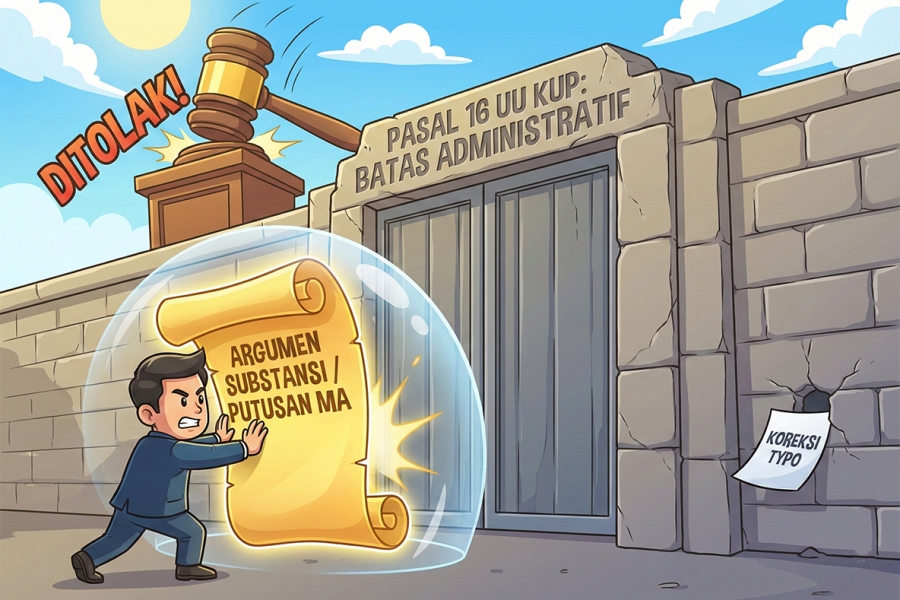
PT AAC, involved in a dispute over the Underpaid Tax Assessment Letter (SKPKB) for Income Tax Article 26 (PPh Pasal 26) for the June 2020 Tax Period, faced a significant challenge in proving its entitlement to the tax rate facility under the Double Taxation Treaty (DTT). Article 26 of the Income Tax Law explicitly stipulates a 20% withholding tax rate on income sourced from Indonesia received by Foreign Taxpayers (WPLN), and DTT benefits can only be applied if the taxpayer meets the formal requirements governed by Directorate General of Taxes Regulations (PER), including the submission of a Certificate of Domicile (CoD). This Tax Court Decision underscores that the completeness of DTT administrative requirements is the gateway to preferential tax rates.
The core conflict in this dispute originated from differences in interpretation and evidence regarding two aspects: the object of withholding and the right to the DTT rate. The Directorate General of Taxes (DJP) as the Respondent maintained its correction, based on an audit indicating that payments made by PT AAC to WPLN were essentially remuneration for technical services, royalties, or interest sourced in Indonesia, thus subject to PPh Article 26. The DJP's argument was reinforced by the alleged failure of PT AAC to present adequate evidence to refute the nature of this income as a taxable object. The DJP rejected the application of the DTT rate, thereby imposing the standard 20% rate on gross income as per Article 26 of the Income Tax Law.
PT AAC countered by presenting evidence that some payments were pure reimbursements, which should not constitute WPLN income, or claimed that a valid CoD had been submitted. This fundamental difference in evidentiary testing determined the outcome of the dispute.
The Tax Court Judges acted as arbitrators, applying the principle of caution and the burden of proof. The Judges partially granted PT AAC's appeal only for those items where PT AAC successfully met the burden of proof convincingly, both in terms of substance (e.g., proving it was a reimbursement) and DTT formality (producing a valid CoD in accordance with PER-25/PJ/2018). For the corrections that were upheld, PT AAC's failure lay in its inability to prove the beneficial owner status or non-fulfillment of the formal CoD requirements for the relevant tax period.
The implication of this Partial Allowance decision is highly significant. It reaffirms that PPh Article 26 compliance is a high-risk area in international taxation. Errors in classifying transactions (taxable or non-taxable object) and lapses in fulfilling DTT administrative requirements (CoD) can result in the imposition of a much higher 20% standard rate. The key takeaway for multinational companies is the need for proactive documentation of transfer pricing and withholding tax, ensuring both the formal validity and substantial nature of every cross-border transaction.
A Comprehensive Analysis and the Tax Court Decision on This Dispute Are Available Here.
















 tpc.consulting
  tpc.consulting
  info@taxindo.co.id