


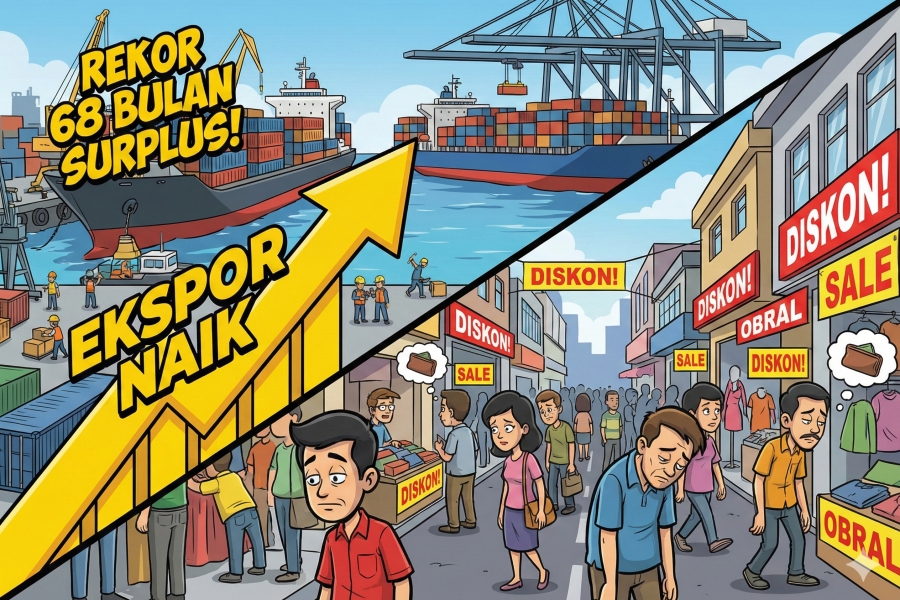
Indonesia's economy demonstrates resilience by recording a trade surplus for 68 consecutive months accompanied by a surge in capital goods imports signaling industrial expansion. However, an anomaly occurs as price indicators show monthly deflation and weakening purchasing power due to labor market pressures. The "Rojali" phenomenon, or groups who rarely buy, has now become a serious warning for middle-class consumption stability in 2026.
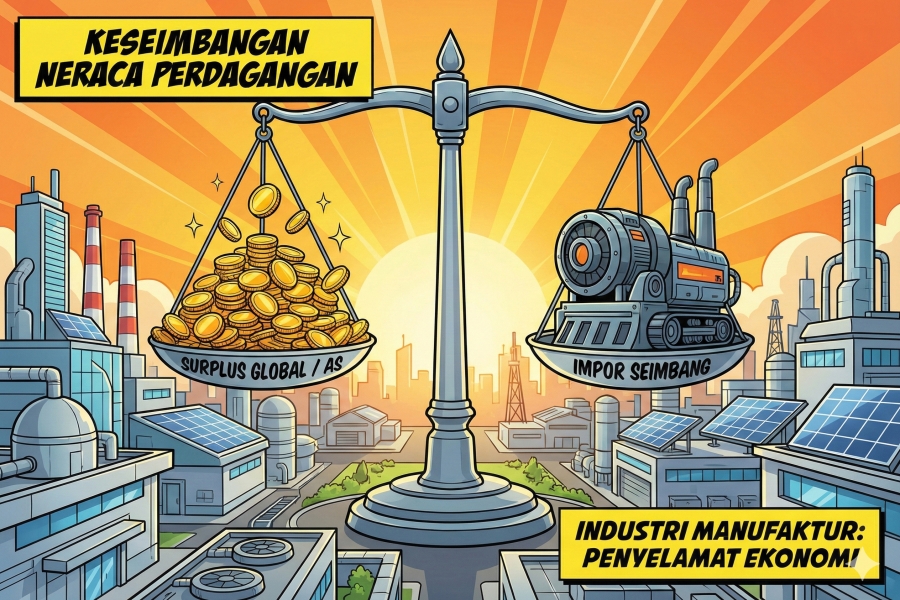
The Central Statistics Agency (BPS) reported Indonesia's trade balance performance, which again recorded a surplus of US$2.51 billion in December 2025, extending this positive trend to 68 consecutive months since May 2020. This surplus was supported by strong non-oil and gas exports and balanced by a significant 20.06% jump in capital goods imports throughout 2025, particularly in machinery and mechanical equipment. This increase in productive goods imports indicates that the domestic manufacturing and industrial sectors are actively expanding production capacity to welcome future economic growth opportunities. Although the industrial sector shows aggressiveness in expansion, price indicators at the consumer level actually show a contrasting anomaly at the beginning of the year.
The domestic market was surprised by BPS data recording a monthly deflation of 0.15% in January 2026, even though annual inflation remained high at 3.55% due to the low base effect from electricity tariff discounts the previous year. This monthly price decline was mainly triggered by an abundant supply of food such as red chilies and shallots, while on the other hand, jewelry gold prices actually crept up. This deflation in the food group provides a double signal, namely maintained logistical supply or actually restrained demand due to purchasing power that has not fully recovered. Food price stability has apparently not been able to fully boost public consumption, which is actually held back by structural problems in the labor market.
Mandiri Institute and BRIN highlighted that the decline in formal labor absorption is the main culprit for slowing consumption, where the formal job market is only able to absorb 1.9 million people per year. This situation severely hits the middle-class group, who are now trapped in the "Rojali" phenomenon or Rombongan Jarang Beli (Groups of Rare Buyers), where people tend to hold back spending and prefer saving due to income uncertainty despite nominal wage increases. This phenomenon is exacerbated by the high number of workers shifting to the informal sector, increasing family economic vulnerability and triggering the risk of a deflationary spiral if not immediately addressed.
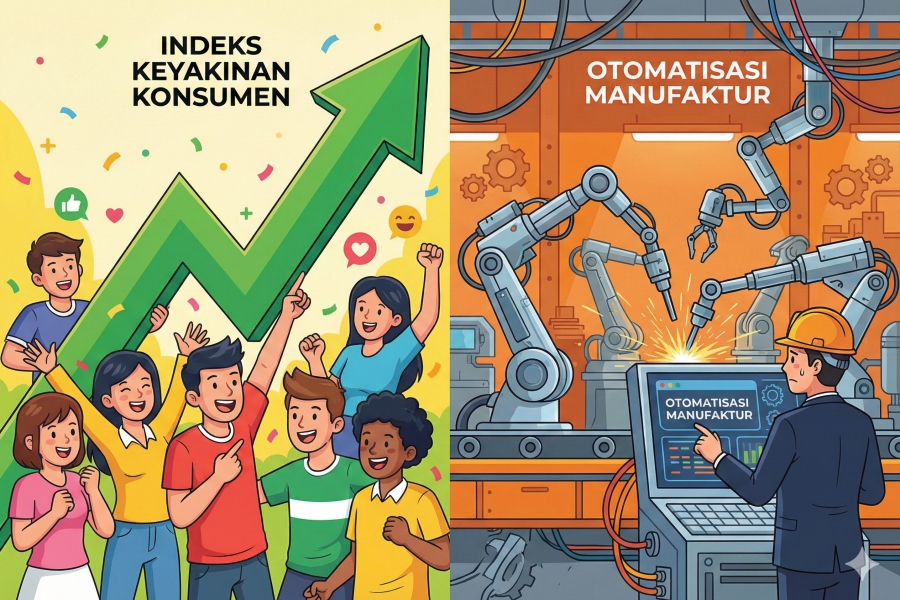
The gap between solid macroeconomic performance and the fragility of micro purchasing power fundamentals demands high vigilance from business actors and investors. Companies need to immediately adjust pricing strategies and product efficiency to target the middle-class segment, which is increasingly price-sensitive, while investors must scrutinize sectors that are defensive against purchasing power fluctuations. For the general public, this condition serves as an important signal to strengthen emergency funds and manage household cash flow more conservatively amidst job market uncertainty.
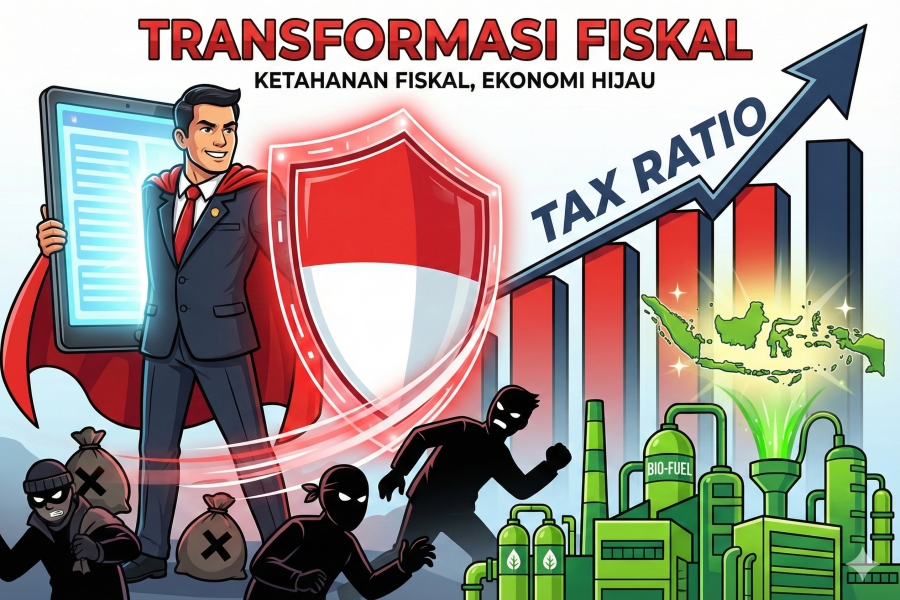
Indonesia is currently standing on two different legs; solid trade balance resilience and heavy challenges in maintaining household purchasing power. The government must immediately align fiscal policies with concrete strategies for creating quality formal jobs to prevent the "Rojali" phenomenon from dragging down national economic growth targets.














 tpc.consulting
  tpc.consulting
  info@taxindo.co.id