



President Prabowo brings his "Prabowonomics" strategy to the world stage in Davos to attract thousands of global CEOs. Domestically, Finance Minister Purbaya dismisses political rumors as the cause of currency volatility as the Rupiah strengthens away from the critical Rp17,000 mark. Good news also comes from BPJS Ketenagakerjaan, which successfully recorded double-digit investment growth in 2025.
President Prabowo Subianto departed for Switzerland today to serve as a keynote speaker at the prestigious World Economic Forum (WEF) in Davos. Before 65 heads of state and over 1,000 CEOs of giant global companies, the President will dissect his flagship economic concept dubbed "Prabowonomics". Cabinet Secretary Teddy Indrawijaya explained that this term encapsulates the strategies and successes of economic policies implemented by the government over the past year.
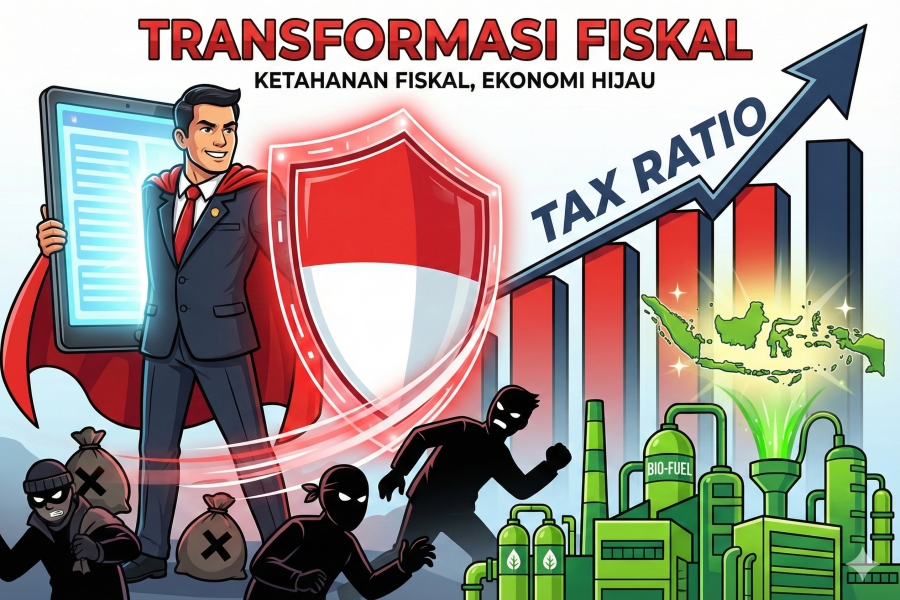
This moment serves as a strategic stage for Indonesia to demonstrate national economic resilience amidst global uncertainty still clouding international markets. This confidence on the world stage aligns with the government's hard work to maintain domestic currency stability, which was briefly hit by negative rumors.
Finance Minister Purbaya Yudhi Sadewa firmly denied speculation linking the Rupiah's weakening to the nomination of Thomas Djiwandono as Deputy Governor of Bank Indonesia (BI). Purbaya emphasized that pressure on the Garuda currency was purely due to global market dynamics, not internal political sentiment regarding the President's nephew's appointment.
In fact, the market responded positively to this clarification, with the Rupiah exchange rate in midday trading successfully striking back against the US dollar, strengthening by 0.19 percent to the level of Rp16,903. This strengthening proves that Indonesia's economic fundamentals remain solid enough to withstand external shocks, consistent with the performance of domestic financial institutions which actually recorded impressive green report cards.
BPJS Ketenagakerjaan, or BP Jamsostek, successfully recorded brilliant investment performance with double-digit growth in 2025 despite very dynamic financial market conditions. BPJS Ketenagakerjaan Deputy of Communication, Erfan Kurniawan, reported that the Old Age Security (JHT) program investment results broke Rp36 trillion or grew 11.39 percent, while the Pension Security (JP) jumped sharply by 25.45 percent to Rp14.69 trillion. The strategy of placing funds in safe and stable instruments has proven effective in increasing yields for Indonesian workers.
The combination of high-level economic diplomacy by the President and the solid performance of pension funds provides a strong signal that Indonesia is ready to face the economic challenges of 2026. Market players and the public need not panic excessively in response to short-term exchange rate fluctuations as monetary and fiscal authorities continue to coordinate to maintain stability.
Maintained macroeconomic stability and growing social security are the main capital for investors to keep investing in Indonesia. The public is advised to remain calm and focus on productivity, while utilizing this economic recovery momentum to arrange long-term financial planning more wisely.
















 tpc.consulting
  tpc.consulting
  info@taxindo.co.id