


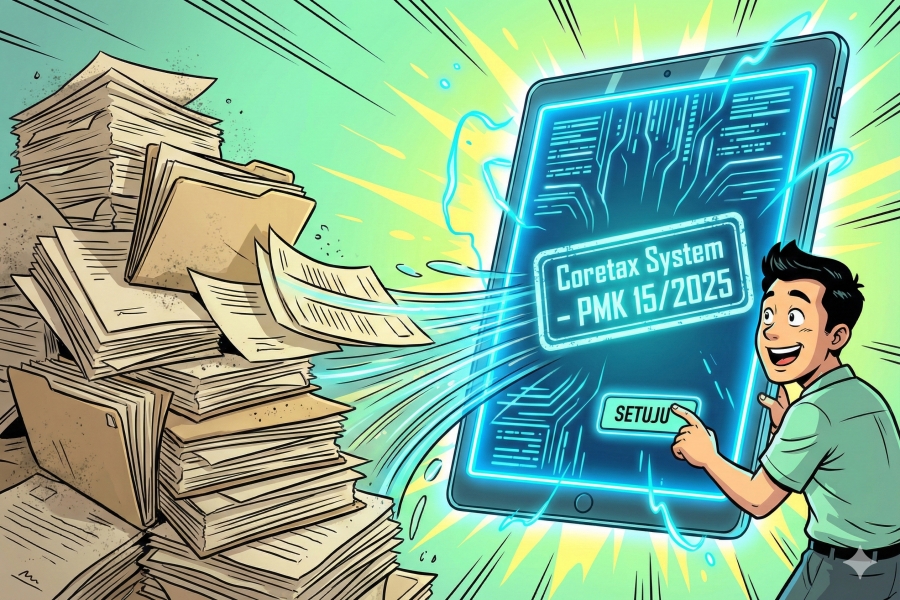
PMK Number 15 of 2025 formalizes online tax audit procedures, facilitating meetings via video conferencing. Taxpayers must return online meeting minutes within 5 working days, otherwise they are legally deemed to have refused signing. Document signing prioritizes electronic signatures, while retaining wet signatures as a contingency option during system failures. The delivery of the Notification of Audit Results (SPHP) and responses is now prioritized through electronic channels to ensure timing accuracy. This regulation reinforces the tax authority's power to access and seal electronic data to support digital compliance.
In Indonesia's modern tax landscape, 2025 marks a significant turning point with the enactment of Minister of Finance Regulation (PMK) Number 15 of 2025 concerning Tax Audits. This regulation not only simplifies previous rules but also provides a solid legal foundation for digital-based tax administration (Core Tax Administration System). One of the most revolutionary aspects of this regulation is the formalization and detailed arrangement of the Online Tax Audit mechanism.
This article will narratively dissect how tax audit procedures can now be conducted without physical face-to-face interaction, ranging from letter delivery, virtual meeting execution, to electronic document signing mechanisms, as well as their legal implications for Taxpayers.
Traditionally, tax audits have been synonymous with physical visits by Tax Auditors to business premises or the Taxpayer's presence at the tax office (KPP) carrying piles of physical documents. However, PMK 15 of 2025 changes this paradigm by recognizing the legal validity of digital interactions.
The government recognizes that efficiency and flexibility are key in modern tax administration. Therefore, this regulation authorizes the Director General of Taxes to carry out crucial audit stages through electronic media. This not only reduces the administrative burden and logistical costs for both parties but also accelerates the audit settlement process, which has strict deadlines.
The audit process begins with the delivery of the Notice of Audit (Surat Pemberitahuan Pemeriksaan). In this new era, initial communication plays a vital role. One of the most tangible changes is seen in the Meeting with Taxpayer mechanism.
Under the latest regulation, the initial explanation meeting—where the Auditor explains the reasons, objectives, as well as the rights and obligations of the Taxpayer—no longer has to be conducted in a tax office meeting room. This meeting can now be facilitated through video conferencing. This flexibility is explicitly regulated, providing an option for Taxpayers who may have geographical or operational constraints to remain cooperative without being physically present.
In the official invitation received by the Taxpayer, the Tax Auditor will list "Media and Link" as the meeting venue, replacing the physical office address. This is the formal signal that the Taxpayer is entering the realm of an online audit. Taxpayers are expected to prepare adequate technical infrastructure to ensure the meeting runs smoothly, as attendance and interaction in this meeting carry the same legal consequences as face-to-face meetings.
The biggest challenge in online audits lies not in the video conferencing technology itself, but in the post-meeting legal administration. In face-to-face meetings, the Minutes of Meeting (Berita Acara) are usually printed and signed on the spot immediately after the meeting concludes. However, in an online scheme, there is a time gap and document delivery procedure that is critical.
PMK 15 of 2025 prescribes specific procedures to mitigate future disputes. After the online meeting concludes, the Tax Auditor will draft the Minutes of Meeting and deliver them to the Taxpayer, usually through agreed electronic channels or the Coretax system. This is where the Taxpayer's critical compliance point lies.
Taxpayers have a maximum of 5 (five) working days from the time the Minutes are delivered to sign and return them to the Auditor. This timeline is binding. Failure to comply with this deadline has serious consequences: the Taxpayer is deemed to have refused to sign the Minutes of Meeting. In such a scenario, the Auditor will make a note of refusal in the minutes, and the audit process will proceed with the assumption that the Taxpayer did not exercise their right to formalize agreements or objections in the record. Therefore, time management and responsiveness become valuable assets for Taxpayers in online audits.
One of the most progressive aspects of PMK 15 of 2025 is the full recognition of Electronic Signatures. The regulation asserts that if an audit is conducted online, the signing of documents requiring the approval of both parties—such as the Minutes of Final Discussion (PAHP)—is to be done electronically.
This is a step forward that integrates digital identity systems into tax procedural law. Electronic signatures ensure document integrity and prevent non-repudiation. However, the regulators also realize that technology is not immune to failure.
So, what happens if the system experiences downtime or technical issues prevent electronic signing? The PMK provides a clear fallback procedure. In such technical force majeure conditions, signing reverts to the conventional method using a wet signature.
However, there is a unique and strict hierarchy in this manual procedure: the signing must be done first by the Taxpayer, and only then signed by the Tax Auditor Team. This provision is designed to ensure that the document held by the tax authority is one whose validity has been confirmed by the Taxpayer before being ratified by the state.
Although PMK Number 15 of 2025 does not provide a single lexical definition of "Electronic Signature" in the General Provisions Chapter (Article 1), this regulation positions the electronic signature as the primary validation instrument within the online audit ecosystem.
Within the legal construction of this PMK, an Electronic Signature is understood as a document authentication mechanism carried out within the Core Tax Administration System (Coretax) environment. This is closely related to the definition of "Electronic Data" in Article 1 number 32, which includes letters, signs, numbers, access codes, symbols, or perforations. This means that authorization performed by the Taxpayer through the system—whether in the form of an approval click, access code/token input, or digital certificate—is recognized as a valid signature.
Operationally, Article 27 paragraph (4) asserts that in online audits, electronic signatures are mandatory, not merely optional, for documents involving both parties (the Auditor and the Taxpayer). This shifts the nature of a signature from a mere ink stroke to a digital proof of consent that is binding under administrative law, ensuring that documents such as Minutes of Meeting or Discussion Minutes cannot be repudiated by the parties involved.
The heart of audit disputes often stems from the delivery of the Notification of Audit Results (SPHP). This document contains fiscal correction findings that will form the basis of the tax assessment. PMK 15 of 2025 provides specific exceptions regarding the delivery method of this crucial document.
While general documents can be sent via courier services, the delivery of the SPHP and the Written Response to the SPHP is prioritized through three main channels: electronically (via the Coretax system), directly, or via facsimile. The use of electronic channels provides an accurate timestamp, which is vital given that Taxpayers have limited time to respond to the SPHP.
If a Taxpayer chooses to respond electronically, the system will record the submission time precisely, saving the Taxpayer from disputes over response deadlines. Conversely, failure to respond to the SPHP within the specified time (whether online or offline) will result in the Taxpayer being deemed to have agreed to all auditor corrections, a condition every taxpayer certainly wishes to avoid.
Although the "online" concept emphasizes remote communication, the aspect of field audits has also undergone modernization. Tax Auditors now have reinforced authority to access and download Electronic Data.
If a Taxpayer uses a server-based or cloud-based accounting system, and the Auditor requires access, the Taxpayer is obliged to provide technical assistance. This could be in the form of providing IT personnel or specific hardware to ensure data is accessible.
Furthermore, the concept of Sealing (Penyegelan) has also adapted. The object of sealing is no longer limited to physical warehouses or filing cabinets but includes data storage media and access to electronically managed data. Auditors can seal access to ERP systems or data servers to secure digital evidence. Tampering with a "virtual seal" or manipulating sealed data carries criminal consequences just as severe as breaking a physical paper seal.
PMK Number 15 of 2025 is not merely a change in procedural rules, but a legal adaptation to digital business realities. For Taxpayers, online audits offer convenience and efficiency but demand a higher level of administrative discipline. Delays in responding to digital notifications, failure to sign electronic documents on time, or lack of data infrastructure readiness can lead to material losses in audit outcomes.
Tax professionals and business owners must immediately adapt to this "new normal." Ensuring contact details (email/phone numbers) in the DGT system are always up-to-date, understanding electronic signature procedures, and monitoring system notifications regularly are fundamental risk mitigation steps in facing tax audits in this digital era.
Article 1 number 32, Article 11 paragraph (3) letter b, Article 11 paragraph (5), Article 11 paragraph (6), Article 11 paragraphs (7) and (8), Article 27 paragraph (2), Article 27 paragraph (4), Article 27 paragraph (5), Article 7 paragraph (4) letter b, Article 14 paragraph (1) and Appendix Letter I Number 24 PMK Number 15 of 2025.













 tpc.consulting
  tpc.consulting
  info@taxindo.co.id