Economic Target Revision and Fiscal Reform: Early Signals from Prabowo’s Administration
Taxindo Prime Consulting
Wednesday, September 17, 2025 | 13:21 WIB
Optimized with Google Chrome
The new administration under President Prabowo Subianto has begun to outline its strategic direction in the economic sector. A series of policies and official statements have sent strong signals about the country’s fiscal and monetary trajectory, including the revision of growth targets, certainty over tax incentives, and plans to establish a State Revenue Agency.
President Prabowo Subianto’s government is taking strategic measures to respond to economic challenges, beginning with a revision of the 2025 economic growth target to 5.3%, considered to be more realistic. To support this target, the government confirmed the extension of tax incentives for Micro, Small, and Medium Enterprises (MSMEs)—a policy designed to provide legal certainty and encourage local business growth. On another front, the government is preparing to launch an economic stimulus package aimed at addressing rising layoffs, though its effectiveness will largely depend on the speed of implementation.
The administration is also prioritizing fiscal reform, with plans to establish a State Revenue Agency, a move welcomed by Finance Minister Purbaya Yudhi Sadewa. The agency is expected to optimize state revenues and improve the efficiency of the taxation system.
In addition, the government is reviewing other key policies, including certainty over tobacco excise rates for 2026. This decision remains under study and will take into account multiple factors such as state revenue needs, industry sustainability, and public health considerations, in order to provide clarity for stakeholders in the tobacco sector.
These policy measures carry significant implications for the government’s broader economic strategy. The revision of growth targets reflects a more cautious and realistic approach, while the extension of MSME tax incentives and the plan to establish a State Revenue Agency highlight the administration’s commitment to supporting the real sector and strengthening fiscal efficiency. The success of the economic stimulus rollout and tobacco excise policy will be crucial in safeguarding future stability and growth.
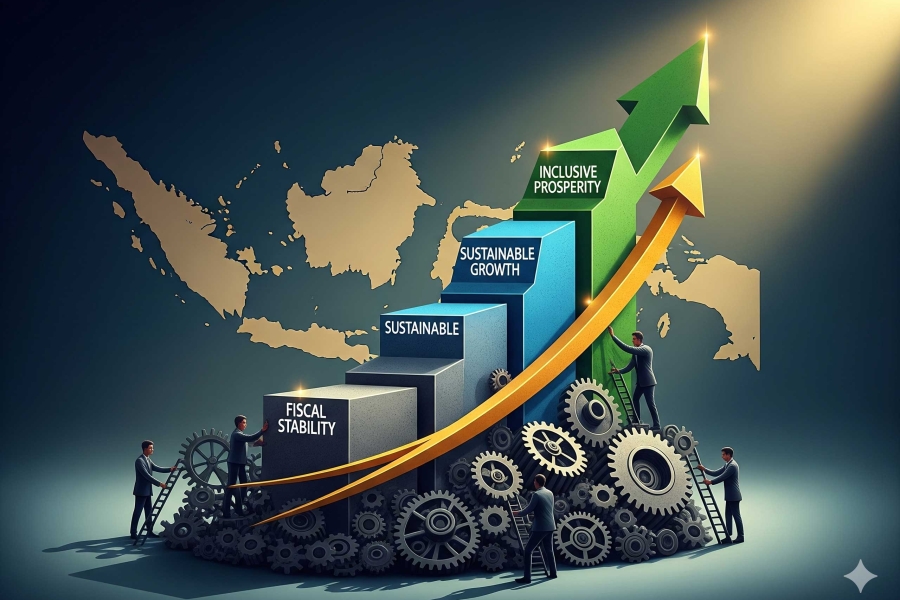
This dynamic reflects the ongoing policy transition under new leadership. The government is working to balance realistic targets with proactive measures to stimulate the economy and protect the real sector. Certainty in tax incentives, the effectiveness of stimulus programs, and bureaucratic reforms will be key pillars for the administration in achieving sustainable and inclusive economic growth.



















 tpc.consulting
  tpc.consulting
  info@taxindo.co.id