


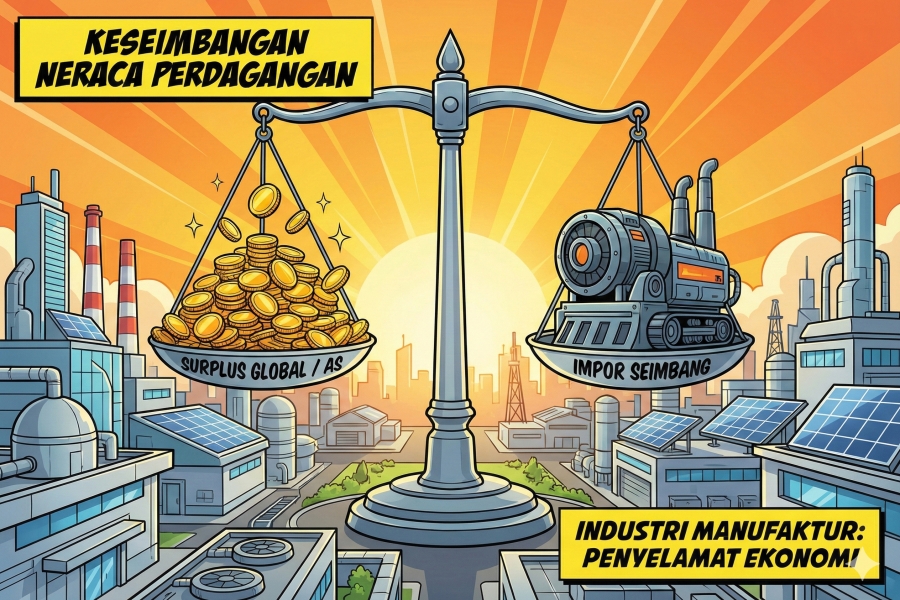
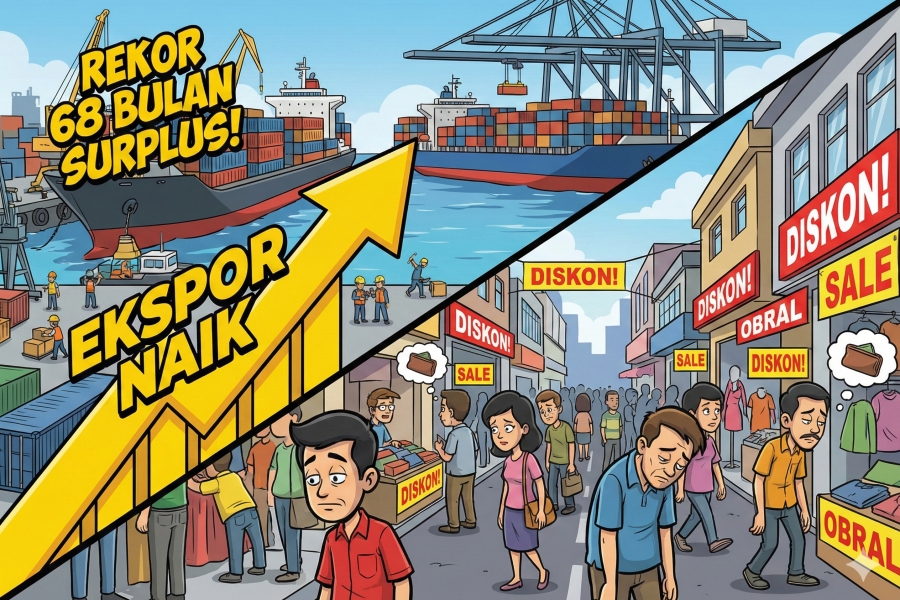
Indonesia's trade balance throughout 2025 showed a sharp contradiction where the United States emerged as a foreign exchange hero contributing a surplus of US$21.12 billion, while China burdened the economy with a deep deficit reaching US$22.17 billion. The Central Statistics Agency (BPS) revealed that the flow of imported goods from the Panda Country surged drastically, controlling 41.60% of the non-oil and gas market share, making Indonesia increasingly dependent on that country's supply chain. Despite the heavy import pressure, the total national trade balance still managed to post a surplus of US$41.05 billion thanks to solid manufacturing export performance to the global market. This high dependence on imported raw materials has prompted the government to immediately execute a massive strategy to strengthen the domestic industrial structure.
President Prabowo Subianto officially announced the implementation of 18 priority downstreaming projects in 2026 with a fantastic investment value reaching Rp618 trillion to break dependence on foreign parties. These strategic projects include the construction of aluminum smelters, oil refineries, and palm oil derivative industries projected to absorb 276,800 quality workers for the community. The Head of State emphasized that Indonesia will no longer beg for investment but will build economic independence by processing natural resources domestically through independent funding schemes like Danantara. Along with the push for industrial independence, the government is also tightening the reins on state revenue through stricter tax schemes in the natural resources sector.
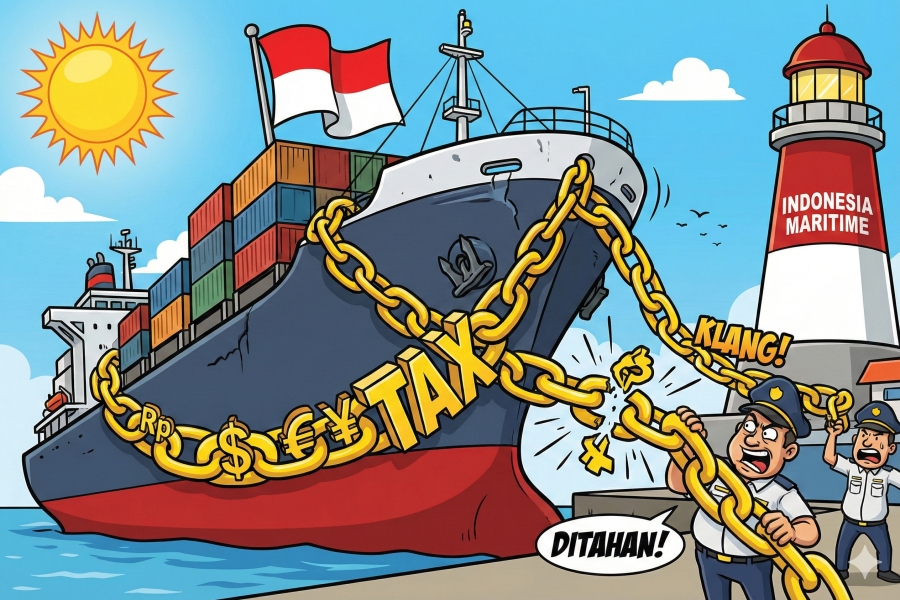
The Directorate General of Taxes (DJP) plans to make tax debt settlement an absolute requirement for mining companies wishing to submit their Work Plan and Budget (RKAB) to secure state revenue targets. Meanwhile, the Riau Provincial Government is eyeing a potential local revenue of up to Rp4 trillion per year by applying a surface water tax specifically for giant palm oil plantation corporations. This firm step aims to discipline large entrepreneurs who have been difficult to tax and ensure that natural resource exploitation contributes maximally to the regional treasury.
These series of strategic policies provide a strong signal that business actors in the mining and plantation sectors must immediately improve tax compliance and prepare to enter the downstream industrial ecosystem. Investors can take advantage of great opportunities in the 18 new projects offered by the government, while the wider community will benefit from the creation of massive jobs and stronger regional revenue for development.
Indonesia is now moving towards a new era of economic transformation that reduces import dependence through aggressive downstreaming and enforcing tax discipline on natural resource giants. Stakeholders should immediately align their business strategies with this national agenda to gain maximum benefits from the momentum of independent economic growth.












 tpc.consulting
  tpc.consulting
  info@taxindo.co.id