




Sumatra's infrastructure has fully recovered post-disaster alongside a surge in domestic investment realization hitting over a quadrillion rupiah in 2025. The government is accelerating the construction of thousands of Red and White Cooperatives as a new engine for the people's economy. However, youth unemployment remains the biggest economic risk overshadowing Indonesia in the next two years.
The Ministry of Public Works (PU) has successfully restored all main logistics routes in Sumatra regions that were paralyzed by natural disasters. Minister of Public Works Dody Hanggodo ensured that national road and bridge connectivity in Aceh, North Sumatra, and West Sumatra has now been reconnected to guarantee the smooth distribution of food and energy. Thousands of heavy equipment units were deployed massively to open access to remote villages while preparing decent temporary housing for refugees. This vital infrastructure recovery serves as crucial capital for the government to accelerate economic equalization programs deep into rural levels.
The government is now rushing the construction of 26,000 Red and White Village Cooperative units as the spearhead of the people's economic transformation across the country. Coordinating Minister for Food Affairs Zulkifli Hasan emphasized that tens of thousands of land spots have been prepared to change the face of cooperatives into productive modern business entities, not just savings and loan associations. This strategic program involves thousands of professional business assistants to ensure cooperatives can manage retail sectors, logistics, and serve as off-takers for competitive local products. This economic vibrancy at the grassroots level aligns with the brilliant achievement of national investment realization which has just set a new record.
The Ministry of Investment reported that capital investment realization throughout 2025 successfully broke the fantastic figure of Rp1,931.2 trillion, exceeding the set target. This performance surge was dominated by the strength of domestic investors (PMDN), contributing over one quadrillion rupiah thanks to a conducive business climate stability. Minister Rosan Roeslani is highly optimistic that the presence of the Danantara Investment Management Agency will further boost capital inflows in strategic sectors such as health and downstreaming in 2026. Although capital flows are pouring in, the major challenge regarding labor absorption remains a serious homework assignment that must be resolved immediately.
The World Economic Forum (WEF) report places unemployment as the biggest economic risk ready to hit Indonesia within the next two years. Economic experts assess that the low quality of labor absorption and minimal productivity are the main root causes amidst the increasingly massive onslaught of artificial intelligence technology adoption. The government is urged to immediately shift policy focus from merely chasing macro growth figures towards creating quality, labor-intensive, and sustainable jobs.
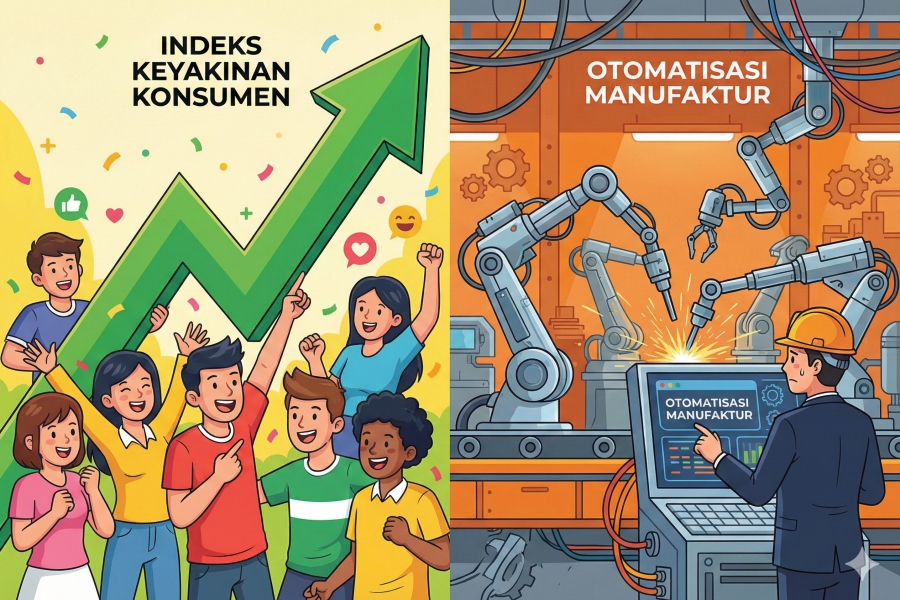
This contradictory situation between investment surges and employment risks demands business players be more adaptive in designing human resource development strategies. Investors need to be more diligent in targeting high-resilience labor-intensive sectors, while the public must continuously improve vocational and technological skills to avoid being crushed by fast-moving industrial automation.
The success of physical infrastructure development and high investment achievements will be less meaningful if they fail to create decent jobs for the younger generation. The government, private sector, and educational institutions must synergize to align training curricula with real industrial needs so that the demographic bonus does not turn into a future social disaster.


















 tpc.consulting
  tpc.consulting
  info@taxindo.co.id