


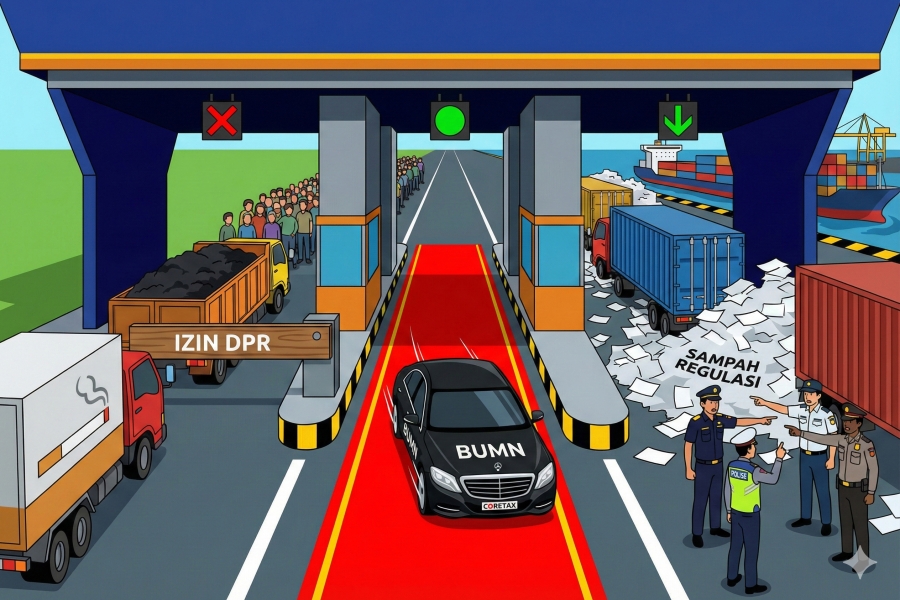
The government's plan to add cigarette excise layers and coal export duties is still hindered by Parliamentary approval and technical ministry rules. On the other hand, the Ministry of Finance is providing tax ease for State-Owned Enterprises (BUMN) restructuring through the latest Coretax rules. However, business players complain about sectoral egos of technical ministries hampering export-import logistics flows at the port.
Finance Minister Purbaya Yudhi Sadewa must hold back his ambition to immediately implement the new tobacco excise tariff layers in the near future. This strategic plan still requires a political "green light" from the House of Representatives (DPR) through a fairly lengthy consultation process. Meanwhile, the export duty policy for coal commodities also cannot be executed yet because the Ministry of Energy and Mineral Resources (ESDM) is still struggling with technical formulations for calorie grouping and reference prices. This delay in fiscal regulation contrasts with the government's rapid steps in improving the tax administration system for state-owned companies.
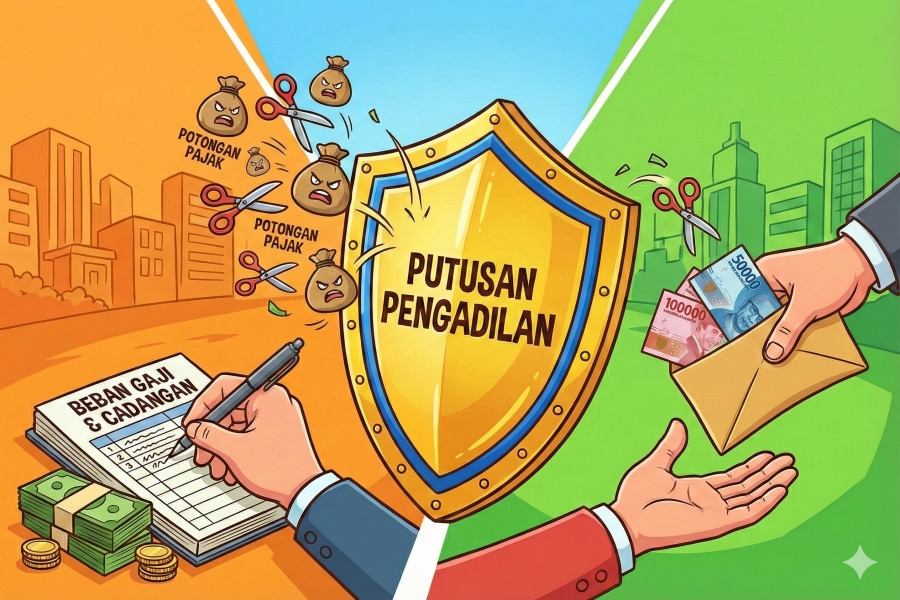
The Ministry of Finance has officially overhauled the core tax administration system or Coretax rules to smooth out corporate actions of State-Owned Enterprises (BUMN). Through Minister of Finance Regulation Number 1 of 2026, the government provides facilities for the use of book value and fiscal loss compensation for BUMNs undertaking restructuring or holding formation. This policy even applies retroactively to "whitewash" restructurings that have been running since the 2021 tax year, provided they have obtained permission from the Minister of BUMN. This administrative ease for BUMNs contrasts with the complicated licensing bureaucracy that still strangles private business players in international trade channels.
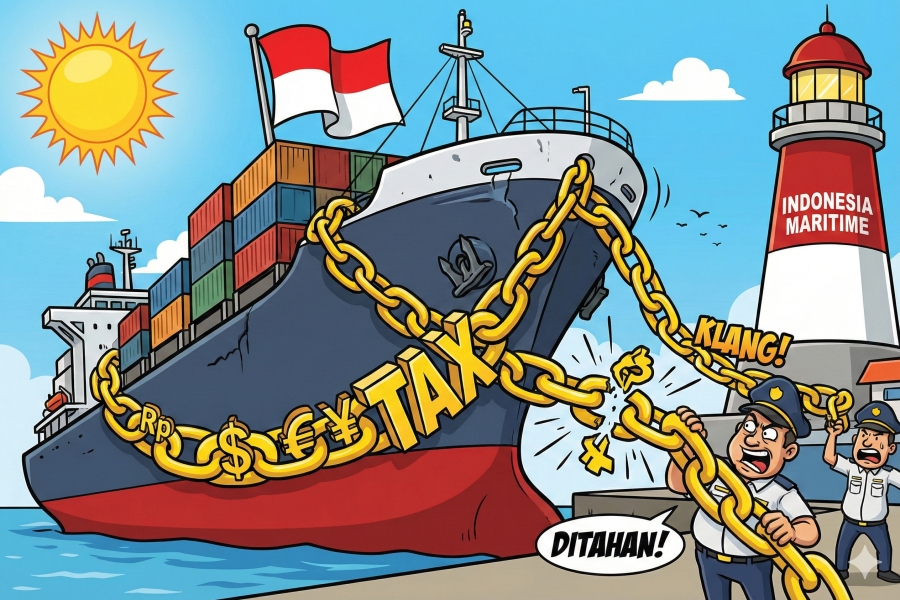
The Association of Priority Lane Companies (APJP) accused sectoral egos among technical ministries as the culprit for the slow national export-import logistics flow, not Customs performance. APJP Chairman Bob Azam likened the licensing flow to a river where regulatory trash from upstream piles up downstream where customs officers work. The government is now urging the implementation of Indonesia Single Risk Management (ISRM) so that a company's low-risk status at Customs can be automatically recognized by other ministries to cut waiting times at the port.
The uncertainty of excise and export duty regulations has resulted in cigarette and mining industry players delay business expansion until the rules of the game are clearly established. On the other hand, new tax facilities provide a breath of fresh air for BUMNs to conduct massive asset efficiency without being burdened by large fiscal costs. However, high logistics costs due to cross-ministry licensing barriers remain a serious threat to the competitiveness of Indonesian export products in the global market.
The government must immediately align the work rhythm between state institutions so that fiscal and trade policies do not hold each other hostage. Concrete synergy through an integrated system is absolutely necessary to guarantee business certainty and optimize state revenue from various potential sectors.











 tpc.consulting
  tpc.consulting
  info@taxindo.co.id