




The application of sectoral accounting principles became a crucial determinant in the Corporate Income Tax dispute for the 2017 Tax Year involving PT SRL. This case highlights the fundamental conflict between the tax authority's interpretation of timber volume from the Production Results Report (LHP) SIPUHH and the accounting treatment of forest products used to reduce the capitalized investment costs in Industrial Timber Plantation in Development (HTIDP). The obligation of fiscal income recognition must be supported by sufficient transaction evidence, not merely production data.
The Directorate General of Taxes (DJP) performed a positive correction on Business Revenue based on the premise that the entire timber volume from land clearing recorded in the LHP SIPUHH (148,619.29 m3) had been sold and constituted pure income under Article 4 paragraph (1) of the Income Tax Law (UU PPh). This DJP assumption was reinforced by the alleged lack of adequate detailed inventory of round logs in PT SRL's books. Consequently, the DJP also rejected the Negative Fiscal Adjustment proposed by PT SRL, arguing that the sale should be subject to non-final Corporate Income Tax.
PT SRL, on the other hand, strongly rebutted, stating that the LHP SIPUHH volume is only production or felling data, not sales data. PT SRL firmly argued, in accordance with the Regulation of the Minister of Forestry RI Number P.32/Menhut-II/2014 regarding Guidelines for Financial Reporting on the Utilization of Production Forests (Dolapkeu-PHP), that the costs incurred for land clearing (including the resulting timber) are investment costs that must be capitalized into the HTIDP account. Therefore, the sale of part of this timber is not pure income but an accounting mechanism to reduce the value of the capitalized HTIDP asset, thus requiring the Negative Fiscal Adjustment to be accepted.
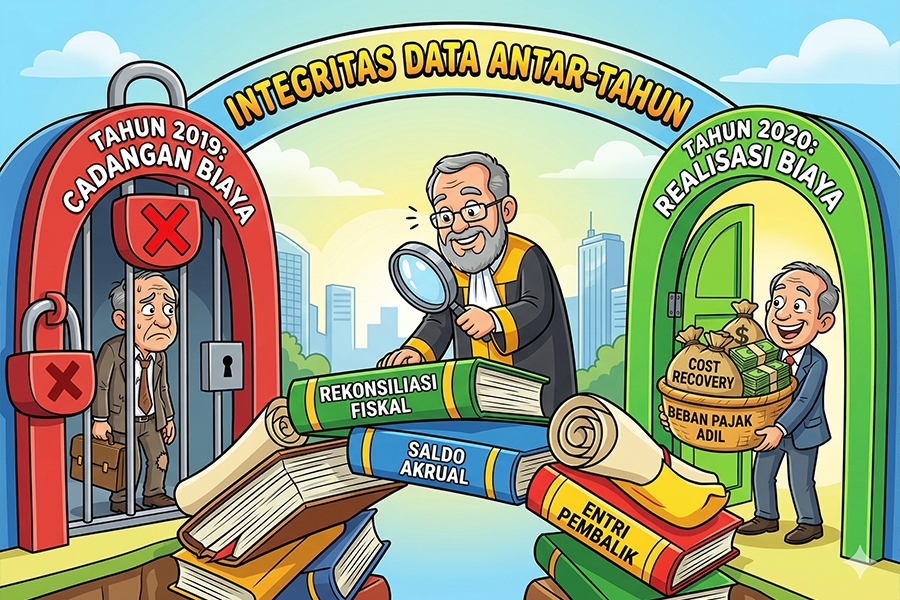
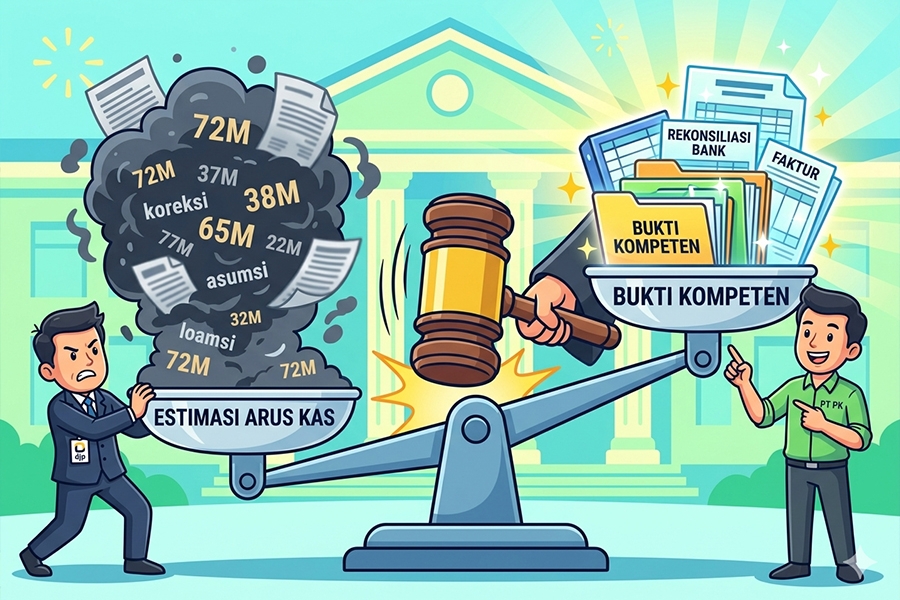
The Tax Court Judges decided to grant PT SRL's appeal in its entirety. In their legal consideration, the Panel emphasized that the DJP's correction was assumptive as it only relied on LHP SIPUHH data without being supported by adequate sales transaction evidence (cash flow, sales invoices, or proof of fund transfer) (Article 29 paragraph (2) of the General Provisions and Tax Procedures Law/UU KUP). The Panel accepted PT SRL's evidence, supported by the Audited Financial Statements with a Qualified Opinion (WDP), which substantially indicated that the HTIDP capitalization treatment complied with sectoral standards. Furthermore, the Panel criticized the DJP's inconsistency: the DJP recognized a positive correction (adding income or reducing costs) arising from the same capitalization issue, yet rejected the corresponding Negative Fiscal Adjustment. This inconsistency was deemed not to reflect justice and material truth.
This decision sets an important precedent emphasizing the need for DJP to respect and deeply understand the specific accounting standards for the forestry industry regulated by the Ministerial Regulation on Forestry. The implication of this decision for Taxpayers is the reinforcement of the obligation to maintain impeccable documentation, especially in reconciling operational data (forestry production volume) with commercial accounting data (inventory and capitalized assets). For the DJP, the ruling provides a lesson that operational data, such as LHP SIPUHH, cannot automatically be used as the sole basis for determining revenue recognition without being supported by valid financial transaction evidence. This victory materially confirms that the sale of land clearing results intended to reduce HTIDP investment costs must be treated consistently.
The PT SRL dispute reaffirms the principle that tax disputes must be decided based on material truth, and the substantiation of corrections must be strong and adequate. The obligation of Taxpayers in the forestry sector to capitalize land clearing costs into the HTIDP asset according to Dolapkeu-PHP is fully recognized. Consequently, the corrections to Business Revenue, COGS, and Negative Fiscal Adjustment that contradicted this consistent accounting treatment were entirely cancelled, returning the Taxpayer's payable Income Tax calculation to zero.
A Comprehensive Analysis and the Tax Court Decision on This Dispute Are Available Here













 tpc.consulting
  tpc.consulting
  info@taxindo.co.id