



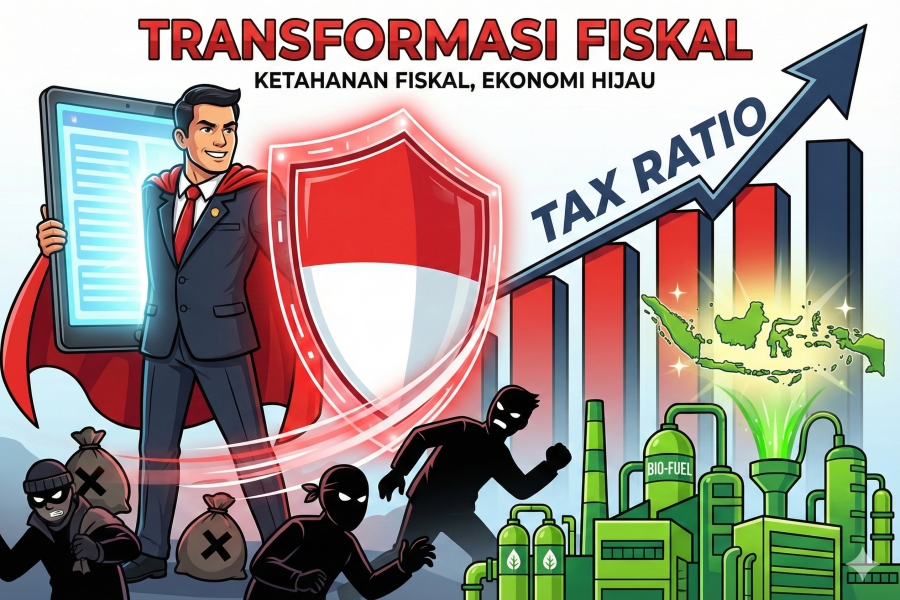
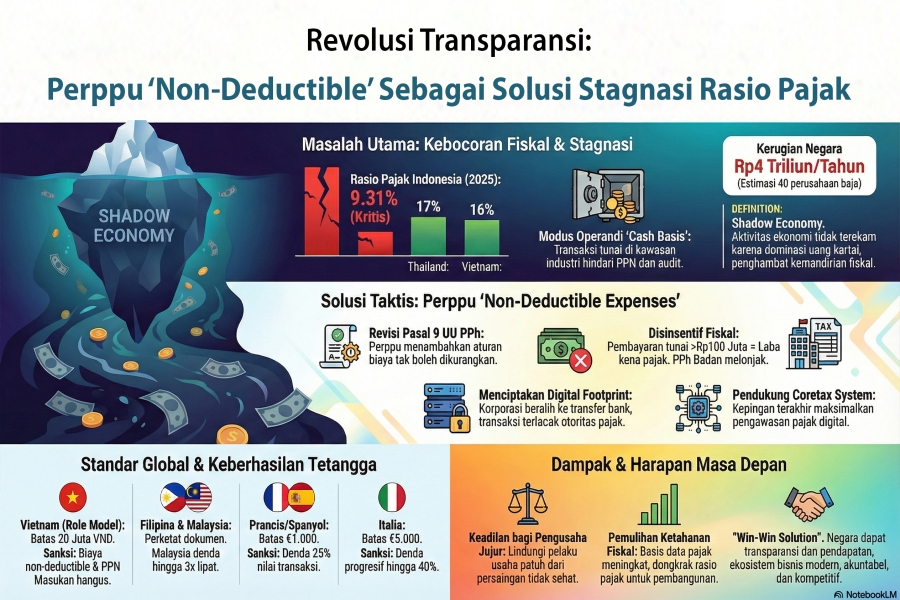
Finance Minister Purbaya Yudhi Sadewa faces a tough challenge in raising Indonesia's tax ratio, which plummeted to 9 percent in 2025 due to economic pressure. To reach the ideal 12 percent target and avoid reprimands from President Prabowo, Purbaya is preparing internal rotation strategies and promising feasts for employees. This extra effort is deemed crucial to break through the decades-long structural rigidity of taxation for the sake of the country's fiscal resilience.
Finance Minister Purbaya Yudhi Sadewa revealed his personal struggles regarding the arduous effort to raise Indonesia's tax ratio, admitting the task makes him feel physically "sick." Purbaya explained that this challenge is not new but the result of structural rigidity that has taken root for decades and is difficult to penetrate despite various policy attempts. The government is now targeting a moderate figure in the range of 11 to 12 percent, with 11.5 percent considered a safe threshold to guarantee the country's fiscal resilience amidst the drop in the tax ratio to the 9 percent level throughout 2025.
Although realizing that this increase cannot happen instantly, Purbaya remains optimistic about carrying out internal improvements, including employee rotation and organizational strengthening, to improve revenue performance in 2026. He emphasized that achieving this target demands extra hard work and strong policy consistency so that the tax administration system becomes more robust. This spirit of internal improvement becomes Purbaya's main capital to answer political pressure coming directly from the country's highest leadership regarding tax performance.
The pressure became more tangible when Purbaya admitted to frequently receiving a "red report card" from President Prabowo Subianto because tax revenue realization often missed the target. To erase this bad record and avoid future sarcasm from the president, he is determined to pursue a tax ratio increase to the 11-12 percent level this year through significant improvements in the tax collection rate. As an incentive, Purbaya even promised a large feast for all his employees if this heavy mission is successfully completed.
The stressful economic conditions of 2025 were indeed the culprit for the declining tax ratio, but Purbaya believes that the visible economic improvement will open up opportunities for higher state revenue from the tax and customs sectors. Aside from this "carrot and stick" strategy, a deep understanding of the root macroeconomic problems is also key in formulating long-term solutions.
Purbaya reiterated that the stagnation of Indonesia's tax ratio reflects structural rigidity that makes the figure seem to march in place for several decades. The decline in the tax ratio to 9 percent in 2025, down from 10.08 percent the previous year, is seen as narrowing the government's fiscal space in financing development. Therefore, the system reform being carried out is not just about chasing statistical figures, but a fundamental effort to improve the relationship between the state and society in the economic ecosystem.
The tax revenue performance in 2025, which only reached 87.6 percent of the State Budget (APBN) target, shows how urgent the need is for a comprehensive transformation rather than just surface-level polish. Understanding that the tax ratio is a reflection of the state's ability to extract benefits from economic activities, the government's next concrete steps will determine the fate of the state budget in the future.
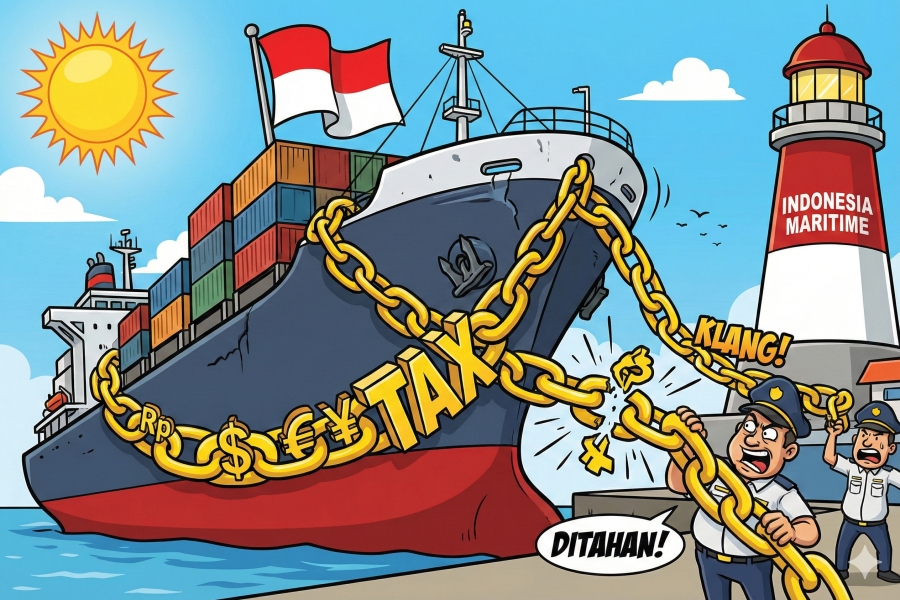
For business players and investors, the government's ambition to raise the tax ratio signals tighter compliance supervision and potential intensification of tax collection across various sectors. However, on the other hand, success in achieving healthy fiscal targets can create better macroeconomic stability, provide business climate certainty, and ensure the sustainability of infrastructure projects vital for private sector growth.
The mission to raise the tax ratio is a high-stakes gamble requiring strong synergy between government firmness and public compliance for a solid economic foundation. The government must ensure that tax extensification strategies are carried out fairly without burdening the middle class, while business players should start reviewing their tax management to remain compliant with the latest regulations.













 tpc.consulting
  tpc.consulting
  info@taxindo.co.id