


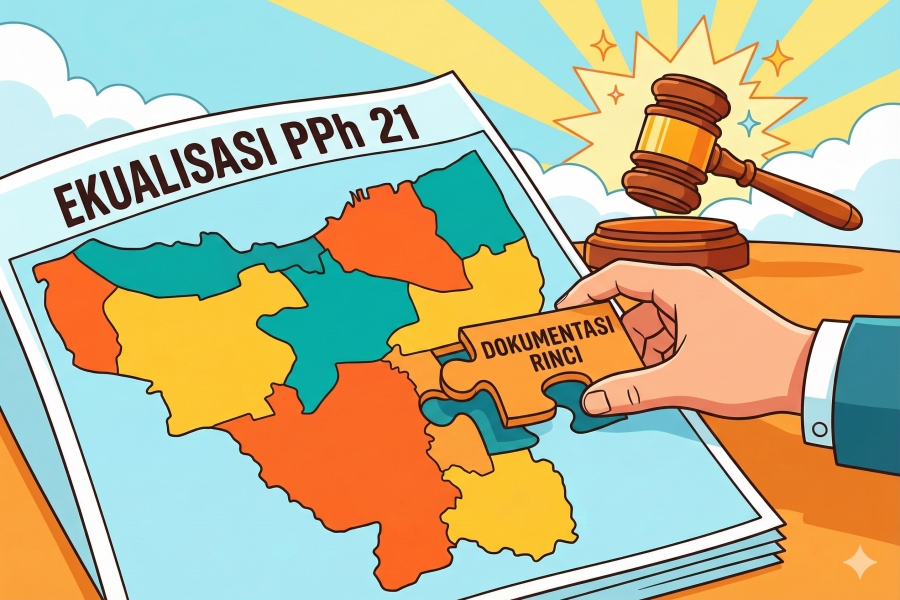
Tax Court Decision Number PUT-010449.10/2023/PP/M.XIIIB Tahun 2025 sets a vital precedent that highlights the necessity for the tax authority to provide material evidence when establishing a correction to the Income Tax Article 21 (PPh Pasal 21) Tax Base (DPP). This dispute centered on a PPh Article 21 correction for the March 2021 Tax Period against PT ATI, which was based on the equalization method—a comparison between the total salary/wage expense recorded in the income statement and the total gross income withheld and reported in the PPh Article 21 Periodic Tax Return (SPT Masa). The Directorate General of Taxes (DJP) discovered a significant positive variance and automatically assumed it constituted PPh Article 21 objects that had not been withheld, resulting in an initial correction of Rp. 8,778,859,103.00.
The core conflict in this dispute lies in the differing justifications for the equalization variance. The DJP employed the functional principle that every salary/wage expense recognized in the financial statements should constitute income for the recipient and thus be subject to PPh Article 21 withholding. Conversely, PT ATI strongly argued that the variance was primarily attributable to cost items that are statutorily not PPh Article 21 objects, such as Social Security contributions paid by the company (the employer's portion) or other types of in-kind benefits (natura) that had a different tax treatment during the disputed tax year (March 2021). PT ATI presented detailed evidence, including payroll registers, contribution payment proofs, and accounting explanations, to substantiate the non-taxable nature of these cost items.
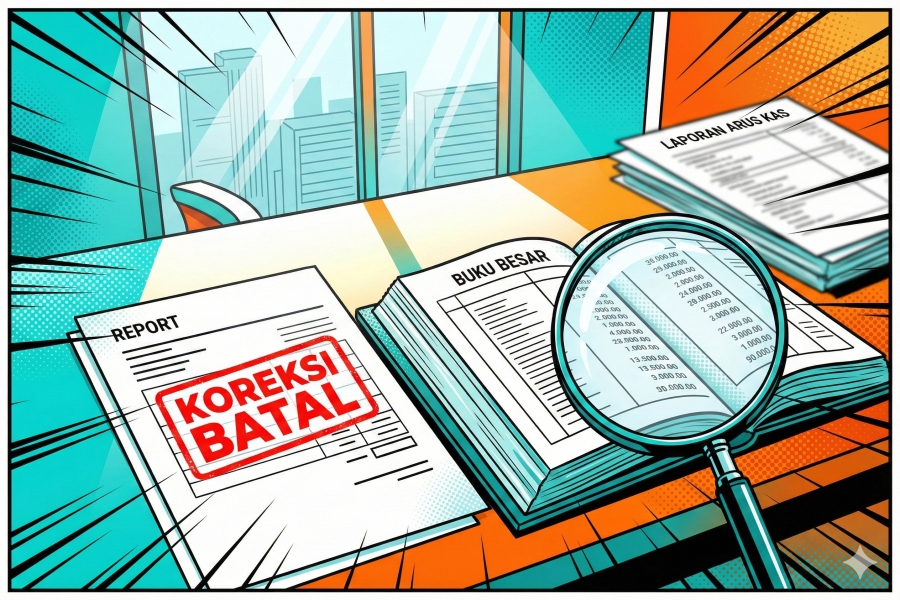
In its resolution, the Tax Court Panel demonstrated a stance prioritizing the principle of evidence. The Panel accepted the majority of the evidence and arguments presented by PT ATI. The decision explicitly annulled Rp. 7,908,069,279.00 of the correction proposed by the DJP because PT ATI successfully demonstrated that the disputed cost items did not constitute PPh Article 21 objects. Nevertheless, the Panel maintained the remaining correction of Rp. 870,789,824.00, indicating that for this residual amount, PT ATI failed to provide satisfactory proof.
The analysis of this ruling carries significant implications for tax practice, particularly in mitigating equalization-based disputes. The Tax Court's decision to partially grant the appeal reaffirms the principle that the determination of tax liability must be substantiated by material evidence, not merely by assumptive data differences. The key takeaway is that taxpayers must proactively conduct PPh Article 21 equalization checks and maintain exceptionally detailed documentation (Equalization Working Papers) to explain every variance, particularly those relating to social security contributions, in-kind benefits, and differences in accounting recognition. Strong documentation is the crucial defense against unsupported corrections.
A Comprehensive Analysis and the Tax Court Decision on This Dispute Are Available Here




















 tpc.consulting
  tpc.consulting
  info@taxindo.co.id