MSME Tax Extended Until 2029, But Tax Shortfall Expected to Widen
Taxindo Prime Consulting
Tuesday, September 16, 2025 | 17:04 WIB
Optimized with Google Chrome
Indonesia’s economy is in a challenging phase where every government policy plays a critical role in maintaining stability and driving growth. Public attention is currently focused on several key policies, from the extension of the final income tax scheme for MSMEs, concerns over a widening tax shortfall, to the burden of external debt and the effectiveness of economic stimulus packages.
The Indonesian government is taking proactive measures to respond to economic and fiscal dynamics. The President officially extended the 0.5% Final Income Tax (PPh Final) rate for Micro, Small, and Medium Enterprises (MSMEs) until 2029, a decision that provides legal certainty and is expected to boost growth in this vital sector. At the same time, the government has launched 17 economic stimulus packages aimed at spurring growth, although their effectiveness remains under scrutiny as some question their impact in the face of structural challenges.
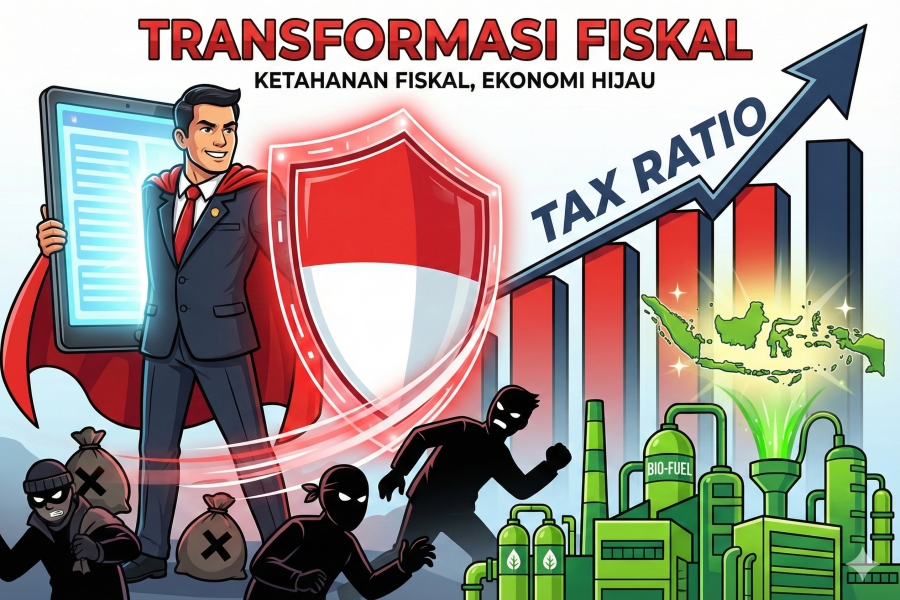
However, behind these moves lies growing concern about the country’s fiscal health. Analysts from CITA predict that the tax shortfall—unmet revenue targets—will widen, with realization expected to reach only around 90% of the State Budget (APBN) target. This concern is further compounded by Indonesia’s external debt, which has reached US$432.5 billion. Although the country’s debt service ratio fell to 16.63% in the second quarter of 2025, the figure still underscores the need for the government to secure new revenue sources to meet increasingly heavy repayment obligations.
Overall, the government is striving to strike a balance between providing incentives for the real sector and managing fiscal challenges. Policies such as the extension of the MSME tax are a positive signal, but long-term success will depend heavily on the government’s ability to address the widening tax shortfall, rising debt burdens, and ensure that stimulus measures are truly effective in revitalizing the economy.
These policies illustrate the government’s attempt to pursue an integrated strategy. The extension of the MSME final tax provides certainty for small businesses, supporting growth in the real sector. On the other hand, the looming tax shortfall and the weight of external debt highlight the serious fiscal risks the government faces. Economists argue that in addition to offering incentives, the state must develop innovative measures to strengthen its revenue base and ensure sustainability in public finances.
These dynamics underline the complexity of managing Indonesia’s fiscal and economic agenda. On one hand, the government has taken strategic, positive steps by granting tax certainty to MSMEs, demonstrating its commitment to real sector growth. On the other, it faces mounting challenges: a widening tax shortfall and significant external debt burdens. This situation demands prudent management of both revenue and expenditure to ensure fiscal sustainability.

















 tpc.consulting
  tpc.consulting
  info@taxindo.co.id