



A fierce battle unfolded at the green table of the Tax Court. It wasn't about a debt dispute, but rather the calculation of salaries for nine foreign employees at PT SCE, a garment company located in Klaten, Central Java.
This story began with a "magical" and burdensome tax correction that forced the company to pay underpaid Article 21 Income Tax amounting to Rp1,365,177,167.00 (including administrative sanctions).
For the December 2016 Tax Period, the Director General of Taxes (DJP) as the Respondent suspected "indications of irregularities in the salary amounts of foreign employees" at PT SCE.
The payroll system for these foreign workers was deemed disproportionate to local employee salaries, even lower than the salaries of foreign workers at similar companies in the Klaten region.
Citing "concrete data" and claiming the Appellant did not submit complete evidence or appear with an authorized representative, the DJP decided to use a special measurement tool, namely the Decree of the Director General of Taxes Number KEP-173/PJ./2002 concerning Guidelines for Foreign Employee Salary Standards.
Consequently, the DJP corrected the Tax Base (DPP) for the Appellant's Article 21 Income Tax from Rp55.25 Billion to Rp59.93 Billion.
PT SCE, as the Appellant, flatly rejected this correction. They argued:
During the trial process, PT SCE demonstrated good faith and made adjustments:
After studying all the evidence and testimonies, the Tax Court Panel of Judges concluded: the data submitted by the Appellant was convincing to the Panel.
The Panel of Judges stated that the DJP could not use KEP-173/PJ./2002 as the basis for correction, as the Taxpayer was able to prove the truth of its bookkeeping.
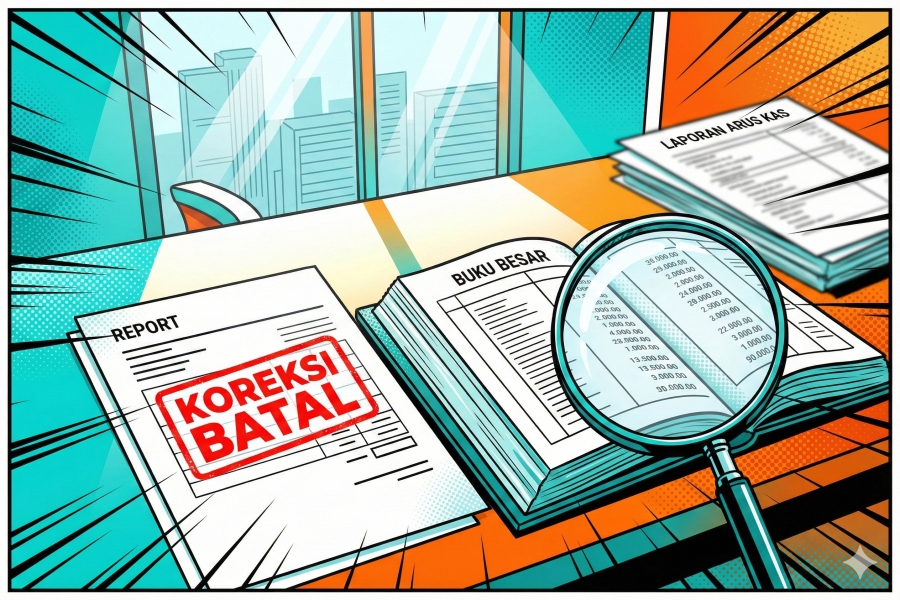
Final Decision: The Panel of Judges Partially Granted the Appellant's Appeal, with the final result being that PT SCE had to pay tax including sanctions amounting to Rp80,633,103, down from the previous Rp1,365,177,167.
The garment company indeed had to pay higher tax than their original calculation due to the PTKP correction, but the amount payable was far less than the DJP's initial assessment. This story serves as a reminder that in tax disputes, the taxpayer's greatest strength lies in detailed and valid proof presented in court.
Comprehensive Analysis and the Tax Court Decision on This Dispute are Available here.




















 tpc.consulting
  tpc.consulting
  info@taxindo.co.id