


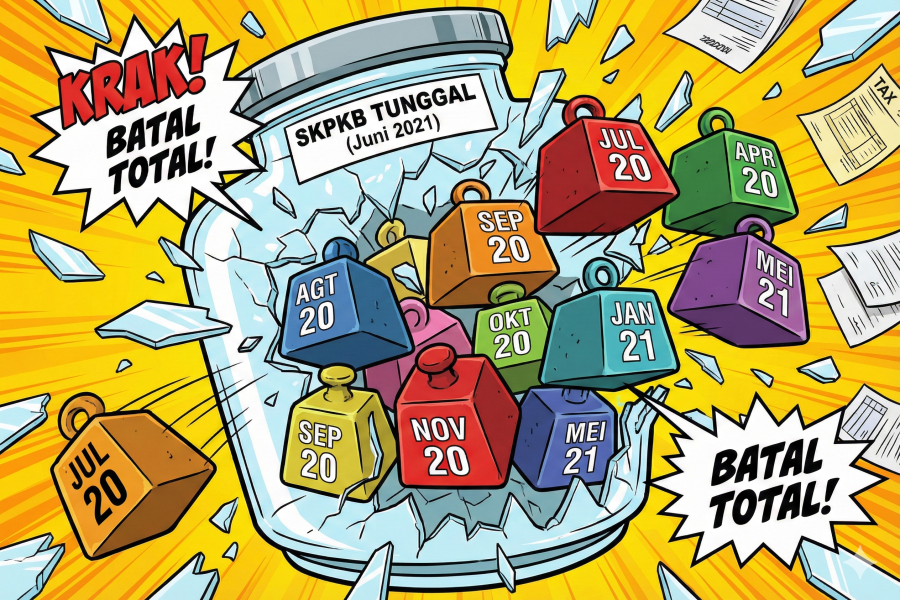
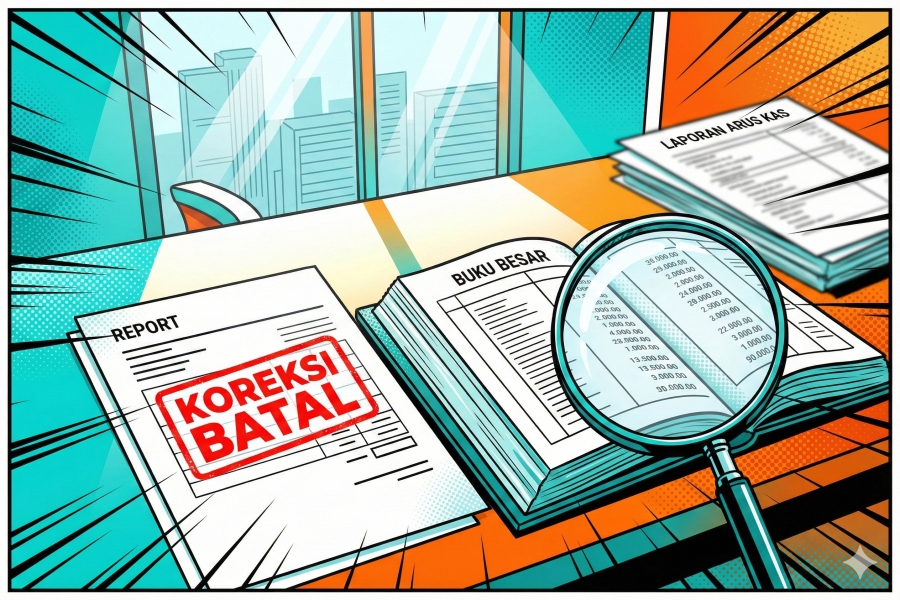
The issuance of the Underpaid Tax Assessment Letter (SKPKB) for Income Tax Article 23 (PPh Pasal 23) by the tax authority must strictly adhere to formal provisions as stipulated in the General Provisions and Tax Procedures Law (UU KUP) and relevant Minister of Finance Regulations. This Tax Court Decision explicitly nullified the entire PPh Pasal 23 correction of IDR 13,875,453,302 against PT LKJ, primarily due to a fundamental violation of the Tax Period principle. This decision emphasizes that formal administrative procedures are not mere formalities but a critical element determining the legality of a tax legal product.
The core conflict in this case stemmed from the audit findings by Directorate General of Taxes (DJP). The DJP discovered a discrepancy between the cost items expensed by PT LKJ and the PPh Pasal 23 objects reported through the Monthly Tax Return (SPT Masa), often known as a PPh Pasal 23 equalization dispute. The DJP concluded that this difference represented service fees subject to PPh Pasal 23 but not yet withheld. However, during the issuance of the tax assessment, the DJP committed a fatal flaw: all correction findings from 12 different Tax Periods (July 2020 to June 2021) were merged into a single SKPKB for the June 2021 Tax Period.
During the trial, PT LKJ strongly contested the validity of the SKPKB from a formal aspect. PT LKJ argued that Article 13 paragraph (1) of the UU KUP explicitly mandates that Tax Assessment Letters must be issued based on a Tax Period, Part of a Tax Year, or a Tax Year. The act of merging corrections from 12 different periods into one SKPKB clearly violated this procedural provision and contradicted the principle of legal certainty. This formal argument was reinforced by substantial counterarguments, where PT LKJ demonstrated that the majority of the corrected objects were reimbursements or costs that were still accrual in nature (not yet due for withholding).
The Tax Court Judges determined that the formal defect in the SKPKB issuance was a legal issue that must be resolved first and holds the legal power to annul the entire tax product. The Panel ruled that DJP’s action of merging Tax Periods was inconsistent with the spirit of self-assessment and formal tax provisions. This ruling effectively disregarded all the DJP's substantial arguments regarding the PPh Pasal 23 equalization. Given this finding of a formal defect, the Panel of Judges granted the entire appeal, rendering the tax correction and the Underpaid PPh zero (Nihil).
The analysis of this decision provides profound implications for tax litigation practice. This ruling sets a strong precedent that Taxpayers can prevail in disputes not only through substantial proof but also by enforcing the tax authority’s formal compliance. Litigation strategy must always include a careful review of the SKPKB issuance procedure, as the failure of the tax authority to comply with the issuance protocol can automatically invalidate the entire tax correction, regardless of the material truth of the dispute. This underscores that procedural fairness (formal due process) is a fundamental right of Taxpayers within the tax system.
A Comprehensive Analysis and the Tax Court Decision on This Dispute Are Available Here
















 tpc.consulting
  tpc.consulting
  info@taxindo.co.id