



In the landscape of Indonesian tax litigation, disputes arising from equalization (reconciliation) between salary costs in Commercial Financial Statements and the reporting of Article 21 Income Tax (PPh 21) Monthly Returns are a classical issue that frequently occurs. Often, tax examiners utilize the equalization technique as a primary method to detect potential under-reporting of employee income. However, This Tax Court Decision confirms that mere equalization assumptions without support from material substance tracing are insufficient to maintain a fiscal correction. This case involves PT LKJ, which filed an appeal against the underpayment tax assessment for the Tax Period of January to June 2021.
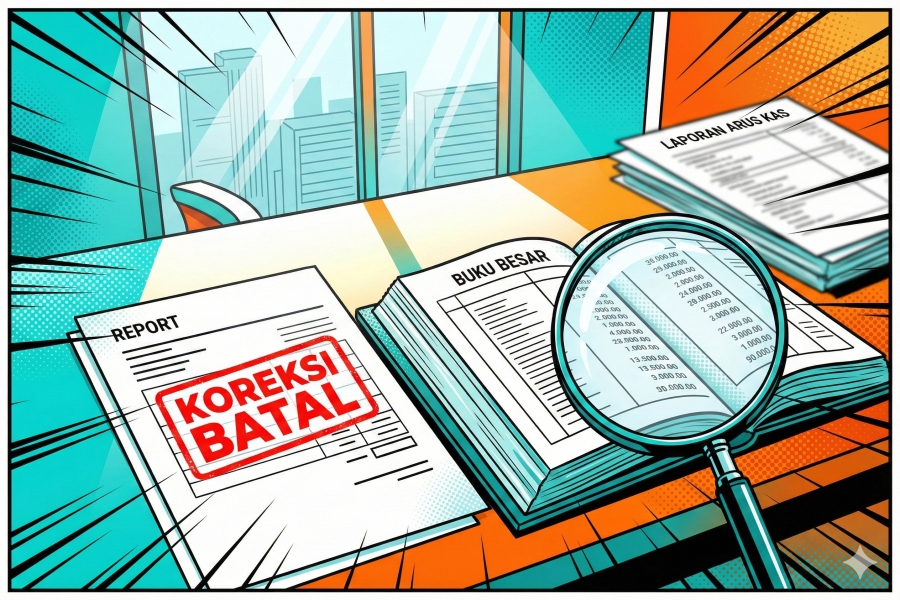
The core conflict began when the Directorate General of Taxes (DJP) performed a positive correction on the Tax Base (DPP) of Article 21 Income Tax. The DJP found a numerical discrepancy between salary expenses recorded in the company's bookkeeping (General Ledger) and the accumulated gross income reported in the Monthly Tax Returns. DJP assumed that this difference represented salary payments that had not yet been taxed. On the other hand, PT LKJ insisted that all tax obligations had been fulfilled. PT LKJ argued that the arising difference was caused by non-taxable object variables as well as timing differences between the accrual method in accounting and the payment realization method in withholding tax obligations.
The resolution of this dispute was achieved at the Tax Court, where the Panel of Judges conducted an in-depth examination of the submitted evidence. The Judges did not merely look at aggregate figures but traced the validity of supporting documents such as payroll summaries, salary slips, and bank account statements. In their legal considerations, the Judges emphasized the principle of "Material Truth" over mere mathematical formalities. The Judges assessed that PT LKJ successfully proved convincingly that the equalization difference figures were not payable Article 21 Income Tax objects, but rather other cost components that could be accounted for legally and fiscally. DJP's failure to refute such specific evidence rendered the proposed correction legally groundless.
The implications of this decision are highly significant for corporate taxpayers in Indonesia. This decision serves as an important precedent that the equalization technique performed by the tax authorities is not an absolute price that cannot be disputed. Taxpayers have a great opportunity to cancel such corrections provided they possess tidy administrative bookkeeping and are capable of presenting consistent "cash flow tests" and "document flow tests." The Taxpayer's victory in this case underscores the necessity for precision in separating labor cost accounts within the Chart of Accounts to facilitate the proof process in the future.
In conclusion, the Tax Court granted the appeal of PT LKJ in its entirety and determined the tax still to be paid as nil. This decision teaches that in Article 21 Income Tax disputes, data transparency and the ability to explain accounting anomalies are the main keys to victory. For tax practitioners, this case serves as a reminder to always be ready with comprehensive monthly reconciliation working papers to anticipate similar potential disputes in the future.
A Comprehensive Analysis and the Tax Court Decision on This Dispute Are Available Here

















 tpc.consulting
  tpc.consulting
  info@taxindo.co.id