


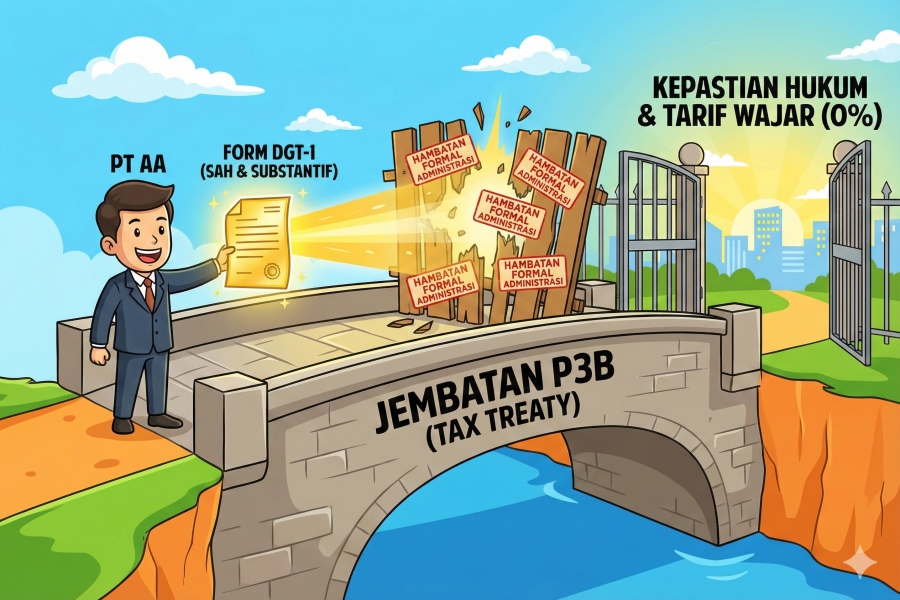
The implementation of Income Tax Article 26 (PPh Article 26) regulations often leads to disputes, particularly when involving the utilization of Double Taxation Avoidance Agreements (DTAA) or Tax Treaties through the submission of a Certificate of Domicile (SKD) or DGT-1 Form. The case of PT AA in this Tax Court Decision is a crucial case study highlighting the conflict between formal administrative tax requirements and the substantive right of the Taxpayer to avoid double taxation. The core of this dispute centered on the correction of the Tax Base (DPP) for PPh Article 26 for the October 2018 tax period, carried out by the Directorate General of Taxes (DJP) due to cost equalization and the DJP's rejection of the DGT Form submitted by PT AA.
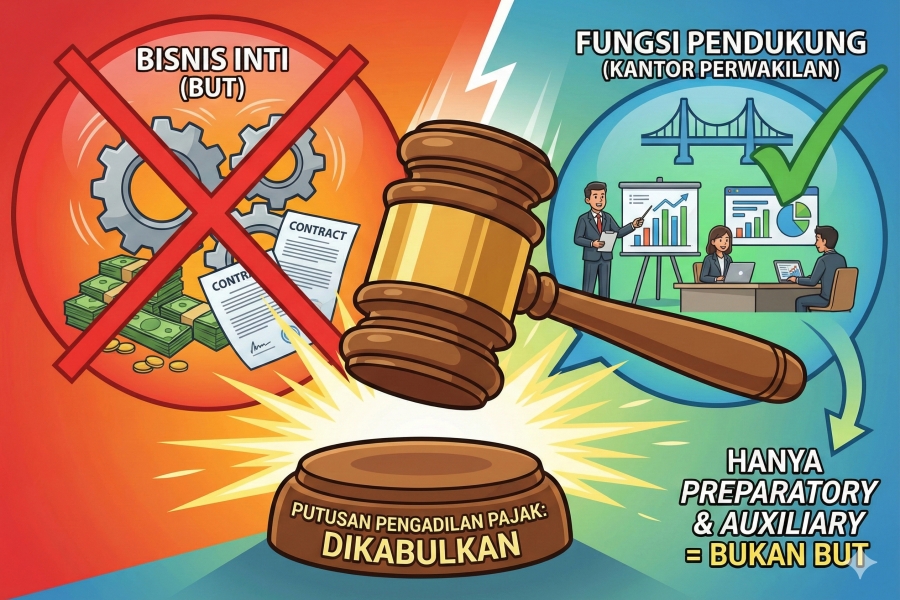
The DJP corrected PPh Article 26 on service fees recorded in the books of PT AA paid to a Foreign Tax Subject (SPLN), asserting that PT AA failed to withhold, deposit, and report the PPh Article 26, or failed to present valid DTAA documents. The DJP insisted that the DGT-1 Form submitted by PT AA should be rejected due to a failure to meet formal requirements, namely, that it was submitted by an employee and not by an authorized management or proxy. Consequently, the DJP applied the domestic rate of 20% as per Article 26 of the Income Tax Law (UU PPh), disregarding the DTAA benefits. In contrast, PT AA argued that the rejection was formalistic and ignored the substance of the DGT-1 Form which had been legalized by the tax authority of the partner country. PT AA asserted that service income without a Permanent Establishment (PE) in Indonesia, the taxing right belongs to the country of residence (0% rate) based on the Business Profits Article of the DTAA.
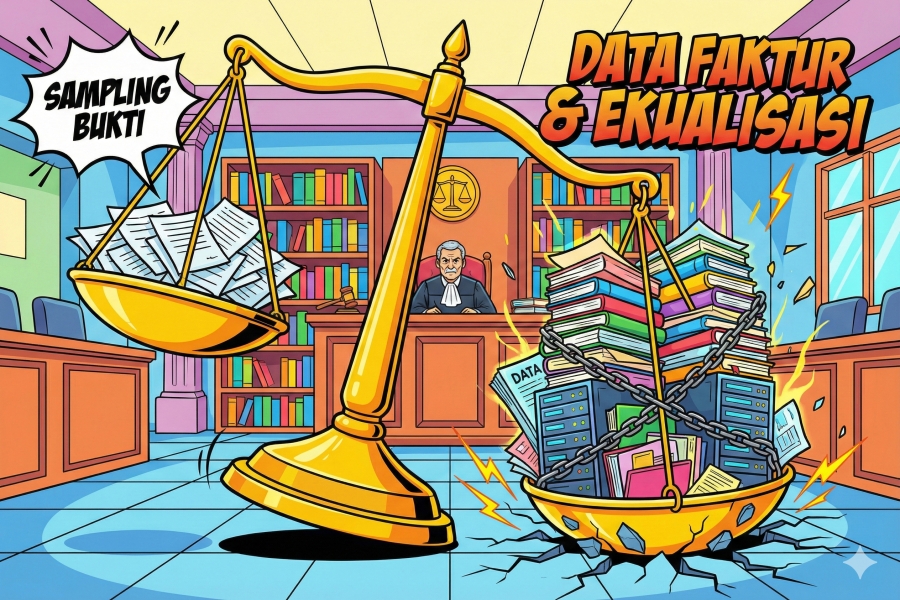
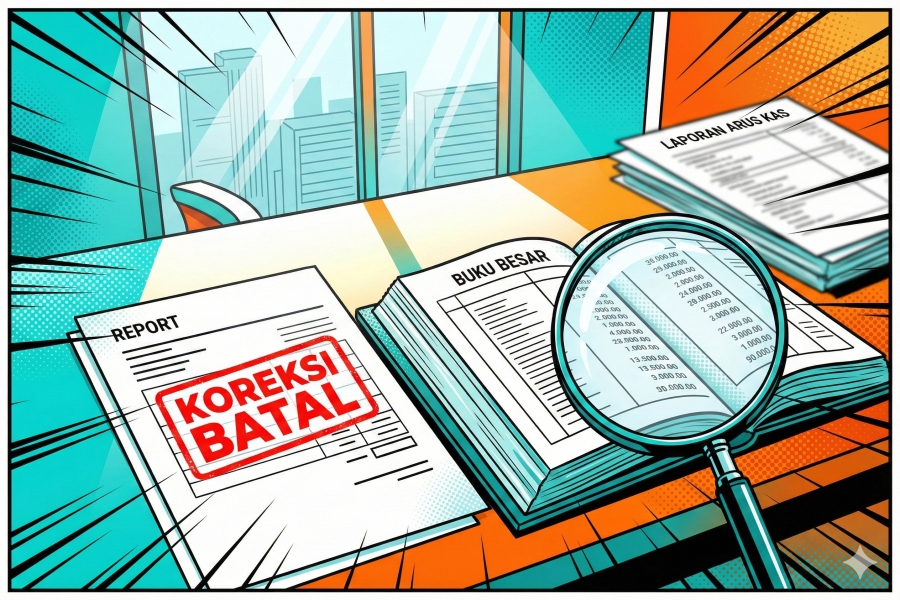
The Tax Court Panel provided an important legal affirmation. The Panel decided to cancel the PPh Article 26 correction amounting to Rp1,218,651,258.00 related to service fees supported by a valid DGT-1 Form. The Panel's legal consideration explicitly stated that DJP's rejection reasons, which were solely formal (i.e., submission by an employee), cannot invalidate PT AA's substantive right to apply the DTAA. As long as the DGT-1 Form is substantially complete and has been legalized, the DTAA requirements are deemed met. Furthermore, the Panel also canceled the correction on the Additional DPP amounting to Rp486,463,666.00, because the DJP failed to convincingly prove that the additional corrected amount was indeed an object of PPh Article 26 that had not been withheld. Corrections were only maintained for transactions not supported by any DGT or other adequate documentation.
This decision has significant implications, placing a strong emphasis on the principle of good faith and legal substance contained within DTAAs, overriding rigid administrative barriers. For Taxpayers, this decision offers reassurance, confirming that as long as substantial evidence (a valid DGT Form) can be presented at the litigation level, the right to DTAA benefits can be maintained. This decision sets an important precedent that encourages the DJP to focus on the substance of DGT validity, rather than merely on the submission procedure. The PT AA case demonstrates that PPh Article 26 disputes related to DTAAs will be determined by the quality of the DGT Form evidence and the ability of the tax authority to prove the corrected object, resulting in a Partial Grant decision that substantially reduced PT AA's original tax assessment.
A Comprehensive Analysis and the Tax Court Decision on This Dispute Are Available Here
















 tpc.consulting
  tpc.consulting
  info@taxindo.co.id