


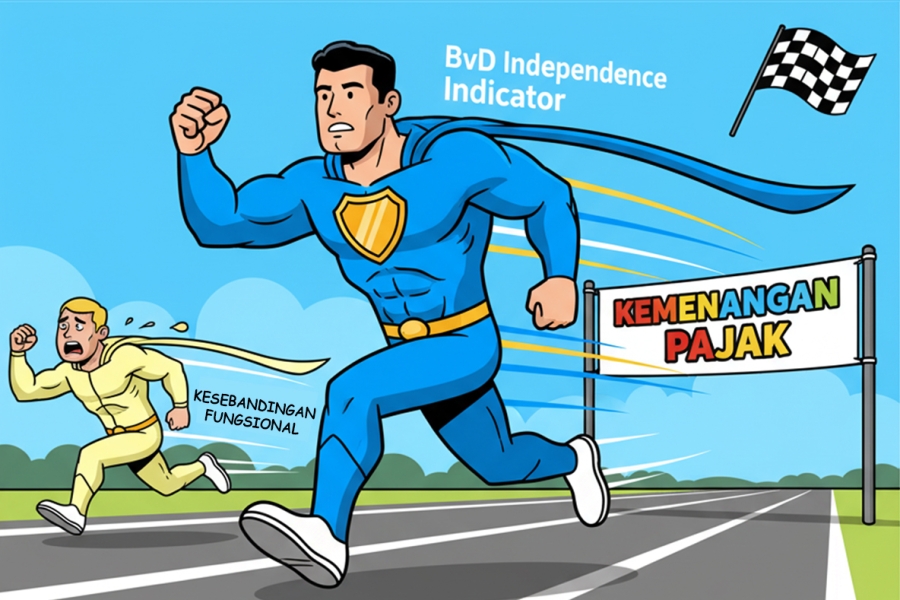
The Tax Court's decision in the dispute involving PT MII underscores the crucial importance of applying formal criteria in the selection of comparable companies for transfer pricing analysis. The panel of judges ultimately validated the correction made by the Directorate General of Taxes (DGT), which was based on the use of the BvD Independence Indicator filter, while simultaneously rejecting all of the taxpayer's arguments that focused on the substance of functional comparability.
This case originated from a DGT correction to the revenue of PT MII (the Appellant) for the 2014 Fiscal Year, arising from export sales transactions to an affiliated party. The core of the dispute was a clash of methodologies in applying the Arm's Length Principle. The DGT rejected all comparable companies proposed by the taxpayer because its search process did not utilize the BvD Independence Indicator filter with the criteria A, A+, or A-, which was deemed essential to prove independence. Conversely, the taxpayer argued that this filter was not a mandatory requirement under the Income Tax Law and instead prioritized a functional comparability analysis, evidenced by a low operating expenses to sales (Opex/Sales) ratio, which was similar to its profile as a contract manufacturer.
In its considerations, the panel of judges took a firm stance by fully supporting the procedural approach implemented by the DGT. The use of a strict independence filter from a commercial database was considered the most reliable method to fulfil the spirit of Article 18, paragraph (4) of the Income Tax Law. The judges found the taxpayer's argument, which focused solely on a single financial ratio, to be too narrow and insufficient to delegitimize the comparable selected by the DGT, as it disregarded other comparability factors mandated by the OECD Guidelines.
This ruling, which denied the appeal, has significant implications, affirming that in transfer pricing disputes in Indonesia, formal and procedural proof of independence carries more weight than mere functional comparability arguments. This decision sets an important precedent for taxpayers, indicating that robust documentation must begin with the most conservative and procedurally defensible comparable search methodology to mitigate the risk of corrections.
In conclusion, this case serves as a valuable lesson that a defence strategy in a transfer pricing dispute must be built on a solid methodological foundation. Taxpayers can no longer rely solely on functional analysis but must be able to prove that every procedural step in the selection of comparable, especially the independence screening, has been meticulously followed in line with the expectations of the tax authority and the interpretation of the judiciary.
A Comprehensive Analysis and the Tax Court Decision on This Dispute Are Available Here.




















 tpc.consulting
  tpc.consulting
  info@taxindo.co.id