This drama centered on a Notice of Tax Underpayment Assessment (SKPKB) for Article 23 Income Tax for the December 2019 Tax Period. The DJP, represented by the Respondent, accused PT IP of engaging in transfer pricing practices in transactions involving the sale of local commodity products to parties within the same affiliated group.
During the audit, the DJP discovered "abnormalities" in the selling price of PT IP's main products—such as Crude Glycerine 80%, Palmitic Acid 98% HIGH IV, PME & Fatty Acid Methyl Ester/Biodiesel, and RBD Palm Oil—to six local affiliated companies.
According to the DJP, the selling price set by PT IP was too low. The difference from the fair market price became the major issue. This difference, amounting to Rp 5,614,501,928, was treated by the DJP as a constructive dividend that should have been subject to Article 23 Income Tax withholding.
Why a dividend? Because in tax practice, if a company with a special relationship sells goods below the market price, the difference is considered an indirect distribution of profit (dividend) to the affiliated party, which is subject to withholding tax.
PT IP, of course, strongly objected. They presented several defenses:
- The Market Price Method Was Correct: PT IP claimed it had correctly conducted transfer pricing using the External Comparable Uncontrolled Price (CUP) Method, comparing its selling prices with publicly available market price data.
- Reliable Adjustments Were Made: According to PT IP, differences with external market data were reasonable due to reliable adjustments. These adjustments covered costs for freight, currency, packaging differences (bulk vs. packaged), and even price discounts.
- Consistency: PT IP also emphasized that this method and these adjustments had been applied consistently from the 2017 to 2021 Tax Years, and the Respondent (DJP) had never made similar corrections in previous years.
- Loan and Interest Issue: PT IP also refuted corrections related to interest expenses on loans from affiliates. They asserted they had proven the fairness of the loan interest rates using the Internal CUP Method. The DJP's accusation that the loans had no economic purpose due to dividend distribution was deemed baseless and lacking clear legal grounding.
- Formality Issue (SKPKB): PT IP even challenged the formal aspect of the assessment issuance, as the SKPKB was signed by an Acting Head (Plh.) of the Tax Office, whom they considered unauthorized to issue strategic decisions.
During the trial, the Tax Court Panel of Judges provided compelling considerations that became key to PT IP's victory:
- Substance Over Form: Regarding the formality issue (SKPKB signed by an Acting Head), the Panel rejected PT IP's argument. The Judges opined that disputes over formality should be raised through a lawsuit, not an appeal. In other words, the judges chose to focus on the substance of the tax dispute.
- Constructive Dividend Must Be Revoked: This was PT IP's winning point. The Panel acknowledged that the DJP indeed had the authority to make secondary adjustments. However, there was an absolute condition:
- The constructive dividend must be received by a party who is legally a shareholder.
- In fact, the Respondent (DJP) based its allegation of a special relationship between PT IP and the affiliated buyers on common control (Article 18 paragraph (4) letter b of the Income Tax Law), not on capital/stock ownership (Article 18 paragraph (4) letter a of the Income Tax Law).
Because the affiliated buyer parties who benefited from the low selling price were not alleged to be shareholders by the DJP, the abnormality in the sales could not be categorized as a constructive dividend. The DJP's correction was declared inconsistent with the law.
- Loan Interest Correction Falls: Similarly, the constructive dividend correction related to loan interest expenses also fell because the primary adjustment on the loan interest expenses was deemed not based on strong evidence and could not be upheld.
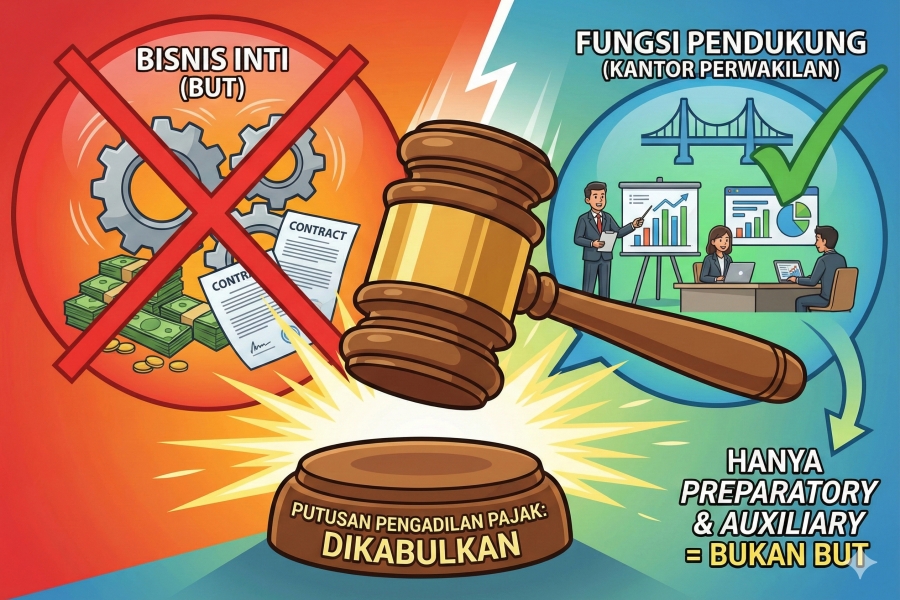
Based on all these considerations, the Tax Court Panel of Judges decided to Grant PT IP's Appeal in Its Entirety.
The impact of this ruling is that the correction to the Tax Base (DPP) for Article 23 Income Tax amounting to Rp 5,614,501,928 was entirely revoked.
Comprehensive and Complete Analysis of This Dispute is Available Here






















 tpc.consulting
  tpc.consulting
  info@taxindo.co.id