




Minister of Finance Regulation (PMK) Number 172 of 2023 provides a comprehensive framework governing the concept of Related Party Relationships for the business interactions of Corporate Taxpayers in Indonesia. This regulation establishes three primary pillars as the determinants of such relationships: minimum capital ownership of 25%, management or contractual control, and one-degree family ties.
The Budget Committee of the Indonesian House of Representatives (Banggar DPR RI) and the government agreed on provisions in the 2027 Draft State Budget that reaffirm the authority of the Minister of Finance to conduct examinations and/or audits of state revenues, including special audits related to the refund of tax overpayments or restitution. These provisions are outlined in Article 37 of the 2027 Draft State Budget and continue similar authorities that have been in place since the 2026 State Budget. Further regulations regarding the examination or audit of state revenues, including the procedures for refunding tax overpayments during examinations or special audits, will be regulated through a Minister of Finance Regulation.
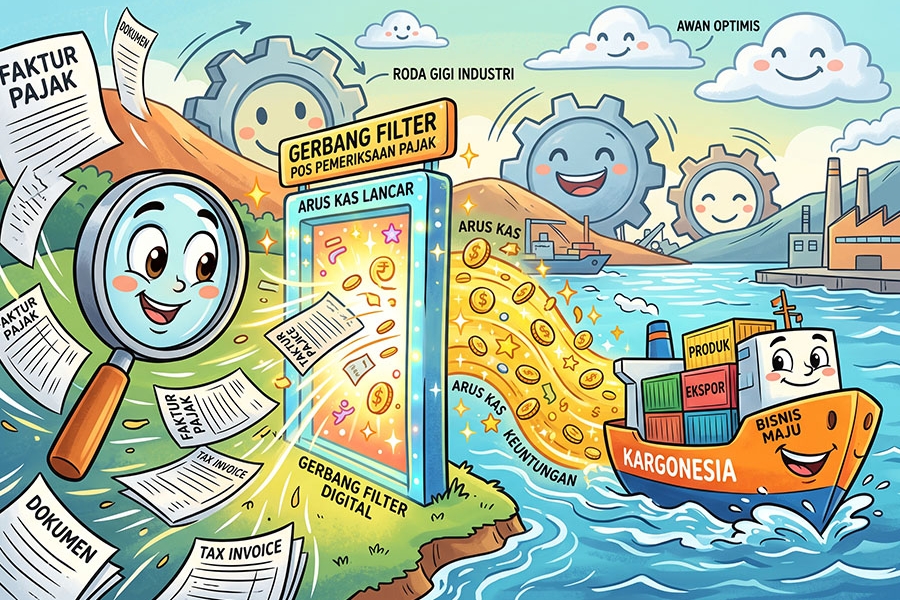
This regulation aligns with the government's more cautious approach to disbursing tax restitutions after the realization reached Rp361 trillion in 2025, which was linked to tax revenue pressures that caused a shortfall of Rp271.7 trillion. One of the tightening measures was implemented through Minister of Finance Regulation (PMK) Number 28 of 2026, which amended several requirements for accelerated restitution starting May 1, 2026. As of August 31, 2026, disbursed restitutions reached Rp191.82 trillion, a 37% year-on-year decrease compared to Rp304.29 trillion in the same period the previous year. Although disbursements are conducted more prudently, the Directorate General of Taxes (DJP) emphasized that restitutions will still be granted as long as taxpayers can prove the existence of overpayments supported by transaction documents in accordance with regulations.
In addition to strengthening the supervision of tax restitution at the central level, the utilization of technology is also being directed toward identifying potential tax revenues at the regional level.
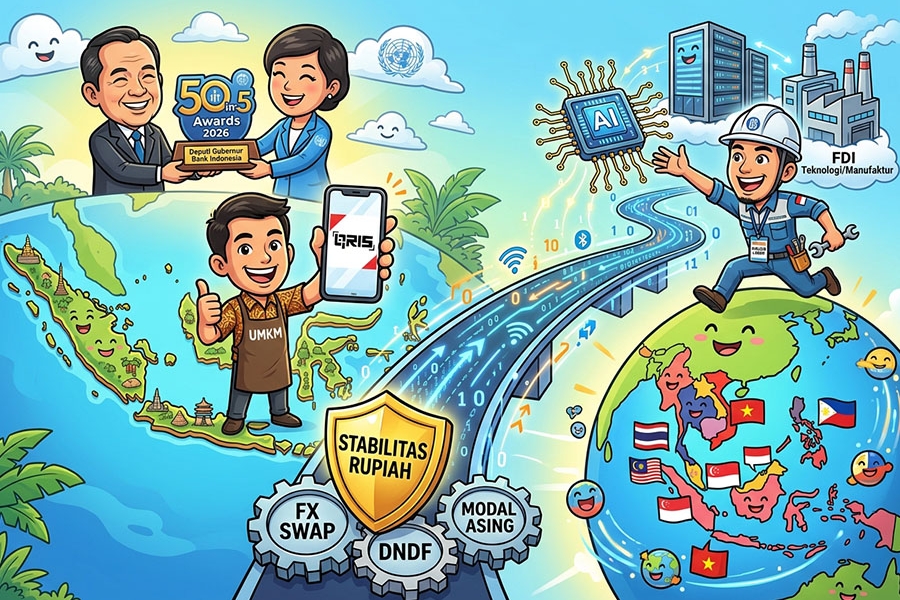
Bank Indonesia (BI) introduced an artificial intelligence (AI)-based innovation to detect untapped local tax potentials. This innovation, developed by a team from the Indonesian Digital Innovation Center (PIDI), combines AI technology, spatial mapping via Google Maps, and matching with local government tax revenue data. The system can map commercial objects such as hotels and restaurants that have local tax obligations, including Land and Building Tax (PBB), and then match them with tax revenue data to identify untapped potential.
The innovation was one of the 80 best digital innovation works in the PIDI program showcased at FEKDI x IFSE 2026. The selection process began with around 2,000 proposals, which were narrowed down to 800 before further curation selected the top 80 works. Out of these 80 works, the 10 best innovations received special awards from Bank Indonesia. This local tax detection innovation also captured the attention of several regional leaders attending the event.
Besides utilizing technology to unearth potential local tax revenues, the government is also still considering its readiness to implement the carbon tax instrument amidst challenges in the national energy sector.
The implementation of the carbon tax in Indonesia is still delayed, despite having a legal basis through Law Number 7 of 2021 concerning the Harmonization of Tax Regulations (UU HPP) and originally being scheduled to take effect on April 1, 2022. The Ministry of Finance is considering the condition of Indonesia's energy sector, which remains heavily dependent on coal and fossil fuels. Implementing carbon pricing under these conditions has the potential to increase the cost of electricity generation and fossil fuels, which could subsequently escalate the need for energy subsidies and compensations, putting pressure on the state budget. The cost increases could also potentially be passed on to the public through higher energy, goods, and services prices.
For the time being, the government is prioritizing the strengthening of the carbon market, including the voluntary carbon market through IDX Carbon. This approach is considered more flexible and adaptive and is expected to provide carbon price signals with a lower risk of economic distortion. The carbon tax will be implemented once several prerequisites are met, including the readiness of the measurement, reporting, and verification (MRV) system, the registry system, and the availability of alternatives for the energy and industrial sectors to transition away from fossil fuels.
These three developments indicate a strengthening in the management of state and regional revenues through different approaches—ranging from increased supervision of restitutions, the utilization of technology and data to identify local tax potentials, to preparations for implementing the carbon tax instrument. Each policy also considers different aspects, from compliance and validity of tax documents to the readiness of technology, systems, the energy sector, and its impacts on the budget and the economy.
For the business world, these developments highlight the growing importance of compliance, data availability, and accurate documentation in fulfilling tax obligations. At the same time, regulatory developments regarding restitutions, the use of technology in mapping potential local taxes, and plans to implement the carbon tax are aspects that taxpayers and business actors must pay attention to in line with the dynamics of tax policy in Indonesia.
















 tpc.consulting
  tpc.consulting
  info@taxindo.co.id