




The government plans to expand the collection of Value Added Tax (VAT) on foreign digital transactions via the SPP-TDLN system by involving a broader network of banks and payment service providers. While this policy significantly widens the state revenue net, it has triggered widespread concern regarding the erosion of middle-class purchasing power and the technical readiness of industry players, prompting the government to float a new income tax incentive as a potential fiscal cushion..
The government is scheduled to massively expand the implementation of the Foreign Digital Transaction Tax Collection System (SPP-TDLN) starting November 9, 2026. This expansion will rope in state-owned banks, private banks, financial technology (fintech) companies, and e-commerce platforms as official digital tax collectors. However, the Directorate General of Taxes (DJP) clarified that this is not a new tax category. The SPP-TDLN has been legally active since September 25, 2026, under Minister of Finance Regulation (PMK) Number 49 of 2026. Therefore, the November rollout merely expands the roster of designated collection agents rather than marking the dawn of a brand-new digital tax.
Through this mechanism, the government collects VAT on the utilization of intangible taxable goods and services originating from outside the customs area. Covered transactions include software purchases, application subscriptions, cloud computing services, streaming, digital entertainment, artificial intelligence (AI), and online gaming. In its initial phase, the DJP appointed six primary operators as collectors: BRI, Bank Mandiri, BNI, BTN, Bank Syariah Indonesia (BSI), and LinkAja. The government is now preparing to onboard approximately 30 additional banks and fintech platforms into the system, utilizing Jalin Pembayaran Nusantara as the central operator to identify qualifying foreign digital transactions.
The SPP-TDLN is designed to complement the VAT on Trade Through Electronic Systems (PMSE) mechanism, which has been in place since July 1, 2020. The fundamental difference lies in the collection agent. Under PMSE, the VAT is collected directly by government-appointed digital platforms and merchants (e.g., Google, Netflix, Spotify, Meta, Microsoft). Conversely, SPP-TDLN utilizes the domestic payment gateway to capture the VAT on foreign digital transactions that bypass the PMSE net. Both mechanisms are explicitly designed to synchronize and prevent the double taxation of a single transaction.
From a state revenue perspective, the expansion of SPP-TDLN drastically broadens the digital tax base. The DJP noted that cumulative PMSE VAT revenue from 2020 through September 2026 reached Rp45.21 trillion (with Rp9.54 trillion collected in the first nine months of 2026 alone). Meanwhile, tax consultants highlight that SPP-TDLN's primary value lies in massive data expansion and compliance enforcement. In just the brief window between September 25 and October 11, 2026, the initial six SPP-TDLN operators identified approximately 5.5 million eligible transactions worth a staggering Rp10 trillion.
However, this aggressive tax expansion has ignited fears regarding public purchasing power, specifically targeting the increasingly fragile middle class. Economists warn that if foreign digital service providers pass the entire 11% VAT burden onto consumers, it will directly inflate household daily expenses. This concern mounts against the backdrop of a shrinking middle class; the Central Statistics Agency (BPS) recorded a drop in the middle-class population from 57.33 million (21.45% of the population) in 2019 to 47.85 million in 2024. Public policy experts have urged the government to consider targeted tax exemptions for digital services that strictly support education, upskilling, and MSME productivity to prevent stifling economic development.
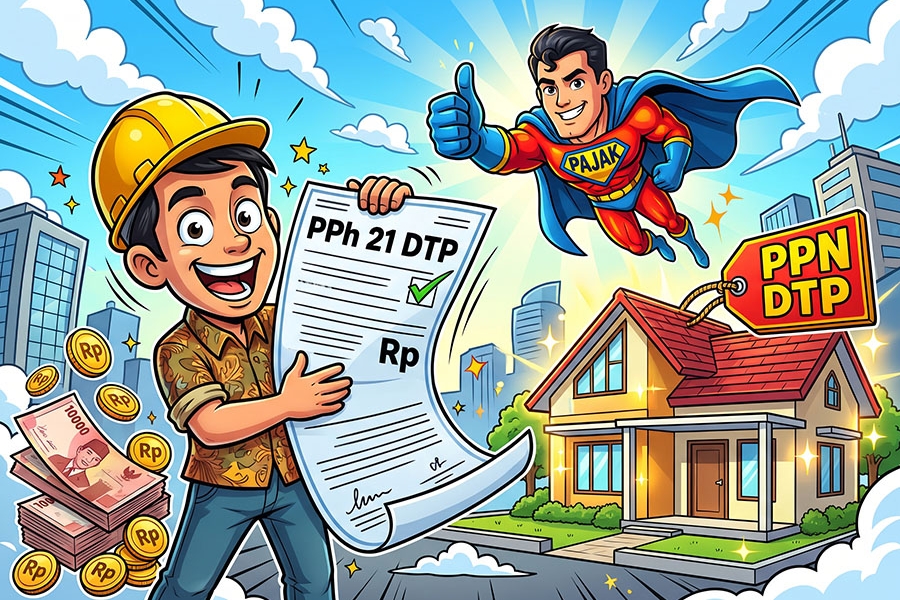
Responding to these purchasing power concerns, the Coordinating Minister for Economic Affairs stated that the government is preparing several assistance programs, heavily teasing a Government-Borne Income Tax (PPh DTP) incentive of up to Rp10 million applicable across all sectors. While floated as a counterbalance to preserve middle-class consumption, the government has not yet detailed exactly how this income tax relief will offset the localized inflationary impact of the expanded digital VAT, stating only that further policy details will be announced in due course.
Ultimately, the success of the SPP-TDLN expansion hinges on flawless execution rather than just the volume of tracked transactions. For the business sector, banks and fintechs must rapidly upgrade their IT and administrative systems to act as reliable tax collectors without inadvertently causing double taxation. For the government, enforcing rigorous digital tax compliance must be delicately balanced with the urgent macroeconomic necessity of safeguarding the middle class's disposable income and overall economic resilience.














 tpc.consulting
 tpc.consulting
 info@taxindo.co.id