


Indonesia is aggressively fortifying international tax cooperation through multinational corporate information exchange and cross-border tax collection assistance. Domestically, the government is reviewing the expansion of Article 21 Income Tax (PPh 21) incentives and the extension of Government-Borne Value Added Tax (PPN DTP) for housing in 2027. These dual-track policies aim to enforce tax compliance while simultaneously supporting economic growth and state revenue..
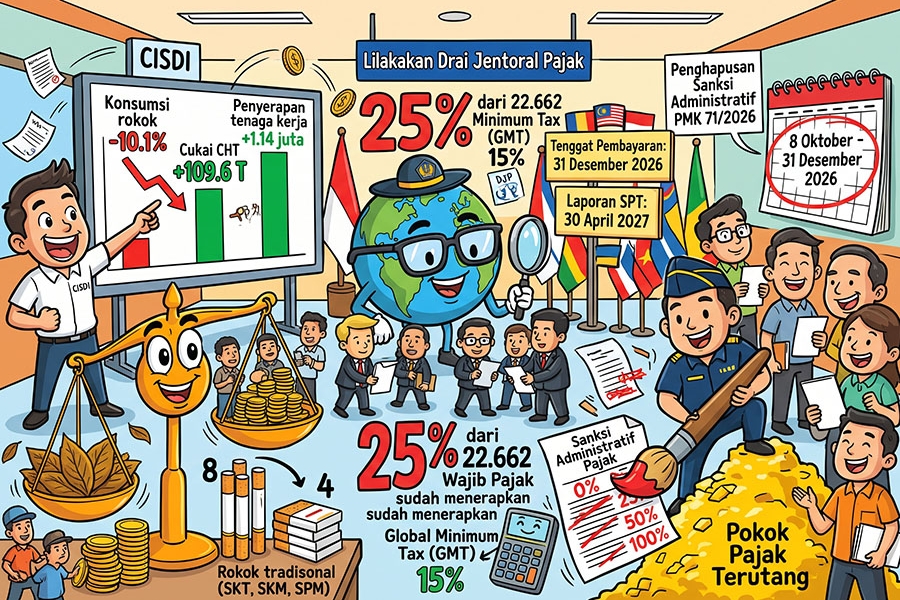
Indonesia is actively strengthening international tax transparency following the Directorate General of Taxes' (DJP) signing of the Multilateral Competent Authority Agreement on the Exchange of GloBE Information (GIR MCAA) at the Global Forum on Transparency and Exchange of Information for Tax Purposes in Montenegro from October 27–29, 2026. This agreement paves the way for the automatic exchange of GloBE Information Returns (GIR) with partner jurisdictions starting in 2027. Prior to Indonesia's accession, 40 countries or jurisdictions had signed the agreement; with Indonesia's participation, the number of signatories rises to 41.
The GIR is a standardized reporting form containing information on multinational corporate groups and their application of the Global Anti-Base Erosion (GloBE) Rules across the various jurisdictions where they operate. This information underpins the calculation of the Global Minimum Tax (GMT) for multinational companies with an annual consolidated gross revenue of at least EUR 750 million. Indonesia has implemented the GMT through Minister of Finance Regulation (PMK) No. 136/2024 since 2025, imposing a minimum effective tax rate of 15%. Its implementation spans three mechanisms: the Qualified Domestic Minimum Top-Up Tax (QDMTT) and the Income Inclusion Rule (IIR) effective since January 1, 2025, and the Undertaxed Payment Rules (UTPR) effective since January 1, 2026. Nevertheless, the government still faces hurdles in strengthening socialization, standardizing tax officers' understanding, ensuring information validity, and maintaining investment competitiveness through certainty regarding alternative incentives.
This push for information transparency runs parallel to the government's efforts to expand cross-border tax collection cooperation, ensuring that tax obligations cannot be evaded simply by moving assets offshore.
The Indonesian government is urging tax authorities in partner countries to enhance cross-border assistance in the recovery of tax claims. Currently, Indonesia has an Assistance in the Collection of Tax Claims (AIC) framework with 81 countries or jurisdictions. This cooperation covers 72 countries through the Convention on Mutual Administrative Assistance in Tax Matters (MAAC) and 9 countries or jurisdictions through Double Taxation Avoidance Agreements (P3B/DTAA). The legal framework is anchored in Law No. 7/2021 concerning the Harmonization of Tax Regulations and Presidential Regulation No. 56/2024.
Through the AIC mechanism, the DJP can request assistance from partner tax authorities to collect tax arrears from guarantors who reside or hold assets abroad. This assistance can involve the freezing of financial accounts, asset seizure, and even asset liquidation. This mechanism massively expands the reach of tax collection, as the authority of Indonesian tax bailiffs is fundamentally restricted to the sovereign territory of the Republic of Indonesia. Consequently, transferring assets overseas no longer automatically eliminates the government's ability to pursue tax obligations.
Beyond fortifying international tax oversight and collection, the government is also preparing domestic incentive policies to sustain public purchasing power and spur economic activity in 2027.
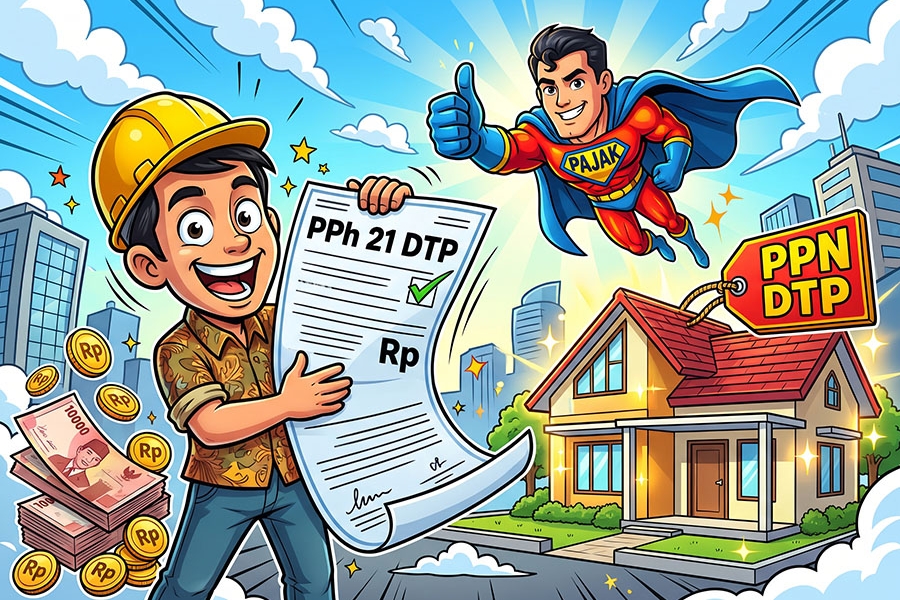
The government is currently calculating the fiscal impact of the planned expansion of the Government-Borne Article 21 Income Tax (PPh 21 DTP) incentive and the extension of the Government-Borne VAT (PPN DTP) for housing against state revenues. In 2027, the government targets tax revenues of Rp2,593.5 trillion. One of the planned policies is to expand the PPh 21 DTP facility for employees earning under Rp10 million per month to all business sectors. Previously, from 2025 to 2026, the government restricted this facility to the labor-intensive and tourism sectors. The government is also reviving discussions on adjusting the Non-Taxable Income (PTKP) threshold.
In the property sector, the government plans to extend the PPN DTP facility into 2027 for houses with a selling price of up to Rp5 billion. This facility covers the price portion up to Rp2 billion. The government is also planning support through subsidized mortgages (KPR) with a 6% interest rate for individuals with a fixed income of around Rp17 million to purchase homes priced up to Rp500 million. However, all these incentive plans still require rigorous fiscal impact calculations so the government can accurately weigh their economic benefits against the sustainability of state revenues.
These three policy tracks hold significant implications for various stakeholders. Multinational corporations must closely monitor GIR reporting obligations and prepare robust tax information in the face of international data exchange. Business actors with cross-border tax obligations must also heed the expanded reach of collection assistance through the AIC network. Meanwhile, the expansion of the PPh 21 DTP has the potential to provide a desperately needed boost to worker purchasing power, while the PPN DTP extension could prop up activity in the housing sector. For investors, certainty regarding GMT application and domestic incentive policies remains a critical factor when evaluating investment decisions.
Strengthening international tax compliance and deploying domestic incentives must proceed in a delicate balance, allowing the government to protect state revenue without suffocating economic growth. The government needs to ensure administrative readiness for information exchange, tighten cross-border collection coordination, and provide absolute clarity regarding the provisions and execution of 2027 incentives. Conversely, business actors must upgrade their documentation readiness and tax compliance to navigate these policy shifts accurately and sustainably.















 tpc.consulting
 tpc.consulting
 info@taxindo.co.id