




The taxation and customs sector is once again highlighted by crucial issues concerning apparatus integrity, taxpayer compliance, and the effectiveness of fiscal policy. Recent reports reveal tax corruption practices using old schemes, scrutiny over the implementation of tax amnesty, and an increase in excise revenue accompanied by a surge in illegal cigarette cases. Amidst these dynamics, the idea of an excise moratorium has emerged as an effort to ease pressure on the tobacco industry. The discussion focuses on developments within the Directorate General of Taxes (DJP) and the Directorate General of Customs and Excise (DJBC).
The national taxation system is once again facing an integrity challenge after the uncovering of an old tax corruption scheme involving collusion between tax officials and business owners to reduce the tax bill of certain Taxpayers (WP). This practice significantly harms state finances and damages public trust, thereby demanding stricter internal supervision within the Directorate General of Taxes (DJP). This integrity issue is compounded by the scrutiny of the tax amnesty program, which is again being linked to a legal case involving a former Director General of Taxes, emphasizing the importance of transparency and strict governance in the program's implementation.
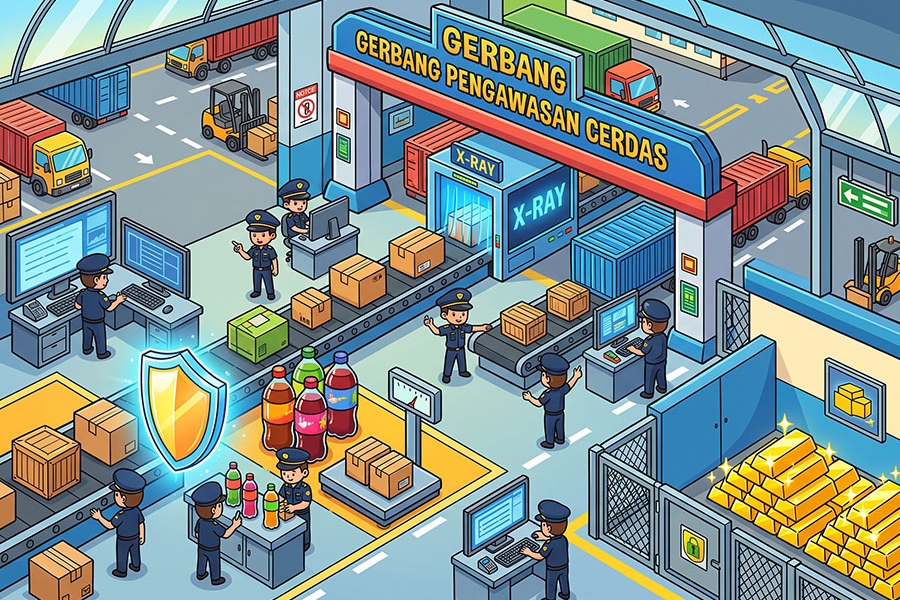
Meanwhile, the Directorate General of Customs and Excise (DJBC) recorded positive performance in the Customs and Excise sector, with state revenue reaching Rp249.3 trillion until October 2025. However, the DJBC also reported a 41% increase in illegal cigarette cases, with a total of 15,800 cases being acted upon. This rise in illegal cigarette cases is a serious concern because it harms state revenue from excise and creates unhealthy business competition for the legal tobacco industry.
In response to industrial pressure, the idea of a moratorium on the increase in the tariff for tobacco excise products (CHT) in 2026 is considered capable of mitigating the pressure faced by the tobacco industry. This moratorium is expected to provide a respite for the industry to recover and enhance competitiveness amidst the challenges of illegal cigarettes and a decline in legal consumption.
These issues carry significant implications for business actors and the nation's fiscal health. The uncovering of tax corruption and the scrutiny over the tax amnesty case demand the government to strengthen the integrity of the apparatus and establish a strict supervisory system to restore Taxpayer trust and ensure taxation fairness. For the tobacco industry, the excise moratorium idea sends a positive signal that can ease cost burdens and aid recovery. However, the 41% increase in illegal cigarette cases indicates that existing excise policies need to be balanced with more effective supervision and stricter legal action from the DJBC to safeguard state revenue and protect the legal industry.
These events show that Indonesian fiscal authorities face a dual challenge: maximizing state revenue (evidenced by solid excise performance) while simultaneously combating illegal practices (the surge in illegal cigarettes) and improving institutional integrity (the tax corruption case). The government must act firmly against corrupt officials and strengthen digitalization systems to minimize human intervention that could lead to corruption. Business actors and Taxpayers need to support governance reforms and maintain compliance so that the taxation system can function fairly and efficiently for the sake of the nation's fiscal health.















 tpc.consulting
  tpc.consulting
  info@taxindo.co.id