




The government targets a tax ratio of 9.26% of the GDP in 2027 through the strengthening of tax administration and increased compliance. Meanwhile, the relaxation of PBB-P5L administrative sanctions can aid corporate cash flows, whereas the Government-Borne VAT (VAT DTP) incentive is deemed more effective in driving sales of ready-to-live-in apartments rather than the launch of new projects. The impact of these policies relies on execution effectiveness, regulatory certainty, as well as economic conditions and public purchasing power..
The government targets tax revenues of Rp2,593.3 trillion in 2027, equivalent to 9.26% of the gross domestic product (GDP), without raising rates or imposing new types of taxes. To achieve this target, the Directorate General of Taxes (DJP) is striving to strengthen tax administration, expand the tax base, optimize the Coretax system, and enhance voluntary compliance through a cooperative compliance approach. Risk-based supervision through Compliance Risk Management (CRM) is also one of the strategies to address the risk of non-compliance, including corporate groups, under-invoicing practices, and affiliate transactions at risk of transfer pricing manipulation.
However, achieving this target faces challenges such as the shift of business models into the digital realm, data fragmentation, the continuity of tax administration reforms, and public perception regarding the benefits of tax revenues. The government has implemented income tax collection on merchants through four marketplaces—Tokopedia, Shopee, Lazada, and Blibli—as well as VAT collection on foreign digital goods or services transactions through the Tax Collection System for Foreign Digital Transactions (SPP-TDLN). A number of observers assess that the target is quite challenging because its achievement is also influenced by economic growth, investment, commodity prices, and geopolitical conditions. Amidst efforts to strengthen state revenue, the government is also providing relaxations on administrative tax sanctions, including for PBB-P5L, subject to certain requirements.
Through Minister of Finance Regulation (PMK) Number 71 of 2026, which amends PMK Number 118 of 2024, the DJP can reduce or eliminate administrative sanctions stated in Tax Assessment Letters (SKP), PBB SKP, Tax Collection Letters (STP), and PBB STP. This policy covers the Land and Building Tax (PBB) for the plantation, forestry, oil and gas mining, geothermal, and mineral or coal sectors, as well as other sectors (PBB-P5L). This relaxation is not a write-off of the principal tax and does not cover the residential or land PBB paid by the public annually. One of the requirements is that taxpayers must settle the unpaid or underpaid tax that serves as the basis for the sanctions.
Requests for the reduction or elimination of sanctions must be submitted in writing, stating the amount of the requested sanction waiver along with the reasons. Taxpayers can only submit one request for each SKP, STP, PBB SKP, or PBB STP, no later than two years after the PMK takes effect. Based on the 2027 Draft State Budget (RAPBN) Financial Note, principal PBB-P5L revenues in 2026 are estimated to reach Rp27.6 trillion, excluding administrative fines. Several observers assess that the policy's impact on the national economy is relatively limited because it only targets sanctions; however, reducing or eliminating fines can still provide financial breathing room for companies to maintain operations. Meanwhile, in the property sector, the effectiveness of tax incentives also depends on product characteristics and market conditions.
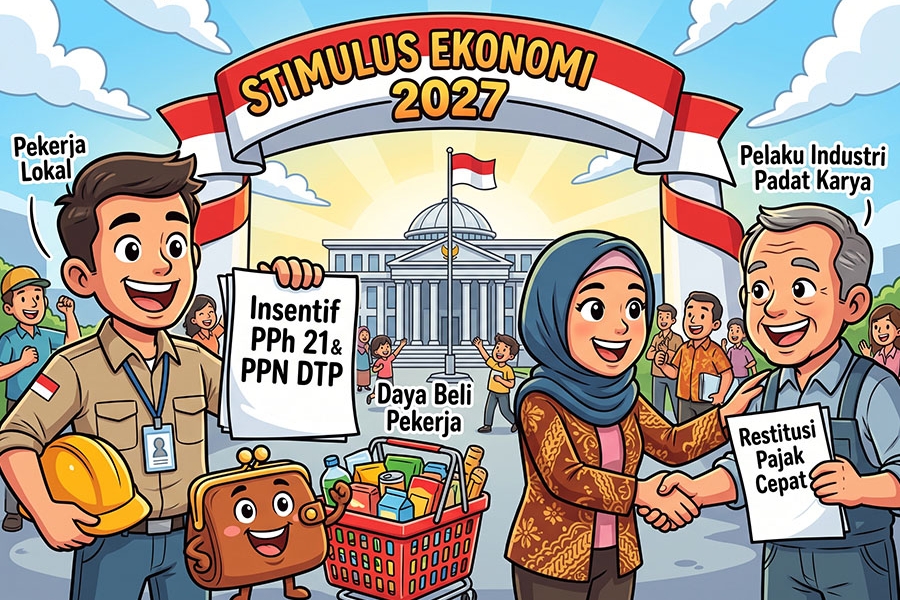
The Government-Borne Value Added Tax (VAT DTP) incentive serves as one of the government's instruments to stimulate the residential property market. According to Colliers Indonesia Head of Research Ferry Salanto, this incentive provides significant savings for consumers, especially for apartments priced under Rp5 billion. The impact is considered more noticeable on the sales of completed or ready-to-live-in units (ready stock), thus helping developers reduce their inventory of unsold units.
However, the VAT DTP incentive is not necessarily sufficient to spur the launch of new apartment projects. Apartment construction generally takes two to three years, whereas the VAT DTP facility depends on the provisions for unit handovers in the year the policy is in effect. Issuing policies on an annual basis without long-term continuity certainty leaves developers facing uncertainty regarding the availability of incentives when a project is completed. Besides policy certainty, apartment sales are also influenced by consumer purchasing power, down payment availability, eligibility for Apartment Ownership Credit (KPA), trust in developers, location, and product quality. This condition indicates that while tax incentives can aid transactions, they do not replace the need for adequate purchasing power and investment certainty.
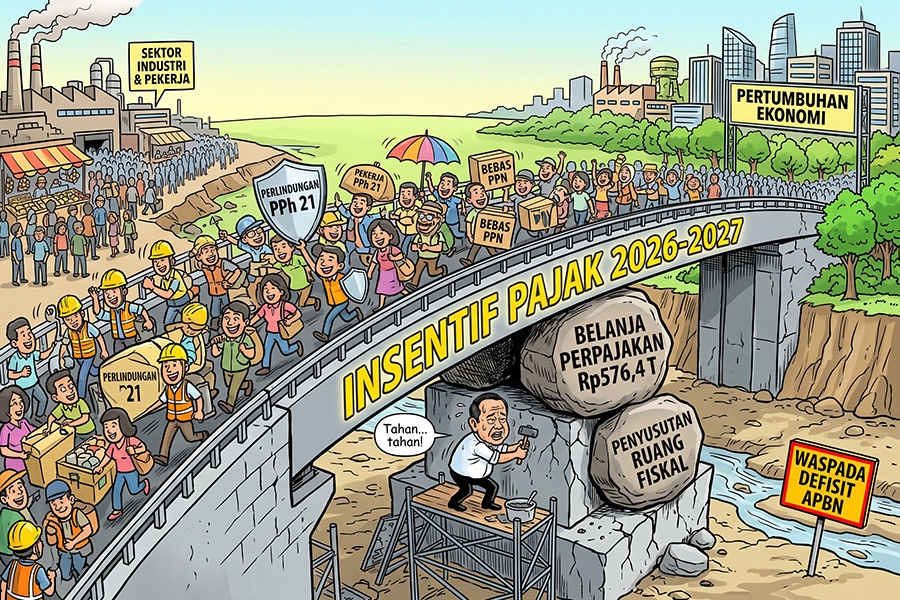
These three issues demonstrate that tax policies have different objectives and impacts. The strengthening of tax administration aims to support compliance and achieve state revenue targets, the PBB-P5L sanction relaxations can assist eligible companies, while the benefits of VAT DTP are more pronounced for sales of ready-stock apartments. For business actors, the benefits of these policies must be assessed based on their respective conditions and needs, including tax obligations, cash flow, and market prospects.
Moving forward, the government needs to strengthen tax administration, enhance policy implementation certainty, and evaluate the effectiveness of incentives based on their impact on economic activities. Business actors and investors must also ensure compliance with tax facility requirements, maintain tax compliance, and consider purchasing power and market conditions before making investment decisions. With this approach, fiscal policies can be evaluated more measurably based on their contribution to state revenue and the sustainability of economic activities.
















 tpc.consulting
  tpc.consulting
  info@taxindo.co.id