


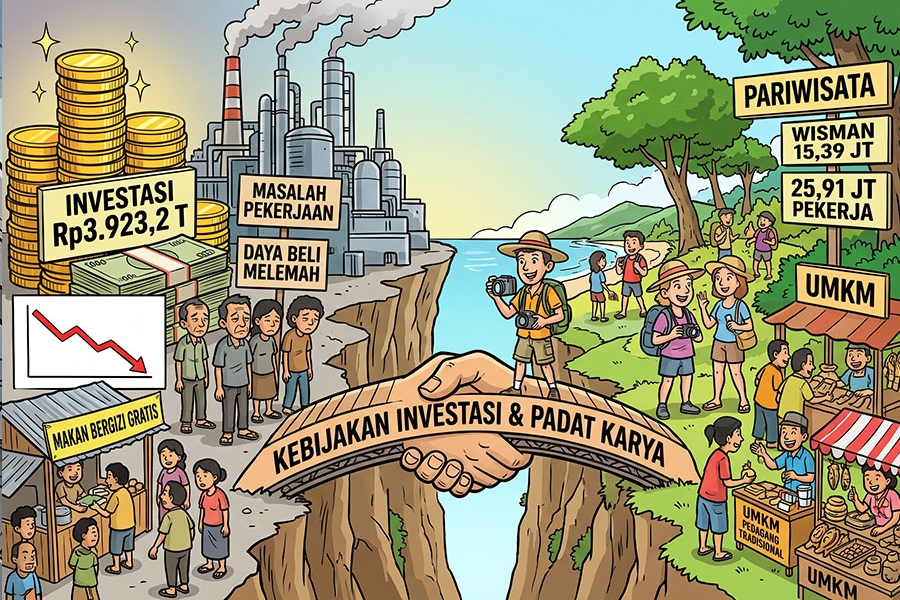
Indonesia's investment reached Rp3,923.2 trillion during the first two years of the Prabowo-Gibran administration, yet challenges surrounding formal job creation, stagnant wages, and public purchasing power continue to cast a shadow over economic growth. Amidst these pressing issues, the tourism sector has demonstrated significant potential in expanding employment opportunities while reinforcing its contribution to the national economy.
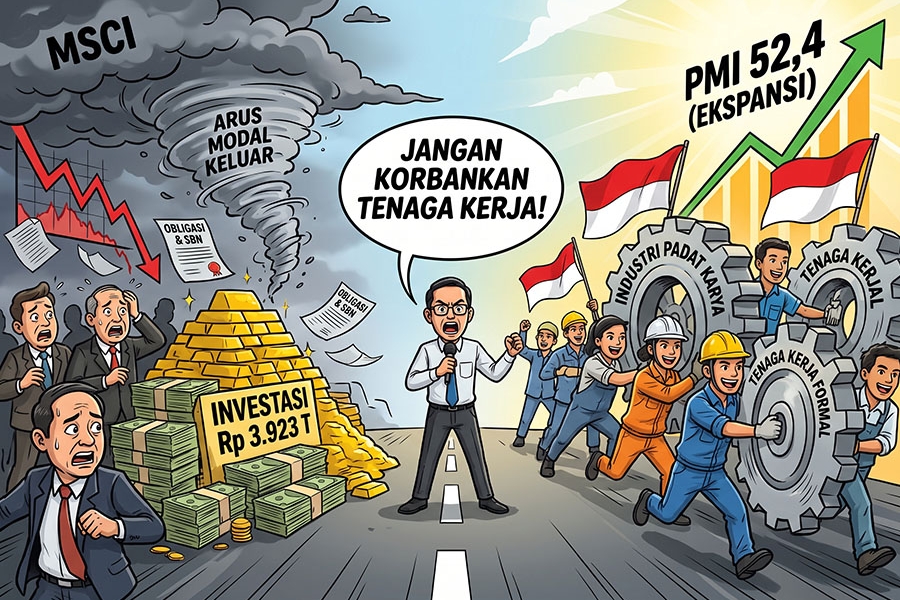
Indonesia's realized investment during the two-year tenure of President Prabowo Subianto and Vice President Gibran Rakabuming Raka reached Rp3,923.2 trillion, substantially higher than the Rp1,278.6 trillion recorded during the first two years of the 7th President Joko Widodo's administration. However, this massive investment value must be contextualized against the depreciation of the rupiah. The Chief Economist of Maybank Indonesia highlighted the rupiah's weakening from Rp15,495 per US dollar on October 21, 2024, to Rp17,987 per US dollar on October 20, 2026. During this period, downstreaming investments reached Rp1,199 trillion, with claims of generating 5.4 million jobs. Nevertheless, large investment figures do not automatically guarantee broad and high-quality workforce absorption.
This fundamental issue is highly visible in current labor market conditions. CORE Indonesia assesses that formal job creation is moving at a sluggish pace, leaving nearly 60% of the workforce in the informal sector. Real wages have also largely stagnated amidst mounting purchasing power pressures on the lower-middle class. Echoing this sentiment, CELIOS highlighted a sharp decline in the number of workers absorbed per Rp1 trillion of investment—dropping from 4,591 workers in 2013 to 1,417 workers in 2025, and hovering at 1,434 workers in the first half of 2026. This trend indicates that investment success must be evaluated not only by the sheer volume of incoming capital but also by the quantity and quality of jobs generated.
Job creation challenges are also tied to the effectiveness of government programs and limited opportunities for the youth workforce. CELIOS emphasized the need to evaluate the government's claim that the Free Nutritious Meal (MBG) program absorbed one million workers, particularly regarding their employment status and working conditions. According to a CELIOS simulation—not official government data—the MBG program potentially reduces total workforce absorption by 1.7 million people due to the displacement of existing food and beverage businesses and budget reallocations impacting the education sector. Meanwhile, a public policy observer noted that private-sector recruitment has fallen short of public expectations and stressed the importance of post-program mentoring for National Internship Program participants to ensure they secure permanent employment.
Amidst these industrial and policy challenges, the tourism sector shows strong potential to support the economy and absorb labor. In 2025, foreign tourist arrivals reached 15.39 million, an increase of 10.80% compared to the previous year, while domestic tourist trips hit 1.2 billion. Up to August 2026, foreign tourist arrivals were recorded at 10.58 million, alongside 842.15 million domestic trips. The tourism sector absorbed 25.91 million workers in 2025 and contributed 4.78% to the national GDP, equivalent to Rp1,138.90 trillion. Tourism foreign exchange earnings in the same year reached US$18.27 billion. Investments in this sector were recorded at Rp73.56 trillion in 2025 and Rp39.68 trillion in the first half of 2026. These achievements demonstrate tourism's viability in driving business activities, opening job opportunities, and stimulating regional economies.
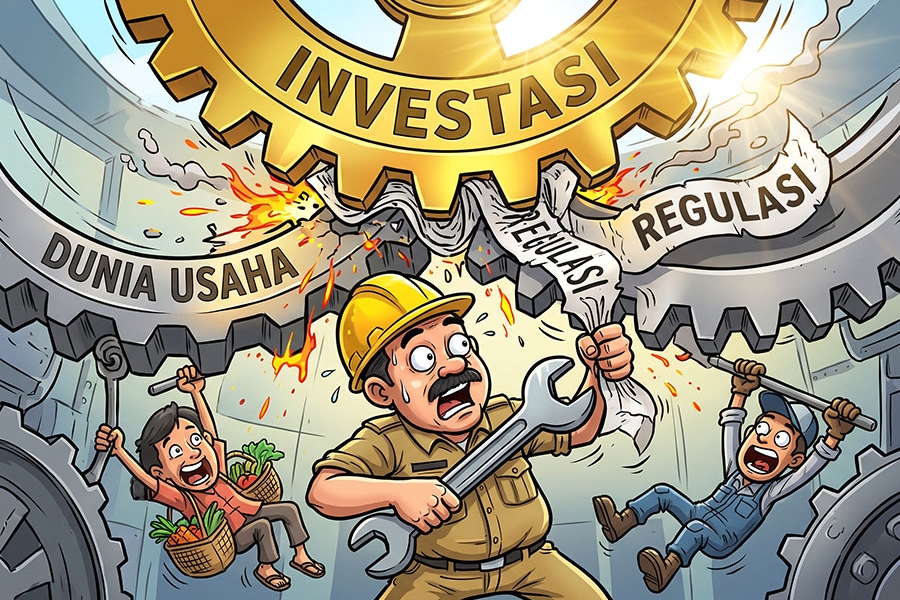
These underlying conditions reaffirm the critical need for a well-directed investment policy. Regulatory certainty and a conducive business climate are imperative to give companies the confidence to invest and hire. Concurrently, support for labor-intensive sectors and micro, small, and medium enterprises (MSMEs) must be fortified so that the benefits of investments reach a broader spectrum of workers and business actors. The government must also ensure that job creation programs are followed by rigorous evaluations of employment status, working conditions, wage levels, and the long-term sustainability of opportunities, especially for the younger generation.
Ultimately, the success of economic development cannot be measured solely by the volume of realized investments or headline growth rates. An equally vital metric is the ability of these investments to translate macroeconomic growth into formal employment, improved incomes, and resilient purchasing power. Synergy among the government, state-owned enterprises, and the private sector—backed by consistent policies prioritizing quality job creation—will be the key to ensuring that economic growth delivers tangible and equitable benefits to the public.












 tpc.consulting
 tpc.consulting
 info@taxindo.co.id