



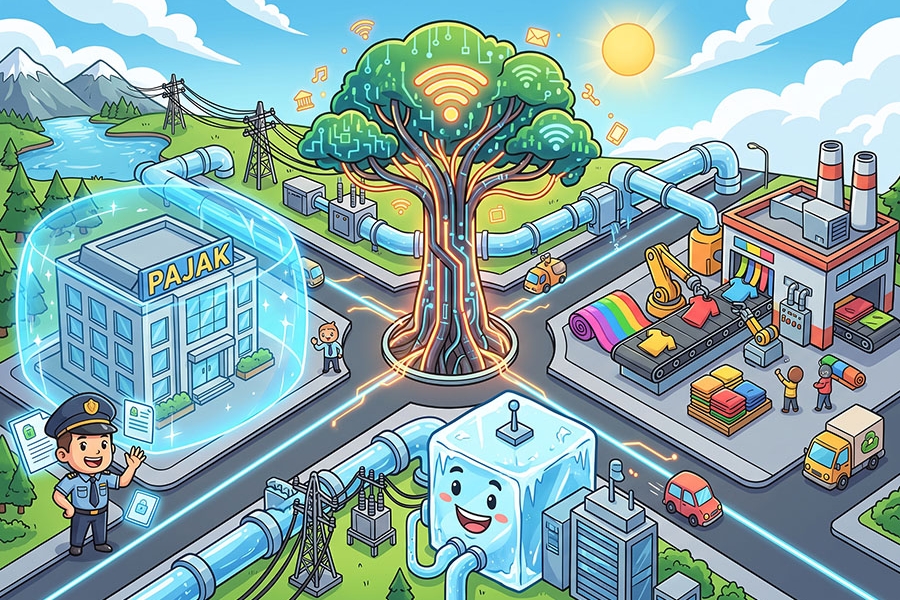
The Directorate General of Taxes is developing an integrated artificial intelligence system to track the wealth of the "crazy rich" in real-time while prioritizing the protection of taxpayer data confidentiality. Concurrently, the utilization of AI technology in the national garment sector has proven to accelerate the industrial supply chain from six months to just two weeks. To support the surging computing needs of these AI data centers, the government is preparing a sustainable supply of water and electricity infrastructure..
The Directorate General of Taxes (DJP) under the Ministry of Finance is designing an artificial intelligence-based system to map the wealth shifts of high-net-worth individuals (the "crazy rich"). The Deputy Minister of Finance explained that the tax authority is building an integrated dashboard that comprehensively connects asset ownership, family relations, and business entity networks. This digital tool automatically scans public news and corporate information disclosures to detect stock sales, mergers, and acquisitions in real-time. This strict, cutting-edge technology-based monitoring of high-income groups is balanced with the government's strong commitment to maintaining the internal information security of the public.
The Director General of Taxes emphasized that the tax authority will not use open-source AI applications in order to guarantee the confidentiality of taxpayer data. The tax authority is focusing on developing an independent data processing system and forging strategic partnerships with member countries of the Belt and Road Initiative Tax Administration Cooperation Mechanism (BRITACOM), including China. This step to protect the digital taxation system is a top priority so that the risk analysis and tax service processes run transparently and reliably. The application of artificial intelligence technology not only changes the map of state tax supervision but also transforms the operational efficiency of the real manufacturing sector.
The utilization of artificial intelligence in the garment industry has been able to cut the time for raw material procurement and product distribution from six months to just two weeks. National textile producers such as PT PB Tbk are applying automation and digital monitoring strategies across eight of their factory facilities to improve cost efficiency and global supply chain competitiveness. The application of this digital manufacturing system also opens up opportunities for cost efficiencies that can be reallocated to improve workers' wages and occupational safety. The accelerated adoption of smart technology in the manufacturing sector is directly proportional to the need for massive supporting infrastructure.
The government is optimizing the utilization of national water infrastructure, such as dams and reservoirs, to meet the cooling needs of AI-based data center servers. The Coordinating Minister for Infrastructure and Regional Development, along with the Minister of Communication and Digital, emphasized that the allocation of water and electricity resources for the digital computing industry must continue to guarantee clean water supplies for households. The government is drafting a roadmap for regional integration to prevent environmental pollution and maintain national energy security in a balanced manner.
The application of AI technology in the taxation, manufacturing, and infrastructure sectors brings tangible implications for increasing business governance transparency and corporate operational efficiency. For garment industry players and data center providers, the adoption of smart technology demands careful initial capital investment as well as guarantees of stable energy and water supplies to compete in the global market. On the other hand, the broader public benefits from robust financial data confidentiality protection and guaranteed availability of household clean water and energy amidst rapid national digitalization.
Ultimately, the synergy between AI-based tax supervision, manufacturing efficiency, and supporting infrastructure readiness serves as the primary pillar sustaining the national digital economic transformation. The government is recommended to immediately formulate technical regulations for the water and electricity governance of AI data centers and accelerate the integration of an independent tax dashboard that is secure from data leaks. Business actors are advised to optimize production process automation and enhance the digital skills of their workforce to strengthen sustainable business competitiveness.
















 tpc.consulting
  tpc.consulting
  info@taxindo.co.id