



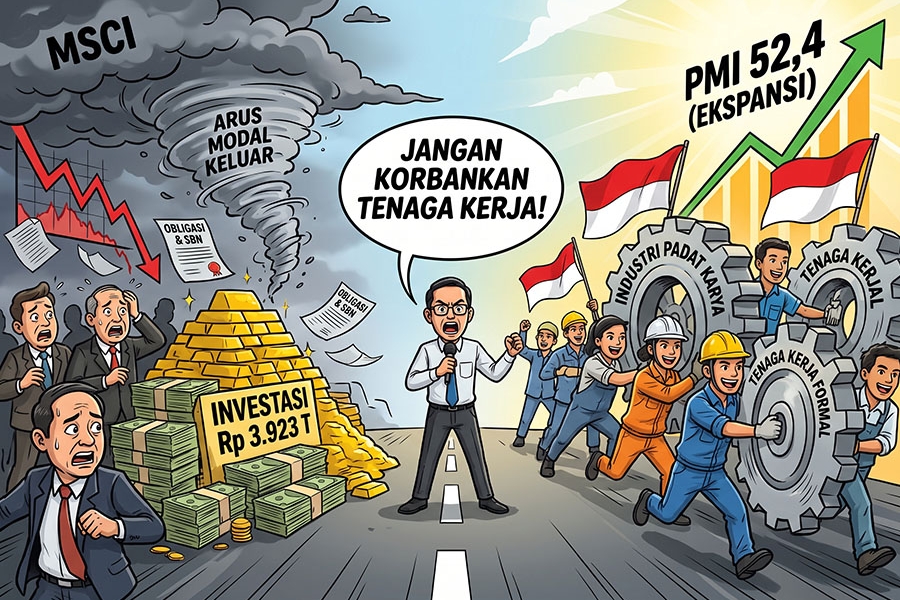
Indonesia's realized investment reached Rp1,539.2 trillion up to September 2026 amidst challenges in maintaining economic stability and investor confidence. MSCI's proposed stock market reclassification raises concerns over potential capital outflows and rising government debt costs. On the other hand, economists highlight the importance of ensuring that economic growth increases productivity and creates formal employment..
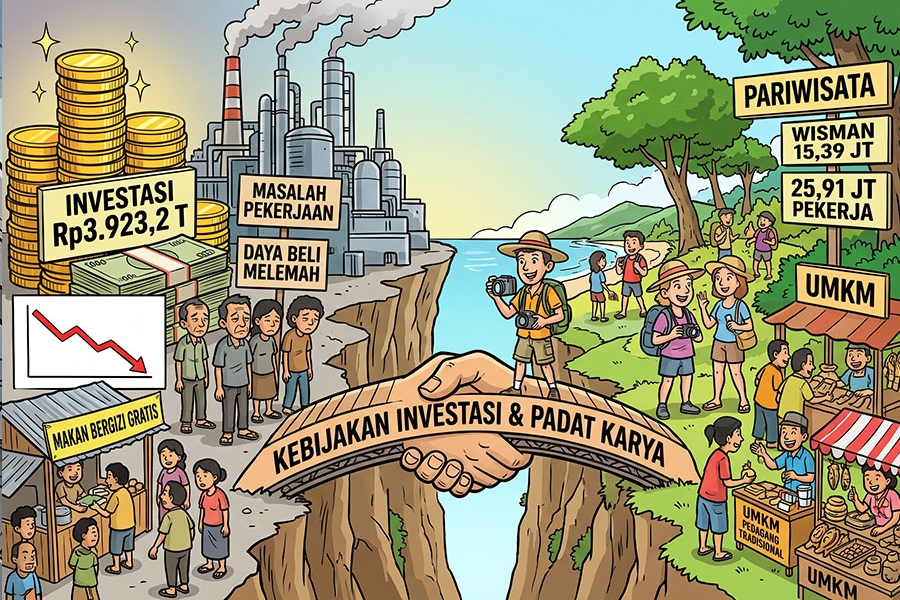
The Indonesian government faces challenges in maintaining economic growth momentum amidst global uncertainty. In a limited cabinet meeting at the Presidential Palace on October 19, 2026, the government and financial authorities discussed rupiah stability, inflation control, state expenditure effectiveness, and efforts to attract investment. On the fiscal side, State Budget (APBN) expenditure in the fourth quarter of 2026 is estimated to reach Rp1,300 trillion, compared to around Rp1,200 trillion in the same period the previous year, with a projected APBN deficit of 2.85% of the gross domestic product (GDP). Meanwhile, realized investment from January to September 2026 reached Rp1,539.2 trillion, or 75.4% of the annual target, absorbing 2,194,496 workers. This achievement serves as a crucial asset for the economy, but the government must continue to maintain market stability and ensure that investments yield sustainable benefits.
One of the anticipated challenges stems from Morgan Stanley Capital International's (MSCI) proposal to downgrade Indonesia's stock market classification from Emerging Market to Standalone Market. The National Economic Council (DEN) fears potential capital outflows spreading from the stock market to other financial instruments, particularly Government Securities (SBN). This risk could elevate pressure on Indonesia's credit rating and push SBN yields higher if investors demand greater compensation for the risks they face. Moody’s and Fitch have revised Indonesia's credit outlook from Stable to Negative, while S&P maintains its rating and outlook. Nevertheless, capital outflows from SBN and rising debt interest burdens due to the MSCI issue remain anticipated risks rather than guaranteed outcomes.
To respond to these challenges, the government and financial authorities are striving to strengthen transparency, governance, and law enforcement in the capital market. Investor confidence is crucial as pressure on the bond market potentially increases government financing costs and narrows fiscal space. However, maintaining financial stability is not the only homework. The government also needs to ensure that the continuous push for economic growth and investment delivers broader benefits through job creation and productivity enhancements.
A researcher from the Institute for Development of Economics and Finance (Indef) criticized the economic growth orientation for overemphasizing GDP increases and investment values without being balanced by adequate formal workforce absorption. According to the researcher, large capital-based industries, including mineral downstreaming, can boost output and export value but do not always absorb as much labor as labor-intensive industries. Therefore, industrialization strategies need to balance the development of strategic industries with sectors that have the potential to absorb more workers, such as processed foods, textiles, furniture, footwear, electronics, and component industries.
Amidst these challenges, Indonesian manufacturing shows signs of recovery. The manufacturing Purchasing Managers’ Index (PMI) rose from 49.8 in August to 52.4 in September 2026, indicating an expansion in industrial activity compared to the previous month. However, this recovery still faces hurdles in the form of high energy costs, reliance on imported raw materials, weakening export demand, and competition from imported products. Economists also warned that investment success cannot be judged solely by the amount of incoming capital. The government must pay attention to project realization, industrial facility operations, labor productivity, real wages, and the investment's ability to create formal jobs and involve domestic suppliers.
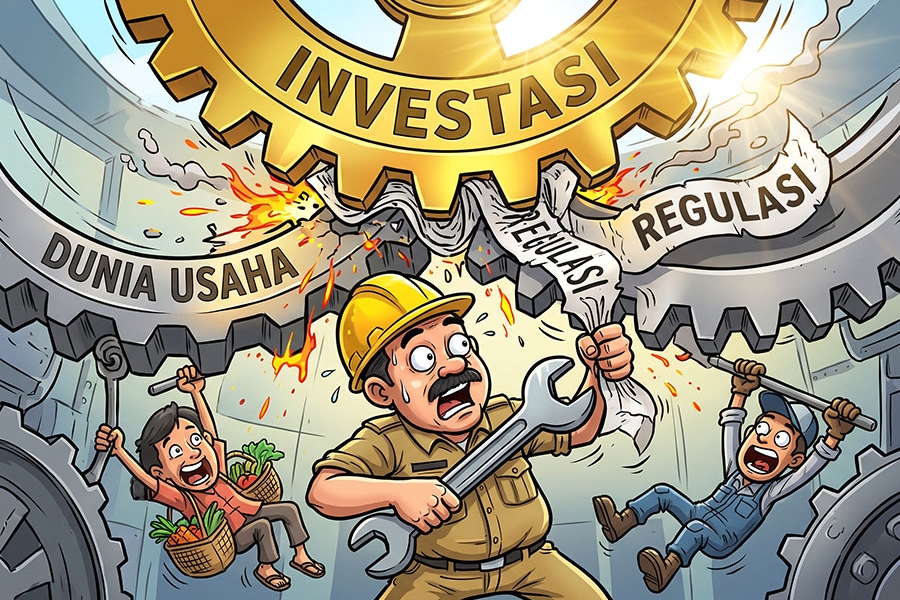
For business actors and investors, these developments underscore the importance of calculating financial market risks, financing costs, and regulatory certainty when making business decisions. For the public, the quality of investment co-determines job availability, income growth, and business opportunities. The government, therefore, must maintain fiscal discipline, strengthen capital market integrity, and direct investments to increase industrial value-add while expanding employment opportunities.
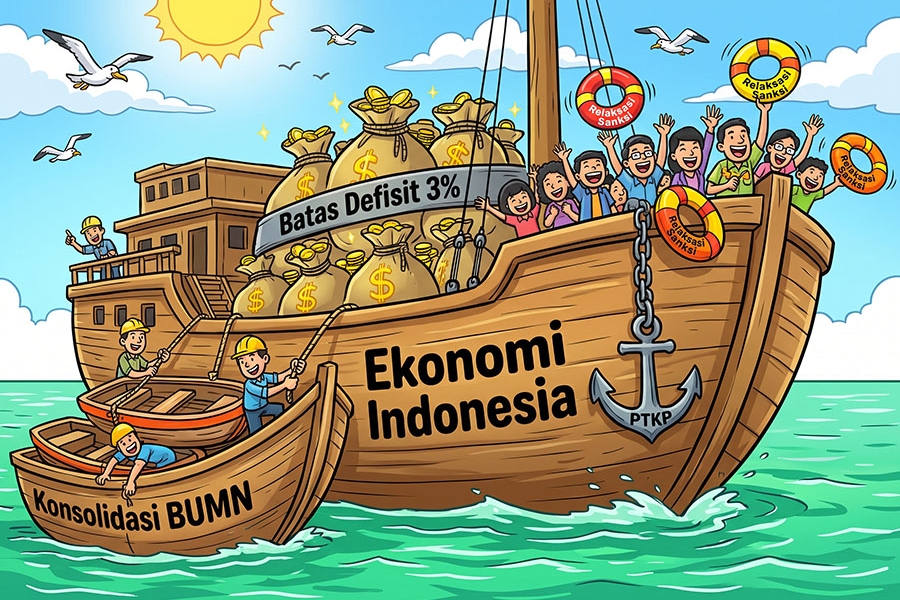
Ultimately, the success of Indonesia's economy cannot be adequately measured by the sheer volume of state expenditure, investment value, or growth targets. The government must maintain investor confidence while ensuring that industrialization increases productivity and creates quality jobs. Business actors must also strengthen their competitiveness and domestic supplier involvement so that the benefits of investments spread more broadly. Sustainable economic growth requires financial stability, quality investments, and the simultaneous improvement of public welfare.













 tpc.consulting
 tpc.consulting
 info@taxindo.co.id