



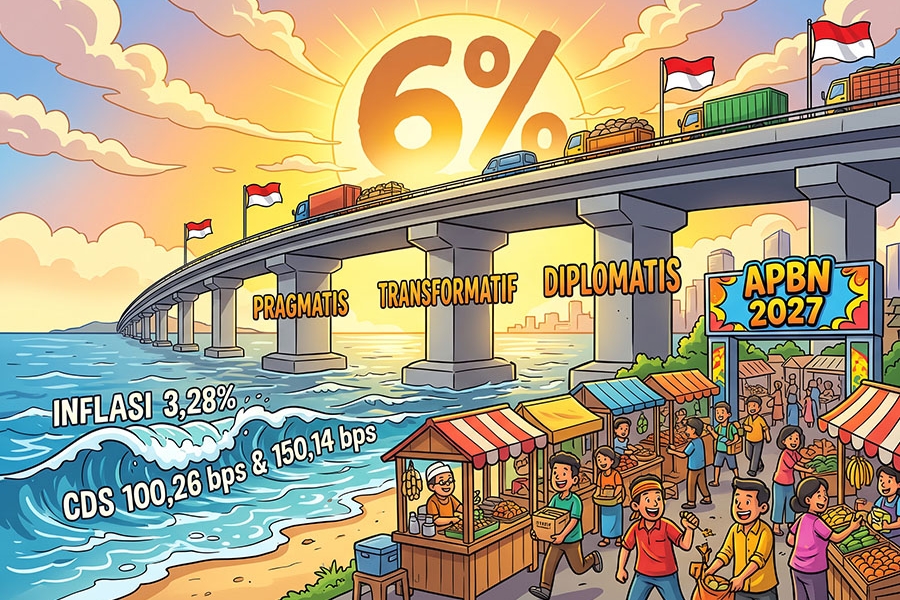
The government is targeting 6% economic growth in 2027 while maintaining a State Budget (APBN) deficit of 2.4% of GDP through pragmatic, transformative, and diplomatic approaches. On the other hand, annual inflation of 3.28% in September 2026 is pressuring the purchasing power of low-income groups and increasing operational cost pressures for MSMEs. Meanwhile, the rise in Indonesia's CDS risk premium has the potential to increase government debt financing costs, demanding meticulous state budget management./b>.
The Ministry of Finance is optimizing the 2027 State Budget (APBN) to chase a 6% economic growth target while maintaining the budget deficit at Rp671.2 trillion, equivalent to 2.4% of the Gross Domestic Product (GDP). The government is implementing three main approaches—pragmatic, transformative, and diplomatic—to drive economic growth while safeguarding fiscal balance.
Through a pragmatic approach, the government directs state expenditure of Rp4,106.3 trillion toward sectors that significantly contribute to the economy, including manufacturing, trade, agriculture, and construction. The government is also directing fiscal incentives in the form of tax relaxations to these sectors. Meanwhile, the transformative approach emphasizes collaboration with Danantara and the financial sector to spur export-oriented investments, downstreaming, and industrialization. The diplomatic approach is directed at expanding market access through economic diplomacy covering investment, trade, and labor. On the revenue side, the government targets state revenues of Rp3,435.1 trillion through efforts to plug revenue leaks and maintain a conducive economic climate. However, achieving these targets also depends on the public's ability to sustain consumption amidst upward price pressures.
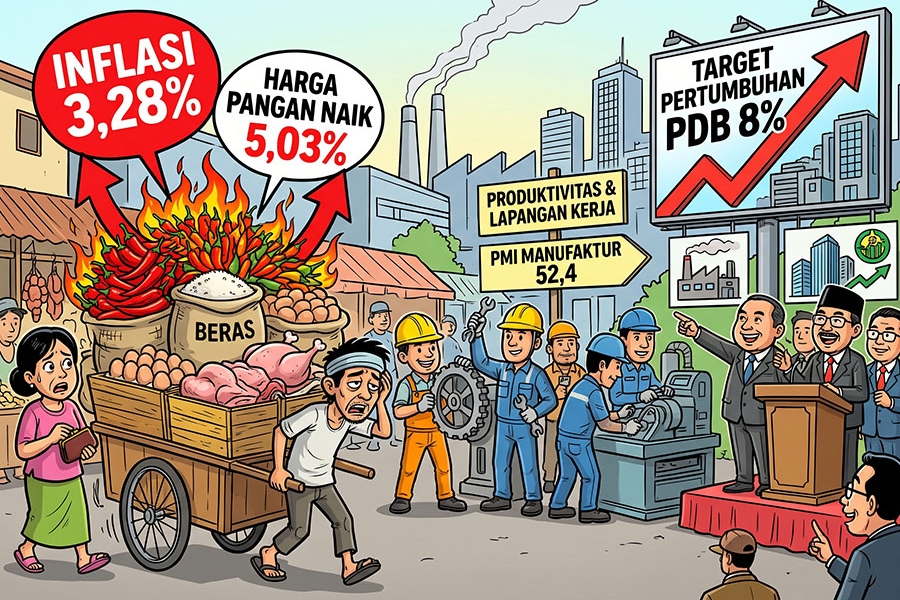
The Central Statistics Agency (BPS) recorded Indonesia's inflation at 3.28% year-on-year (yoy) in September 2026. The increase in goods and services prices reduces public purchasing power, especially among low-income groups, fixed-salary employees, and day laborers. When incomes do not rise in tandem with living costs, the public tends to cut non-primary spending and prioritize basic needs. This inequality in impact also has the potential to widen the socioeconomic gap because low-income groups have far more limited financial breathing room to cope with price hikes.
Inflationary pressures also affect micro, small, and medium enterprises (MSMEs) through rising raw material and logistics costs. Business actors face the dilemma of either raising selling prices at the risk of losing customers or maintaining prices with increasingly razor-thin profit margins. This condition can constrain the ability of MSMEs to sustain their business activities amidst shifts in consumer purchasing power. In addition to facing domestic economic challenges, the government must also account for global financial market pressures that could increase state financing costs.
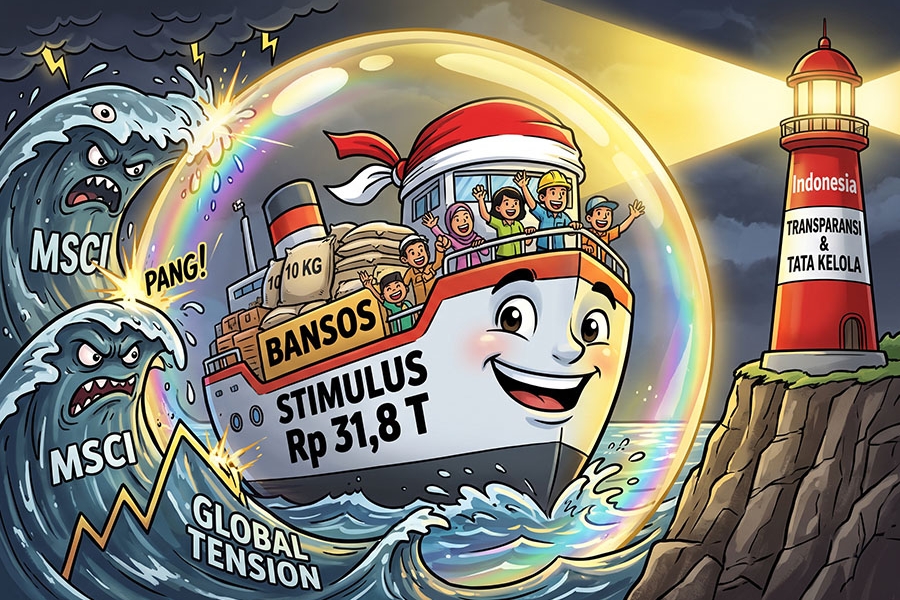
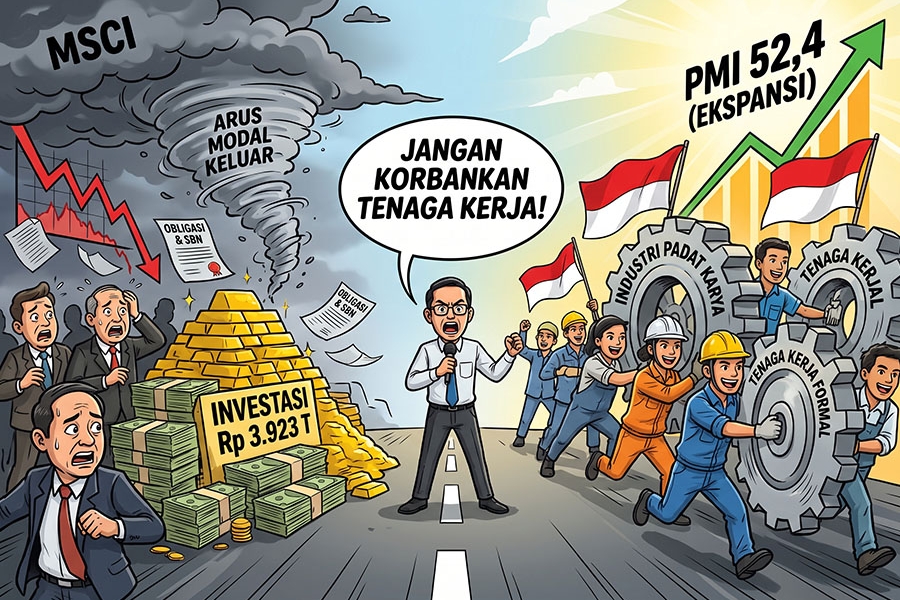
The investment risk premium via Indonesia's five-year credit default swap (CDS) reached 100.26 basis points as of October 22, 2026, while the 10-year tenor stood at 150.14 basis points. According to a Bank Danamon Indonesia economist quoted by Kontan.co.id, the rise in CDS is not only related to the sentiment surrounding Morgan Stanley Capital International (MSCI), but is also influenced by rising US Treasury bond yields, geopolitical risks, and weakening external conditions for Indonesia. The five-year CDS had even begun rising prior to MSCI's consultation announcement regarding the possible reclassification of Indonesia's status from Emerging Market to Standalone. The increase in this risk premium has the potential to drive up the issuance costs of Government Securities (SBN), especially when it coincides with high global yields.
In facing these conditions, the government needs to maintain flexibility in the timing and tenor of SBN issuances, capitalize on domestic investor demand, and consider liability management and a mix of rupiah- and foreign currency-denominated bond issuances. According to economist projections, the 10-year SBN yield could potentially move toward 7.5%–7.6% in the short term if Indonesia's CDS remains above 100 basis points, US Treasury yields stay high, and pressure on the rupiah persists. The baseline projection places the yield at around 7.4% by the end of 2026, assuming Bank Indonesia's policy response strengthens, the risk premium begins to subside, and global conditions improve. These developments underscore the importance of financing management that considers both government funding needs and financial market conditions.
The series of fiscal policies, inflationary pressures, and rising risk premiums hold implications for business actors, investors, and the public. Companies must account for shifts in consumer purchasing power and rising operational costs when formulating budgets and business strategies. Investors must closely monitor SBN yield developments and Indonesia's risk premium when evaluating investment decisions. Meanwhile, low-income citizens need to meticulously manage their expenses when price hikes are not offset by income growth. For MSMEs, cost control and pricing strategy adjustments are vital to maintain competitiveness without disregarding consumer capacity.
Ultimately, achieving the 6% economic growth target in 2027 requires a delicate balance between optimizing APBN expenditure, strengthening investment, safeguarding public purchasing power, and managing state financing risks. The government must ensure that fiscal incentives are directed at productive sectors, maintain a stable investment climate, and flexibly manage SBN issuances according to market developments. At the same time, business actors must reinforce cost efficiency and prepare financial planning that accounts for changes in demand and funding costs. The synergy of fiscal policy, monetary stability, and adaptive business strategies will remain a critical factor in supporting sustainable economic growth.














 tpc.consulting
 tpc.consulting
 info@taxindo.co.id