




The depreciation of the rupiah to Rp18,060 per US dollar on October 22, 2026, coupled with Indonesia's five-year credit default swap (CDS) risk premium hitting 100.26 basis points, is mounting intense pressure on the business world and government financing. Amidst these conditions, Bank Danamon Indonesia's Lead Economist projects that the BI-Rate could potentially increase to 6.25% by the end of 2026 if external pressures persist. These developments highlight the severe challenges in safeguarding real sector competitiveness, financial market stability, and fiscal resilience amidst heightened global uncertainty..
The weakening of the exchange rate, which is nearing Rp18,000 per US dollar, presents a formidable challenge for young entrepreneurs and micro, small, and medium enterprises (MSMEs). The surging US dollar directly inflates the procurement costs of imported raw materials, machinery, equipment, and components. This condition severely compresses profit margins, particularly for the manufacturing and labor-intensive sectors that remain reliant on overseas supplies. Concurrently, business actors face constrained ability to pass these rising production costs onto consumers due to stagnant public purchasing power and fierce price competition.
Sectors highly vulnerable to these rising import costs include textiles and textile products, automotive and components, electronics, pharmaceuticals, and food and beverages. Retail trade reliant on imported goods also faces an imminent increase in the cost of goods sold. Under these circumstances, businesses are becoming increasingly cautious about expanding operations, increasing production capacity, or hiring new workers. The Secretary General of BPP HIPMI emphasized the critical need for policy synergy between the government and Bank Indonesia to maintain exchange rate stability without withdrawing support for productive sectors. Strengthening People's Business Credit (KUR), credit guarantees, logistics cost efficiency, and reducing import reliance are vital to preserving corporate resilience. HIPMI is also pushing for energy supply certainty, streamlined licensing, and accelerated downstreaming to fortify the domestic industrial supply chain.
On the monetary policy front, the BI-Rate, currently at 5.75%, is projected to potentially rise to 6.25% by the end of 2026 if external pressures do not abate. The Lead Economist of Bank Danamon Indonesia assesses that an interest rate hike could serve as a viable option to bolster the attractiveness of rupiah-denominated assets and dampen exchange rate volatility. While this is not yet an official Bank Indonesia decision, controlled core inflation currently provides the central bank some breathing room to evaluate the impact of previous policies before tightening further. However, prolonged pressure on the rupiah, weakening external financing, rising inflation expectations, or depletion of foreign exchange reserves could solidify the justification for raising the benchmark rate. The effectiveness of hedging transaction incentives also depends heavily on the risk premiums investors must bear; if premiums rise and capital inflows stall, these incentives may not suffice to maintain the allure of domestic assets.
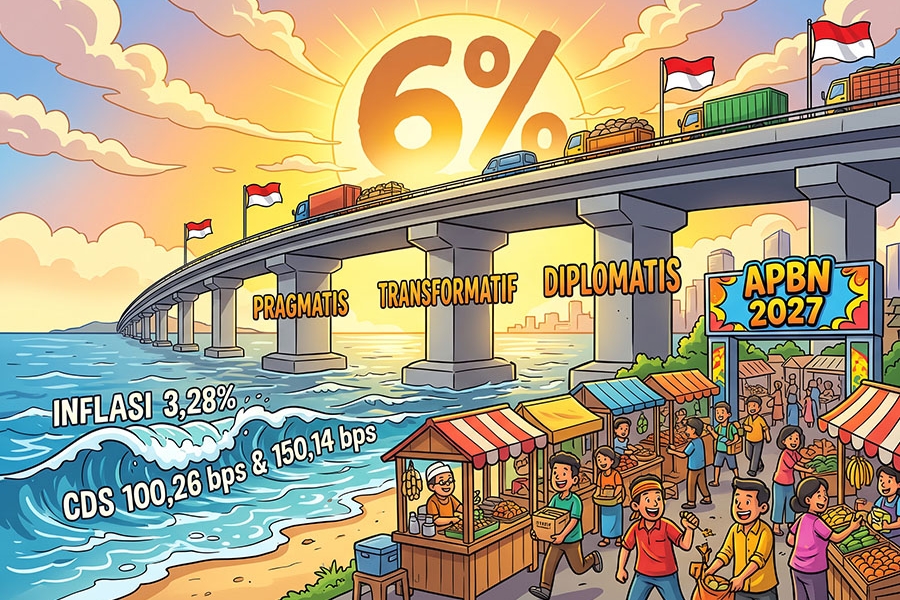
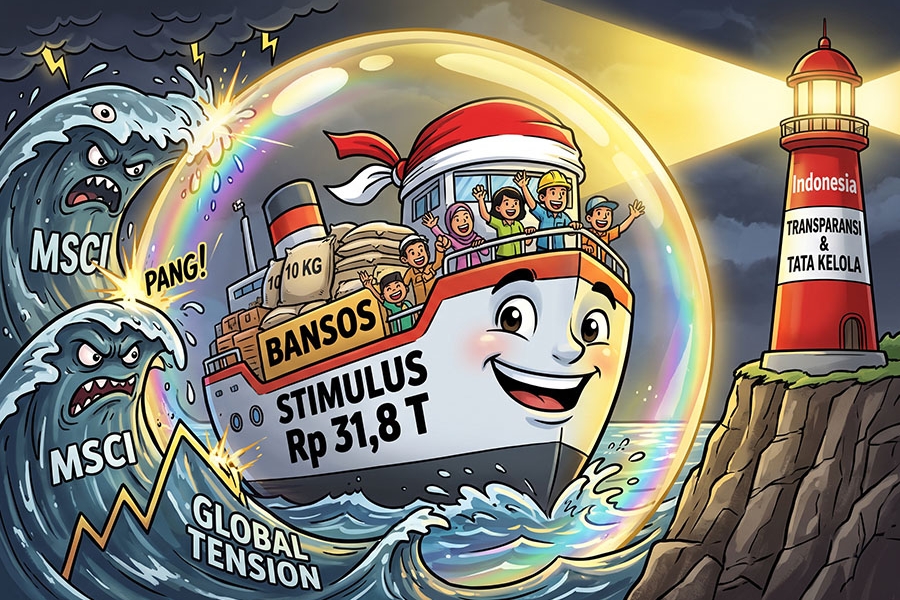
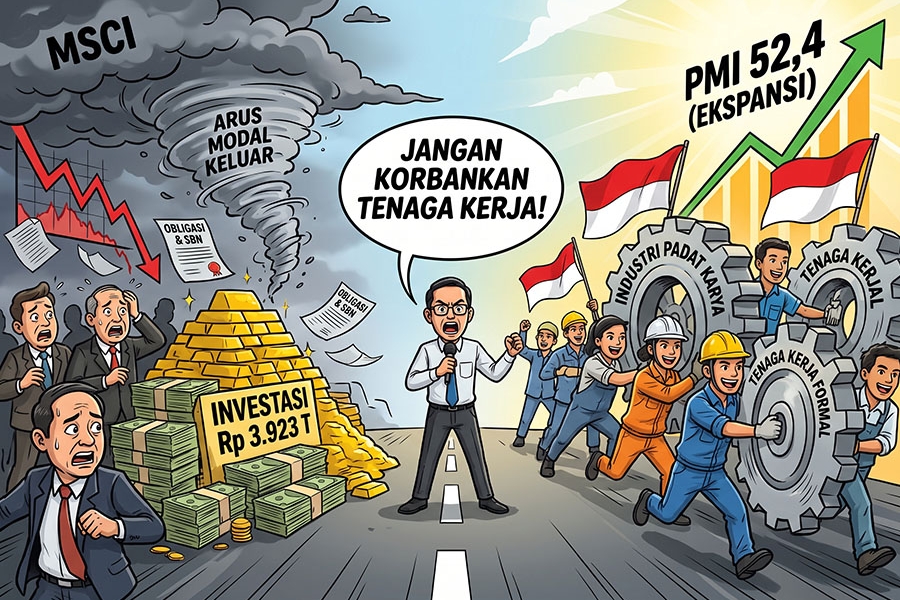
Exchange rate pressures are intrinsically linked to the government's fiscal financing challenges. As of October 22, 2026, Indonesia's five-year CDS premium reached 100.26 basis points, while the 10-year tenor stood at 150.14 basis points. On the same day, the rupiah closed down by 0.21% at Rp18,060 per US dollar. Economists warn that a weaker rupiah threatens to swell the government's subsidy burden and strain fiscal resilience. Furthermore, heightened risk perceptions regarding Indonesia are reflected in these rising CDS premiums, meaning exchange rate pressures and sovereign financing risks must be managed simultaneously. Capital outflows linked to the Morgan Stanley Capital International (MSCI) announcement and anticipation of Bank Indonesia's rate decisions are primary factors keeping the rupiah pinned around the Rp18,000 threshold.
To navigate these headwinds, the government must meticulously manage the issuance of Government Securities (SBN)—both in rupiah and foreign currency denominations—by balancing financing needs, domestic liquidity, and global monetary policy shifts. Improving domestic liquidity conditions can serve as a buffer for the SBN market, as reflected by the Indonesia Overnight Index Average (IndONIA) briefly dropping below 5%. Additionally, maturing Bank Indonesia Rupiah Securities (SRBI) and the lowering of the reserve requirement ratio (GWM) could encourage banks to reallocate funds into SBN. While offering discounts on hedging costs may help sustain foreign fund flows into the government bond market, external risks remain a dominant force over SBN yields. Should the US Federal Reserve adopt a tighter-than-expected monetary stance, the adjustment in yield spreads between US Treasuries and SBN could push SBN yields into the 7%–7.5% range.
The combination of a depreciating rupiah, potential benchmark interest rate hikes, and surging risk premiums introduces complex operational hurdles for both the private sector and the state. Business actors reliant on imported inputs must proactively anticipate procurement cost spikes through rigorous cost management and supply chain optimizations, including exploring hedging instruments. For the government, shifting investor risk perceptions demand prudent debt financing strategies to ensure budget requirements are met without destabilizing the financial market. Ultimately, tightly coordinated fiscal and monetary policies, sustained support for MSME credit access, and accelerated downstreaming will be decisive in insulating Indonesia's economic resilience against external shocks.












 tpc.consulting
 tpc.consulting
 info@taxindo.co.id