




The classification dispute over the receipt of media rebates became the central focus in the court ruling of PT DIAMGI against the Directorate General of Taxes (DJP). The tax authority performed a positive correction to the Value Added Tax (VAT) Tax Base (DPP PPN in Indonesian) based on the assumption that these rebates constituted management service fees under Circular Letter SE-24/PJ/2018. However, the DJP's inability to prove the actual delivery of services or the existence of payments during the specific tax period became the primary obstacle in defending this correction before the Panel of Judges.
The core of this conflict stems from the interpretation of Article 4, Paragraph (1) of the Indonesian VAT Law (UU PPN) and its implementing regulations. The DJP argued that rebates received by advertising agencies from media vendors contain elements of service activity, namely efforts to influence clients to place advertisements with specific vendors. Conversely, PT DIAMGI maintained that the rebates were purely bonuses or rewards for achieving specific purchase volumes provided in cash, which are explicitly stated as non-VAT-able objects in the very same regulation (SE-24/PJ/2018) cited by the DJP.
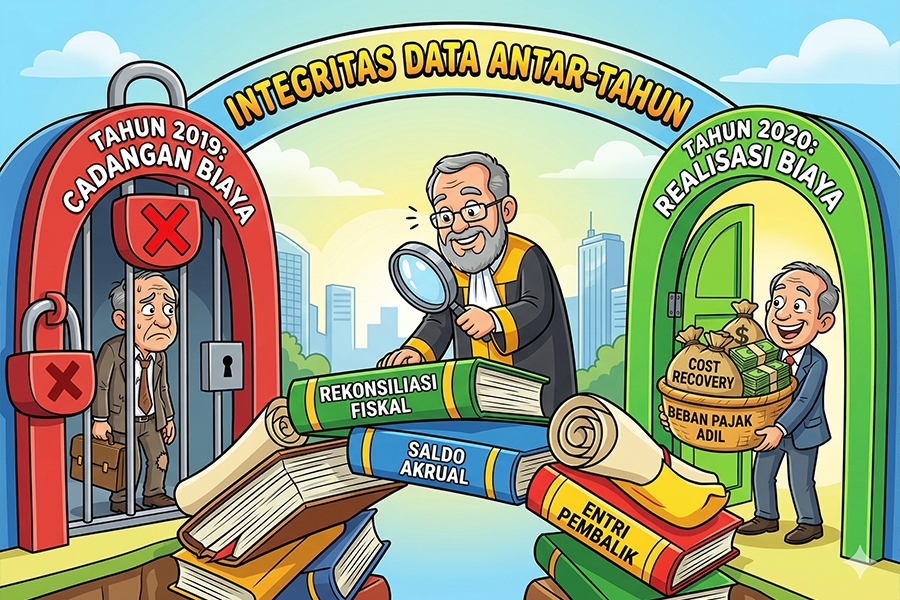
The Panel of Judges provided a resolution emphasizing formal aspects and material evidence. The Judges discovered that the DJP utilized cash flow evidence from different tax periods (May–December 2020) to justify a correction for the March 2020 tax period. Legally, VAT is due at the time of delivery or payment. Since no invoices were issued and no payments occurred in March 2020, the Panel of Judges concluded that there was no taxable object to be corrected for that period.
The implications of this ruling underscore the critical importance of tax period "cut-off" accuracy during audits. This decision serves as a valuable precedent for companies in the advertising industry, establishing that media rebates cannot be automatically categorized as management services without evidence of billing activities and fund flows during the period in question. Strong documentation strategies regarding the specific type of reward received are key to mitigating future fiscal risks.
In conclusion, PT DIAMGI's victory proves that robust legal arguments must be supported by the validity of historical transaction data. The Tax Court consistently applies the principles of legality and legal certainty regarding when tax is due as the basis for overturning presumptive corrections made by tax authorities.
















 tpc.consulting
  tpc.consulting
  info@taxindo.co.id