




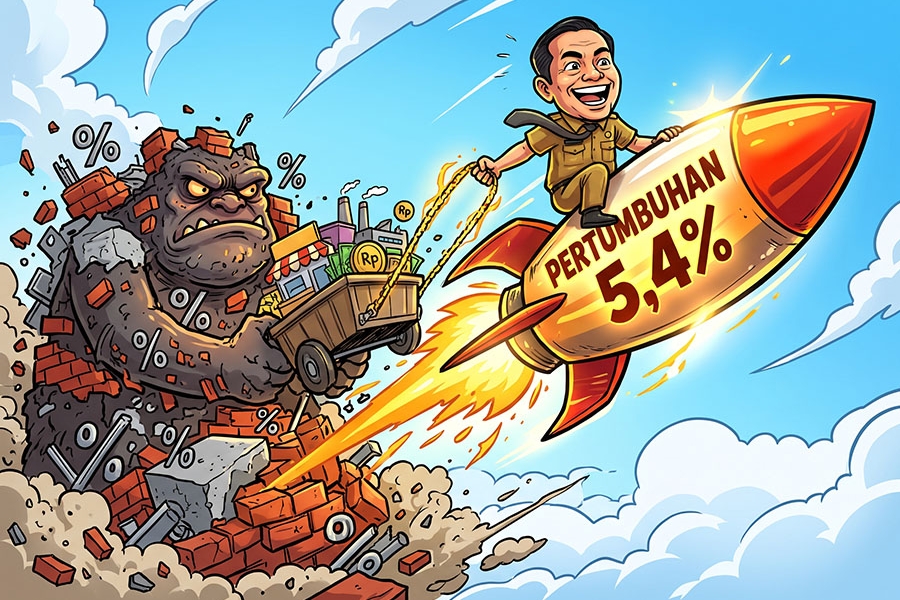
Indonesia is wrestling with massive structural challenges in capturing the economic value of its booming digital sector, with foreign corporations reaping the lion's share of profits while domestic artificial intelligence (AI) utilization remains largely consumer-facing. Conversely, the government is aggressively unleashing nine economic stimulus programs for 2027, prominently featuring the Government-Borne Article 21 Income Tax (PPh 21 DTP) for workers earning up to Rp10 million monthly. To drive financial inclusion, the government is also mobilizing a Rp1.28 trillion "One Person, One Account" initiative targeting 25.16 million low-income adults..
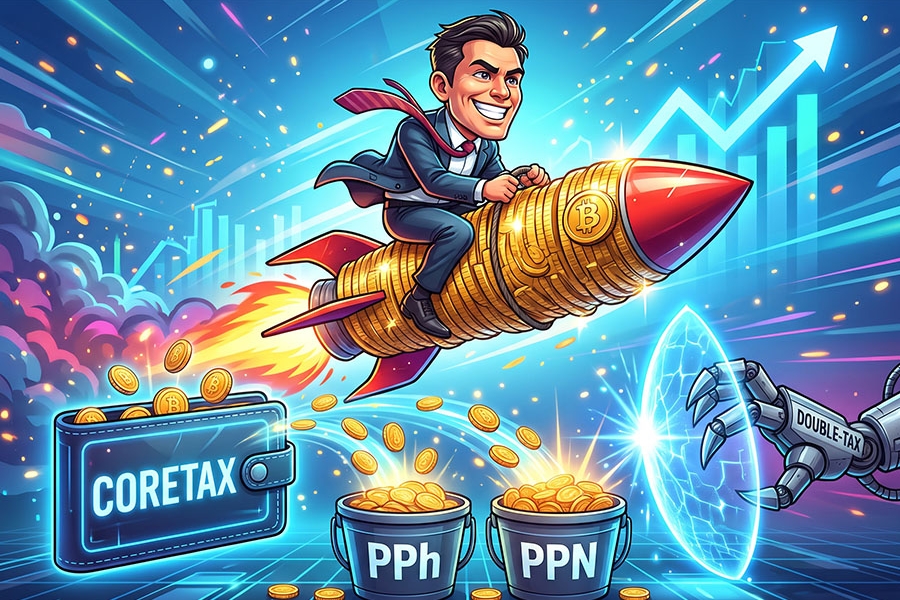
Indonesia's colossal digital market size has not proportionately translated into domestic economic gains. The Director of Digital Economy at the Center of Economic and Law Studies (Celios) assessed that the vast majority of digital economic value is siphoned off by foreign platforms that command massive market share in Indonesia without establishing domestic headquarters. This dynamic directly sabotages state revenue optimization, specifically regarding corporate income tax from foreign digital entities. A parallel structural weakness is evident in the adoption of artificial intelligence (AI). While domestic data center investments are scaling up, critical data processing still heavily occurs offshore, and Indonesia's domestic AI engagement remains disproportionately skewed toward pure consumption rather than production or economic capitalization.
The e-Conomy SEA 2026 report by Google, Temasek, and Bain & Company projects Southeast Asia's digital economy Gross Merchandise Value (GMV) to surge 17% to US 1 trillion by 2035. Staggeringly, 58% of the working population across the top six Southeast Asian markets (SEA-6) are already utilizing generative AI. This adoption is aggressively driving the rise of agentic commerce—a model where AI agents autonomously hunt for products, compare pricing, and execute purchases. According to the report, 75% of AI users are comfortable delegating price hunting and purchasing to AI agents. To capitalize on this, Google strongly recommends that e-commerce, retail, and consumer product actors adopt the Universal Commerce Protocol (UCP), an open standard allowing AI agents to interface seamlessly with products and services while rigorously safeguarding consumer privacy.
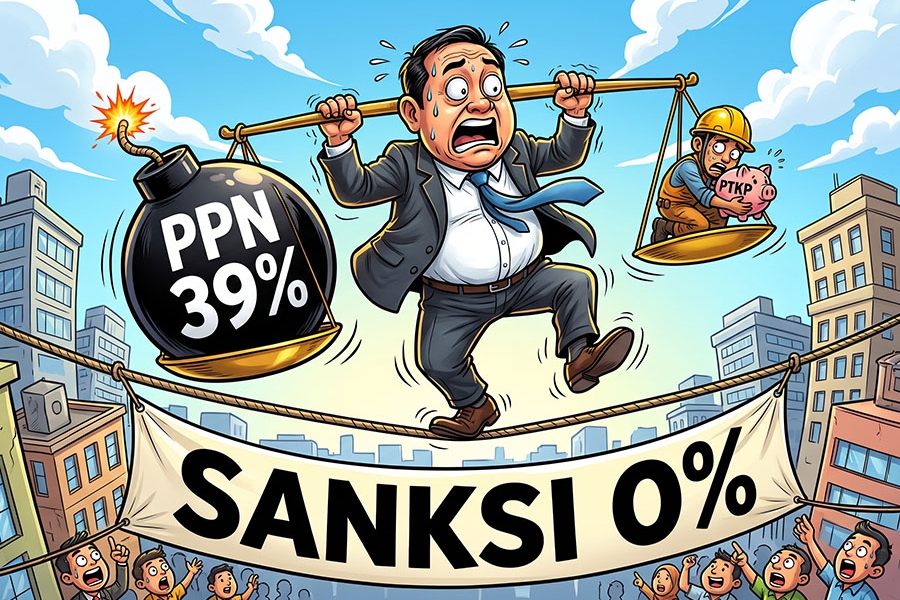
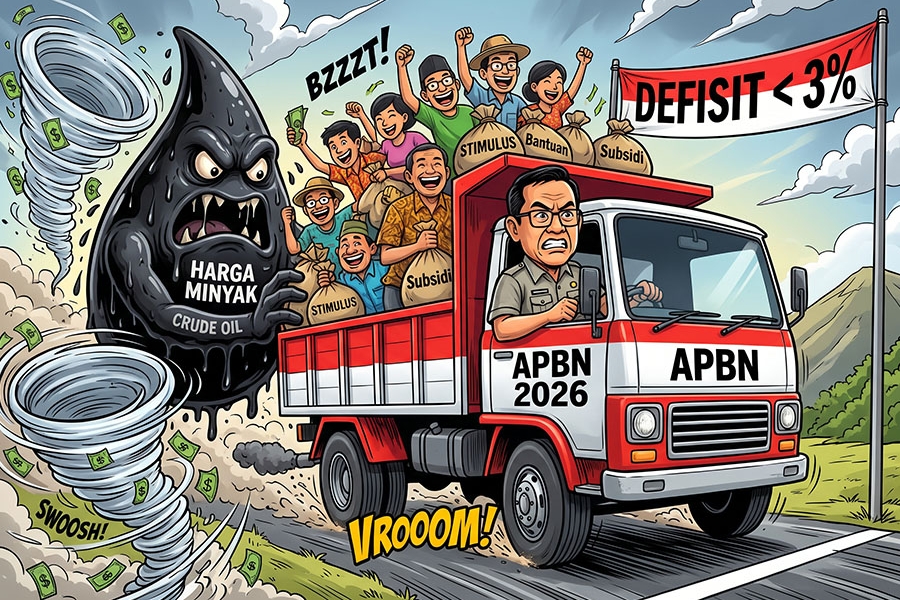
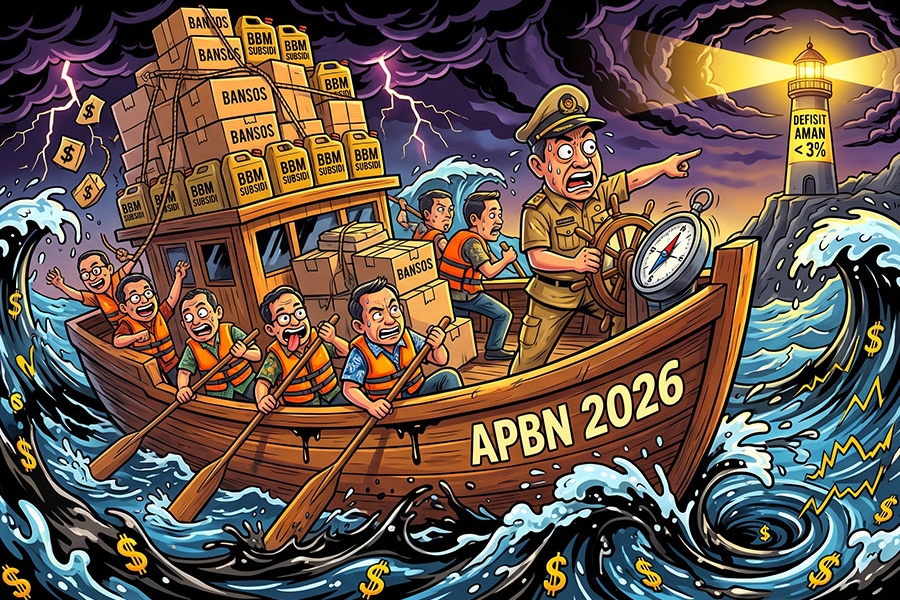
While grappling with these digital optimization hurdles, the government is rapidly assembling a formidable fiscal shield to protect public purchasing power via nine economic stimulus programs for 2027. The crown jewel is the sweeping expansion of the Government-Borne Article 21 Income Tax (PPh 21 DTP) facility. Slated to cover 7.54 million formal sector workers earning up to Rp10 million per month from January through December 2027, this massive tax relief will be rolled out across all business sectors, heavily prioritizing footwear, textiles and textile products (TPT), electronics, and tourism. The government is also actively evaluating an upward revision of the Non-Taxable Income (PTKP) threshold—frozen at Rp54 million annually since 2016—factoring in cumulative inflation and minimum wage trajectories, though specific figures remain unfinalized.
Beyond income tax relief, the 2027 stimulus package includes a National Internship Program for 150,000 participants and a National Vocational Program for 300,000. It also promises a 100% boost to Job Loss Guarantee (JKP) benefits for workers earning under Rp2.3 million, alongside a 50% discount on Work Accident (JKK) and Death Guarantee (JKM) premiums for non-wage earners (BPU). In the property sector, the government is extending the 100% Government-Borne VAT (PPN DTP) for houses priced up to Rp5 billion (covering the first Rp2 billion) and offering a flat 6% subsidized mortgage (KPR MBT). The jewelry industry will see expanded uncollected VAT facilities and a proposed adjustment to the gold purity standard from 99.95% to 99.9%.
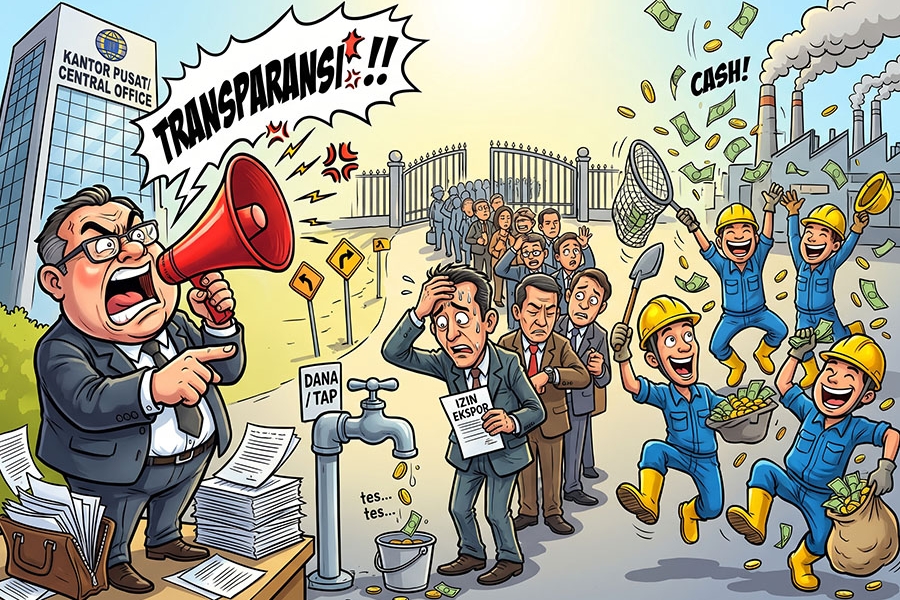
While finalizing the 2027 strategy, the government is launching immediate social protection blitzes in late 2026. A standout initiative is the "One Person, One Account" program. Armed with a Rp1.28 trillion budget, the government aims to forcibly expand financial inclusion by opening free bank accounts for 25.16 million unbanked adults in the lowest four economic deciles. Each new account will receive a Rp50,000 initial seed balance directly from the State Budget. This move is designed to rapidly integrate the poorest demographics into the formal banking sector while drastically improving the efficiency and targeting accuracy of future social assistance disbursements. The government is racing to execute this within a two-month window.
Additionally, the late 2026 blitz includes a 10 kg rice assistance drop for 33.24 million beneficiary families and a Rp900,000 Wage Subsidy Assistance (BSU) payout targeting 13.3 million workers earning under Rp3.5 million per month or below the provincial minimum wage. To spur domestic mobility during the year-end holidays, the government is slashing 100% of the VAT on domestic economy-class flights between December 22, 2026, and January 10, 2027, targeting 3.75 million passengers.
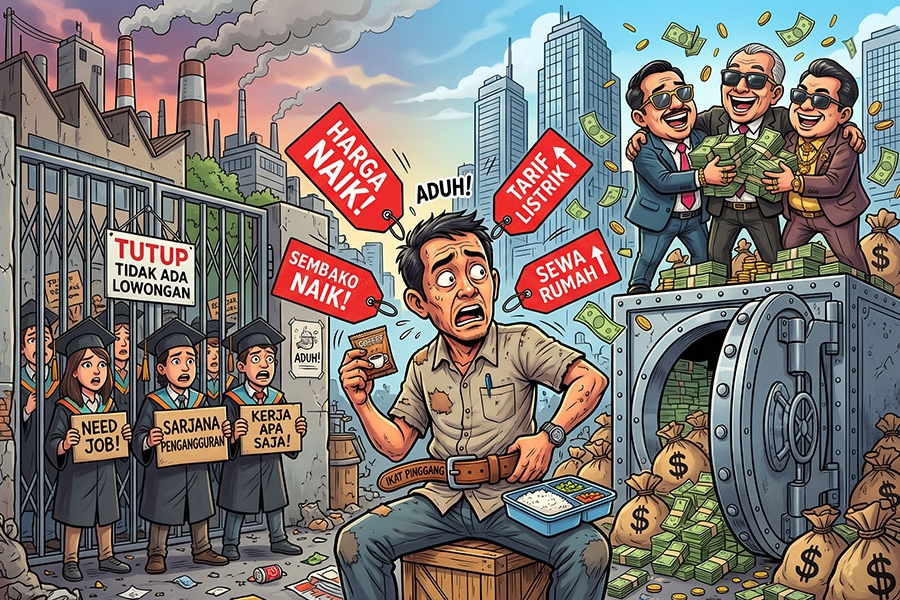
This aggressive triad of policies reveals that fortifying the national economy requires a ruthless balance between domesticating digital economic value, deploying massive fiscal stimuli, and forcefully expanding grassroots financial inclusion. The explosion of AI and the digital market must be countered by fierce efforts to build domestic ecosystems to prevent Indonesia from remaining a mere consumer market for foreign tech giants. Simultaneously, the barrage of government stimuli aims to construct a firewall around public purchasing power and drag low-income demographics into the formal financial sector.
Ultimately, the government must fiercely enforce tax compliance on foreign digital entities, incentivize domestic AI infrastructure, and execute its massive stimulus rollout with pinpoint accuracy. Business actors, in turn, must urgently upgrade their digital infrastructure, optimize product data for AI agentic commerce, and thoroughly understand available tax facilities to survive and thrive in this rapidly shifting landscape








 tpc.consulting
 tpc.consulting
 info@taxindo.co.id