


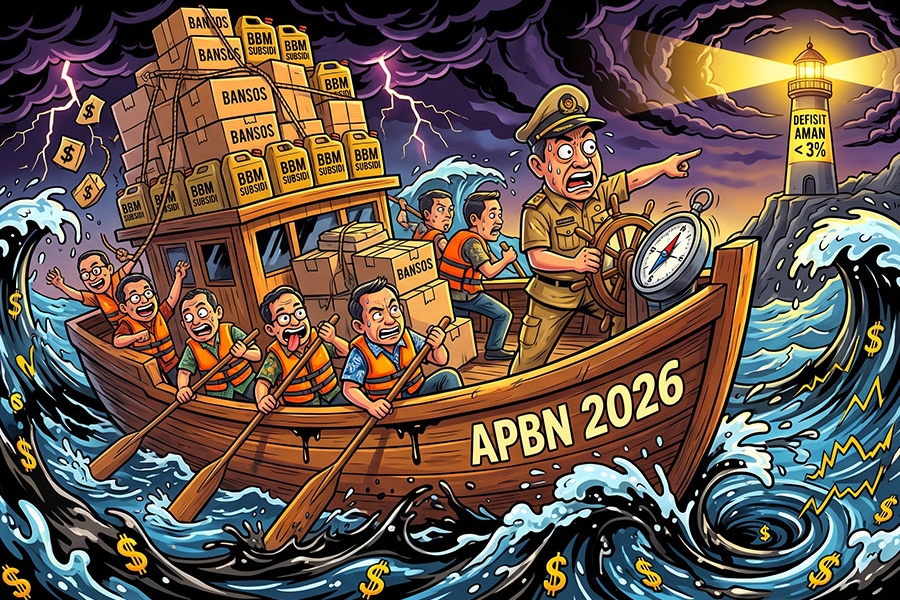
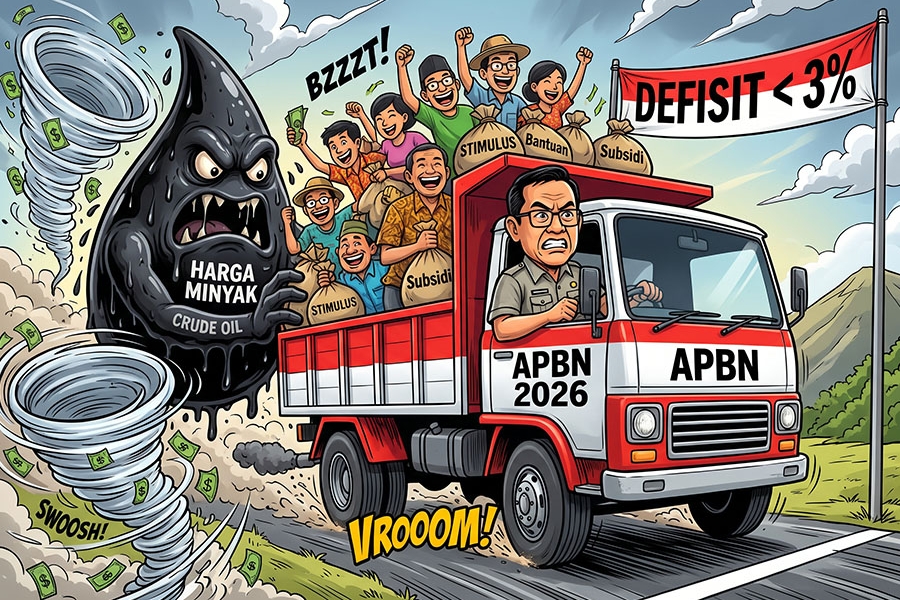
The Ministry of Finance recorded solid state revenue performance reaching Rp2,618 trillion through October 2026, keeping the fiscal deficit contained at 1.47% of GDP. However, the government must disburse a massive remaining expenditure of Rp945.2 trillion across the final two months to finance energy subsidies and public economic stimulus packages. Economists warn of widening deficit risks approaching the statutory 3% GDP threshold under persistent currency depreciation and global crude oil price pressures..
The Indonesian State Budget (APBN) performance through October 31, 2026 recorded solid achievements, with state revenue realization expanding by 23.9% year-on-year to reach Rp2,618 trillion. Minister of Finance Suahasil Nazara highlighted that this revenue represents 83% of the official budget target, propelled by tax receipts of Rp1,796.8 trillion, customs collections of Rp267.2 trillion, and a 37% surge in non-tax state revenue (PNBP) reaching Rp551.8 trillion. Concurrently, state expenditures absorbed Rp2,997.2 trillion, accounting for 78% of the annual budgetary ceiling.
These budgetary trends brought the fiscal deficit to Rp379.3 trillion or 1.47% of gross domestic product (GDP), contracting by 20.9% compared to the same period last year. The primary balance posted impressive results with a surplus of Rp114.8 trillion, reversing from previous deficit positions. The Finance Minister affirmed that a budget deficit does not represent commercial corporate losses, serving instead as a deliberate national investment tool designed to fulfill citizen welfare requirements. Strong revenue collections across the first ten months now face an immediate endurance test from massive government spending acceleration ahead of year-end.
Authorities allocated Rp945.2 trillion in state expenditures throughout November and December 2026 to complete national priority agendas and economic relief measures. Vice Minister of Finance Luky Alfirman and Director General of Budget Sudarto emphasized that fiscal authorities will maintain strict monitoring while chasing remaining revenue targets of Rp590.1 trillion to keep the full-year deficit around 2.85% of GDP. This year-end allocation finances a Rp31 trillion economic stimulus package covering wage subsidy assistance, staple food aid, and basic bank account openings for vulnerable households.
Public spending burdens intensified substantially as energy subsidies and compensation outlays surged 32% year-on-year to Rp415.8 trillion as of October 2026. This energy expenditure escalation reflects Indonesian Crude Price (ICP) deviations climbing to US$94.4 per barrel against the budgetary benchmark of US$70, alongside rupiah depreciation touching Rp17,529 per US dollar. To manage heightened consumer demand for subsidized Pertalite and Solar fuels, the government projects annual energy subsidy budgets expanding toward Rp500 trillion. Massive energy obligations and accelerating year-end disbursements prompted immediate analytical alerts from independent economic observers.
Economic analysts project that the 2026 state budget deficit risks widening toward the statutory ceiling between 2.8% and 2.9% of GDP. CORE Indonesia Economist Yusuf Rendy Manilet noted that government fiscal space is tightening as tax authorities must collect an average of Rp257 trillion monthly over the final two months, far above the previous monthly average of Rp179.68 trillion. Dual pressures from currency depreciation and rising sovereign bond yields also compound government debt service charges.
Bank Danamon Chief Economist Irman Faiz estimated that the full-year deficit could reach 2.89% of GDP as non-interest fourth-quarter spending hits Rp1,144 trillion. Net state revenue expansions also face friction from corporate tax refund payment obligations. Economists urge fiscal authorities to calibrate the timing of sovereign bond issuances carefully to prevent excessive financing cost inflation.
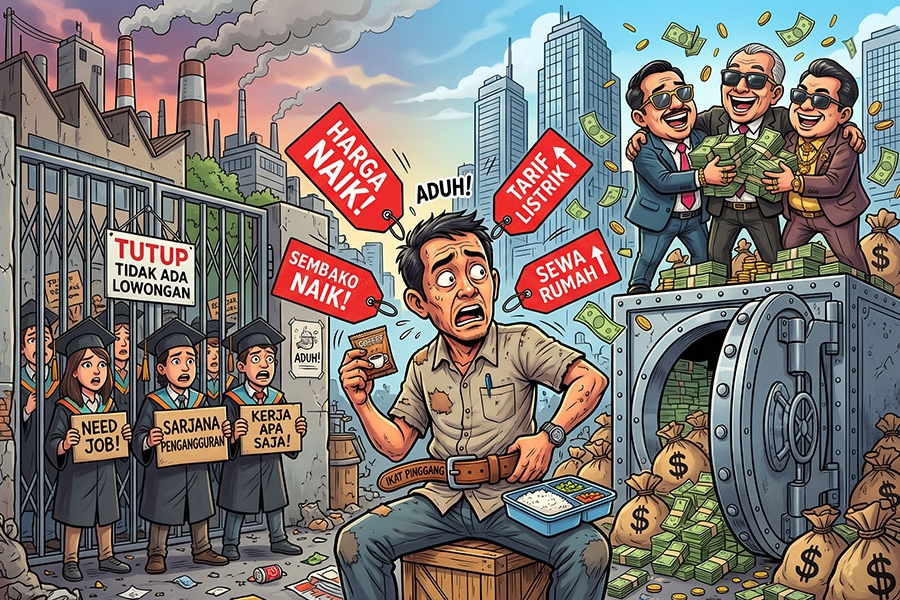
Accelerating Rp945 trillion in state expenditures alongside expanded energy subsidies delivers tangible dual impacts across the national macroeconomic ecosystem. For industrial operators and capital market investors, reliable government spending injects vital liquidity into the real economy and stabilizes domestic consumption, although rising sovereign bond yields require prudence in managing corporate capital expenditure costs. Meanwhile, for lower-middle-income families, continuous fuel subsidies and targeted cash disbursements serve as indispensable cushions protecting household purchasing power from imported inflationary pressures.
In conclusion, the 2026 state budget demonstrates resilient fundamentals that require rigorous spending discipline to prevent fiscal deficits from breaching the statutory 3% GDP boundary. The government is recommended to streamline bureaucratic operational expenses, accelerate targeted social stimulus absorption, and coordinate actively with monetary authorities to manage foreign exchange risks. Business enterprises are advised to track sovereign bond yields and currency fluctuations closely to construct proactive financial hedging strategies and safeguard working capital efficiency heading into the next fiscal year.












 tpc.consulting
 tpc.consulting
 info@taxindo.co.id