



The Directorate General of Taxes (DJP) is forcefully implementing the dynamization of Article 25 Income Tax (PPh 25) installments across November and December 2026 to extract roughly Rp514 trillion and hit the year-end revenue projection. Simultaneously, the government has finalized the trial of a centralized financial reporting system (FRSW) involving 1,052 companies listed on the Indonesia Stock Exchange (IDX), a move designed to simplify administration while aggressively tightening corporate tax oversight. This tax dragnet is further expanding internationally with the enforcement of the 15% Global Minimum Tax (GMT), targeting over 8,100 multinational entities operating in Indonesia..
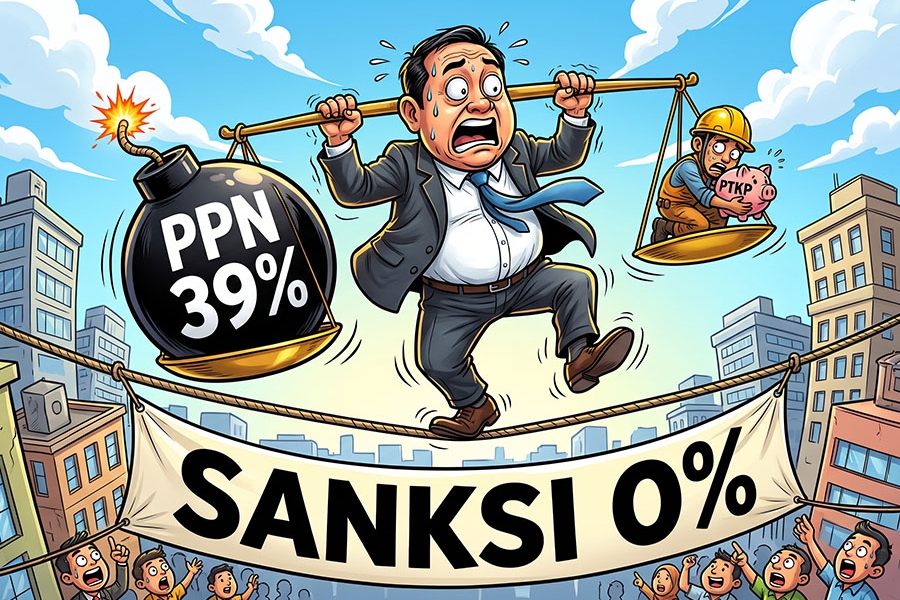
The Ministry of Finance's DJP has triggered the dynamization of Article 25 Income Tax (PPh 25) installments for November and December 2026, specifically targeting corporate taxpayers exhibiting business growth. The Director of Counseling, Services, and Public Relations at the DJP explained that this upward adjustment of monthly installments ensures tax payments remain strictly proportional to current-year operating profits. Officially, the DJP states this prevents massive tax liabilities from piling up during Annual Tax Return (SPT) filings while bolstering corporate tax credits.
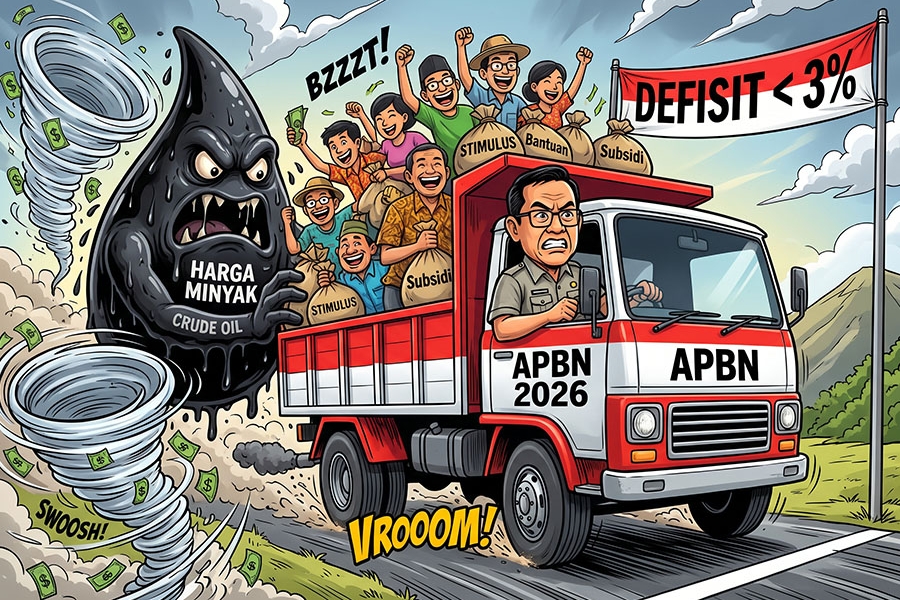
However, the aggressive timing cannot be ignored. The DJP vehemently denied accusations that this dynamization is ijon pajak (advance tax harvesting or pulling forward future tax revenues to cover current deficits). The reality is that total tax revenue by the end of 2026 is projected at Rp2,310.8 trillion—only 98% of the Rp2,357.7 trillion State Budget (APBN) target. To even hit that lowered projection, the DJP still needs to collect a staggering Rp514 trillion in the final two months, facing a potential Rp46.9 trillion shortfall against the APBN target. This revenue panic is compounded by projections that the budget deficit could widen to 2.85% of GDP.
The Head of Tax Research at the Center of Indonesia Taxation Analysis (CITA) warned that despite official denials, the immense pressure to hit targets could easily drive regional tax offices to execute ijon practices. This would place a brutal squeeze on corporate cash flows, especially since businesses are already enduring aggressively tightened tax restitution (refund) policies.
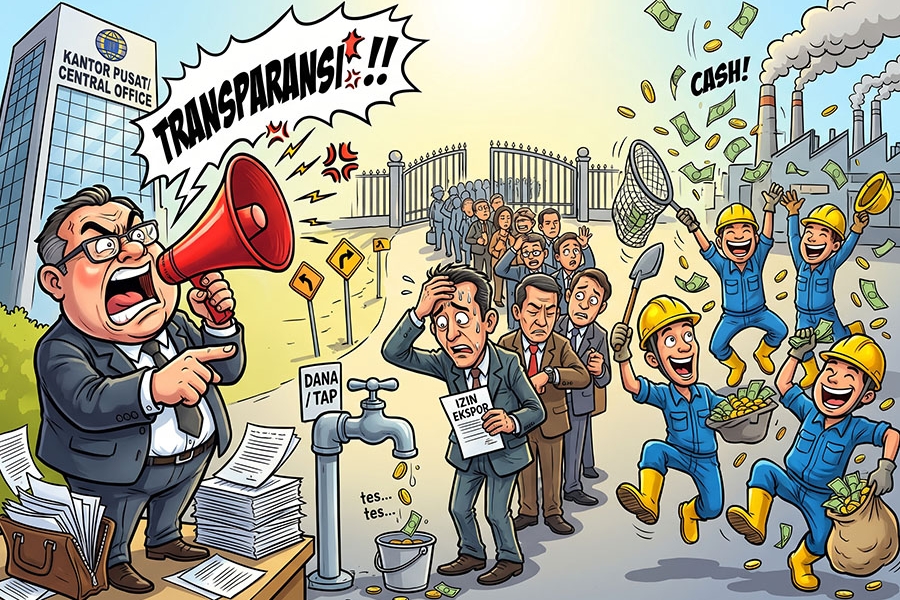
While squeezing current corporate tax flows, the government is simultaneously building a highly sophisticated surveillance infrastructure. The Ministry of Finance, DJP, IDX, and the Financial Services Authority (OJK) have successfully concluded the trial phase of the Joint Financial Reporting Platform (PBPK), or Financial Reporting Single Window (FRSW), involving 1,052 public companies. While billed as an administrative simplification tool to stop redundant reporting across multiple agencies, the DJP openly admitted that this centralized digital data will massively enhance corporate tax compliance oversight.
Economists and capital market analysts are raising red flags. They emphasize that while integration is efficient, the government must install impenetrable cyber-security walls against malware and strictly limit data access. Crucially, they warn the government against weaponizing the FRSW exclusively as an automated tax audit tripwire, which would spark widespread panic among public issuers. Despite these fears, Corporate Income Tax (PPh Badan) revenue is already demonstrating fierce enforcement success, maintaining consistent growth above 20% since May 2026 and hitting Rp303.5 trillion by October.
The final pillar of this revenue strategy extends beyond Indonesia's borders. The DJP has officially identified 8,163 multinational enterprise (MNE) entities falling under the 15% Global Minimum Tax (GMT) net. Based on 2023 Country-by-Country Reports, this population includes 1,758 parent entities and 6,409 subsidiaries, both domestic and foreign. The GMT targets MNE groups with consolidated revenues exceeding EUR 750 million.
Enforced via PMK Number 136 of 2024, Indonesia is deploying three primary weapons to combat base erosion and profit shifting (BEPS): the Income Inclusion Rule (IIR) and Domestic Minimum Top-up Tax (DMTT), active since 2025, and the Undertaxed Profits Rule (UTPR), which went live on January 1, 2026. Already, 78 taxpayers have voluntarily registered under self-assessment mechanisms. This global tax floor is designed not only to claw back shifted profits from low-tax jurisdictions but also to level the playing field between global conglomerates and domestic players, including MSMEs.
The aggressive deployment of PPh 25 dynamization, the FRSW integration, and the Global Minimum Tax signals a massive, unyielding tightening of Indonesia's tax enforcement machinery. For the business sector, this trifecta presents severe immediate and structural challenges. Public issuers and multinational corporations must radically upgrade their financial transparency, cross-jurisdictional tax planning, and cash flow management to survive the impending wave of integrated audits. Meanwhile, the government must ensure that its desperate scramble for end-of-year revenue does not cross the line into predatory ijon practices that could asphyxiate corporate growth and destabilize the broader economy.














 tpc.consulting
 tpc.consulting
 info@taxindo.co.id