




The Ministry of Industry recorded processing sector growth at 5.87% in Q3/2026, outpacing the national economic growth of 5.47%. However, the Indonesian Employers Association (Apindo) warned that this economic recovery is heavily skewed, with approximately 10 subsector groups still contracting. Amidst this disparity, the government is targeting the completion of the fourth revision of the Natural Resources Export Earnings (DHE SDA) regulation by late November 2026, introducing a 100% foreign exchange-to-rupiah conversion relaxation to lubricate business liquidity..
For the first time in 14 years, the processing industry's growth (5.87%) surpassed the national GDP growth (5.47%) in Q3/2026. This sector contributed 19.22% to the GDP (Rp1,168.99 trillion), absorbed 19.98 million workers by May 2026, and attracted Rp246.9 trillion in investments (a 46.7% contribution). On the trade front, manufacturing accounted for 82.64% of national exports (US$182.83 billion) from January to September 2026, corroborated by a strong Manufacturing PMI of 54.0 in October. Top performers included furniture (12.68%), basic metals (9.94%), and leather/footwear (9.75%), while the rubber and plastics subsector contracted significantly by 7.96%.
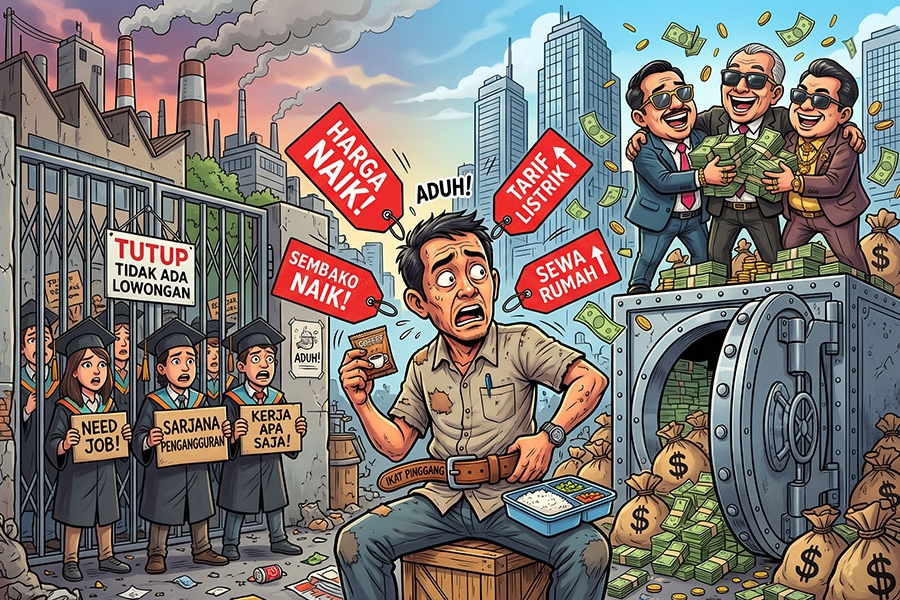
The Indonesian Employers Association (Apindo) cautioned that aggregate national growth fails to reflect the reality across the entire business supply chain. Despite manufacturing contributing 1.20 percentage points to overall GDP growth, around 10 subsectors are actively contracting, including rubber and plastics (-7.96%), air transport (-4.83%), and several agriculture and mining subsectors. Apindo attributes this divergence to stark disparities in demand, production capacity, and sectoral competitiveness. Contracting sectors remain highly vulnerable to rupiah fluctuations and exorbitant logistics costs. Apindo stressed the need for broad-based competitiveness so that economic growth creates a multiplier effect for high-quality job creation rather than relying solely on a few dominant sectors.
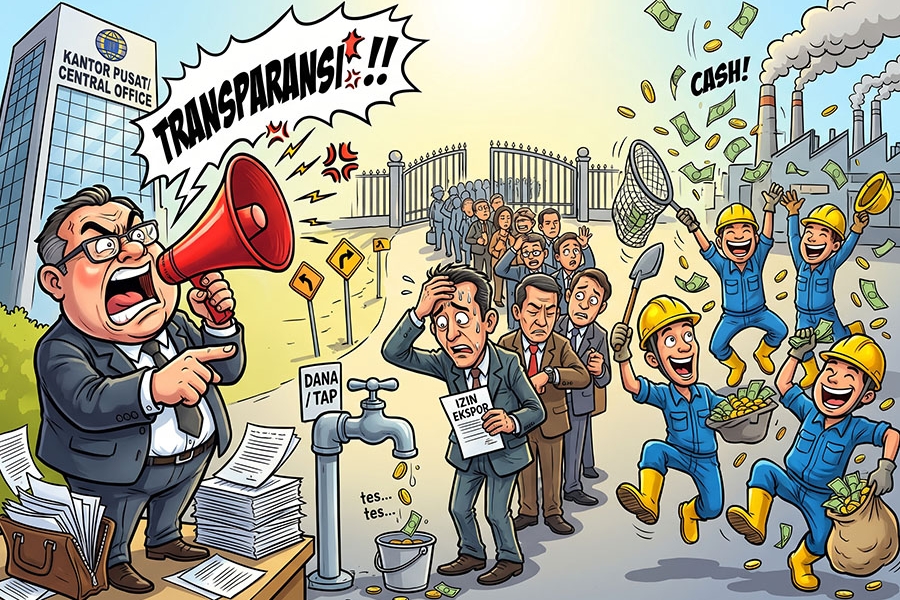
To address business liquidity needs amidst this uneven recovery, the government is expediting the fourth revision of the DHE SDA Government Regulation and its technical rules, targeting a late November 2026 completion. The revision will relax foreign exchange conversion limits, allowing up to 100% conversion to rupiah, up from the previous 50% cap. This technical adjustment will be codified in a forthcoming Minister of Finance Regulation (PMK).
Bank Indonesia data highlights the urgency of this liquidity intervention: non-oil and gas DHE SDA between June and August 2026 stood at US$30.1 million, down from US$31.4 million the previous year. Converted DHE dropped 37.4% to US$14.9 million, while retained foreign exchange DHE spiked 273.1% to US$9.7 million. Alongside the conversion relaxation, the government is continuously evaluating DHE SDA retention obligations and the single-window export mechanism via PT Danantara Sumberdaya Indonesia (DSI), noting that export values have increased and price disparities have narrowed during the transition phase.
Ultimately, the record-breaking 5.87% growth in the processing industry marks a major macroeconomic victory, yet the contraction in key subsectors exposes the fragility of an uneven recovery. The government's planned 100% DHE SDA conversion relaxation serves as a critical tactical maneuver to inject necessary liquidity and foreign exchange flexibility into the corporate sector. Moving forward, the government must rapidly finalize the DHE SDA technical regulations to provide absolute legal certainty, while simultaneously addressing the structural bottlenecks—such as logistics costs and exchange rate vulnerabilities—plaguing the contracting subsectors. Business actors must proactively monitor these regulatory shifts to strategically recalibrate their cash flow management and foreign exchange requirements.













 tpc.consulting
 tpc.consulting
 info@taxindo.co.id