



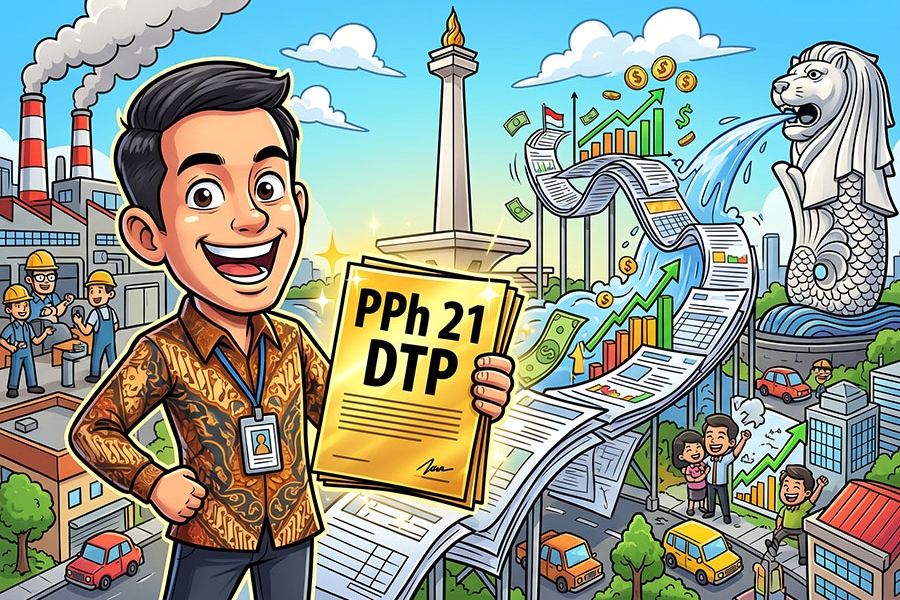
The Indonesian and Singaporean governments have forged a Joint Task Force (JTF) to tackle the fallout from forest fires while simultaneously investigating alleged tax avoidance through transfer pricing and misinvoicing. Domestically, the government is finalizing a massive Government-Borne Article 21 Income Tax (PPh 21 DTP) incentive for 7.54 million formal sector workers earning up to Rp10 million per month in 2027. This dual-track strategy aims to fiercely protect state revenue from corporate base erosion while throwing a vital fiscal lifeline to a middle class suffocating under the combined weight of income and consumption taxes..
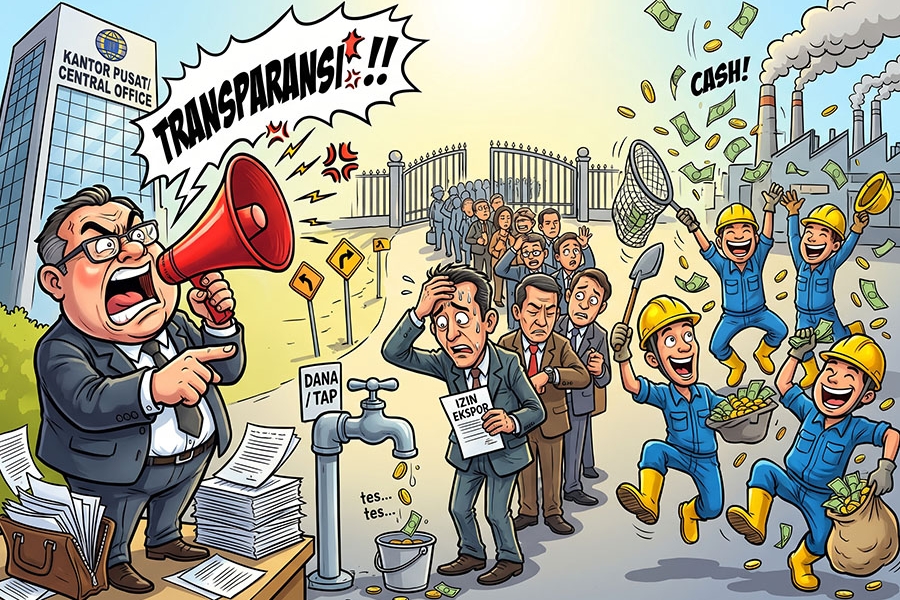
Strengthening cross-border tax surveillance has become an urgent government priority to safeguard state revenue from sophisticated tax avoidance schemes. Indonesia and Singapore have officially agreed to form the Joint Task Force on Strengthening Business Responsibilities between Indonesia and Singapore (JTF). Initially sparked by bilateral cooperation to handle the fallout from forest and land fires (karhutla), the JTF's mandate explicitly includes investigating alleged corporate tax avoidance via transfer pricing and misinvoicing. In executing this, both nations will drastically tighten coordination, automate information exchange, and execute targeted crackdowns within their respective jurisdictions.
The Director General of Taxes (DJP) explained that this Singaporean cooperation is critical to dismantling profit shifting maneuvers executed through affiliated transactions. A primary modus operandi under scrutiny involves domestic corporate taxpayers establishing "marketing offices" in Singapore. These offshore entities charge exorbitant marketing fees back to the Indonesian parent, artificially deflating taxable profits in Indonesia while the Singaporean entity potentially enjoys Corporate Income Tax exemptions down to 0%. While transfer pricing is a standard and legal business practice—provided the transactions possess economic substance and adhere to the arm's length principle—tax observers are urging the DJP to aggressively tighten oversight against its abuse. Recommended countermeasures include launching joint tax audits, optimizing Advance Pricing Agreements (APA), and utilizing the Mutual Agreement Procedure (MAP) to prevent double taxation.
This fierce crackdown on cross-border corporate tax evasion runs parallel to the government's aggressive push to deliver domestic tax stimulus. The government is targeting 7.54 million formal sector workers earning up to Rp10 million per month as recipients of the Government-Borne Article 21 Income Tax (PPh 21 DTP) incentive, running from January to December 2027. Previously restricted to the labor-intensive and tourism sectors, this incentive is slated for expansion across all business sectors, though prioritizing footwear, textiles and textile products (TPT), electronics, and tourism. The detailed mechanisms are currently being heavily coordinated among the Ministry of Manpower, the Central Statistics Agency (BPS), and the Ministry of Finance, with strict calculations regarding the ultimate blow to state revenue.
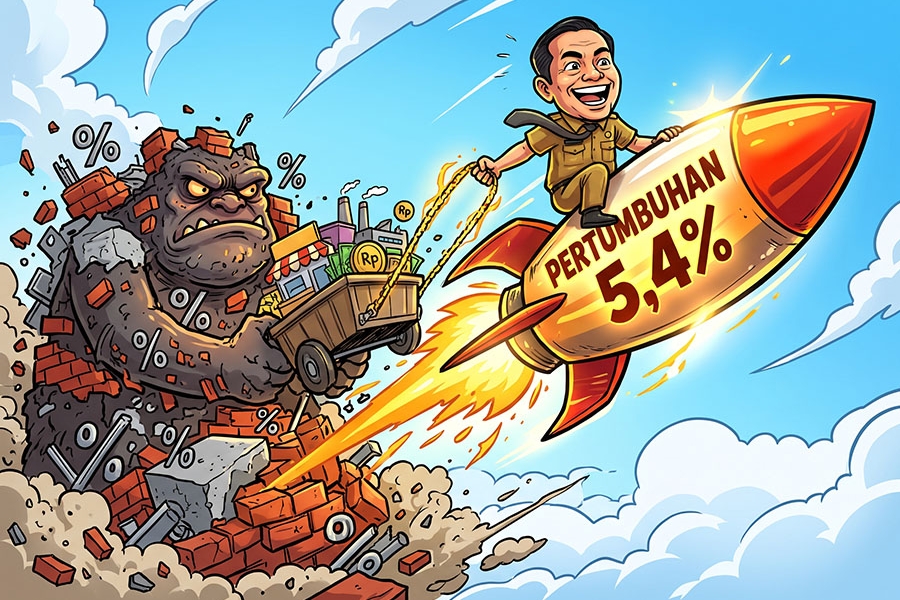
Beyond the PPh 21 DTP, the government is assembling a massive war chest of economic stimuli for 2027. This includes a National Internship Program for 150,000 job seekers starting April 2027, a National Vocational Program for 300,000 participants throughout 2027, expanded Job Loss Guarantee (JKP) benefits, and an upward adjustment to the Non-Taxable Income (PTKP) threshold, which has languished at Rp54 million per year since 2016. Additional lifelines include extending uncollected VAT facilities for the jewelry industry and precious metal consumers, a 50% relaxation on Work Accident (JKK) and Death Guarantee (JKM) premiums for non-wage earners, Government-Borne VAT (PPN DTP) for housing, and subsidized mortgages (KPR) locked at a 6% flat rate.
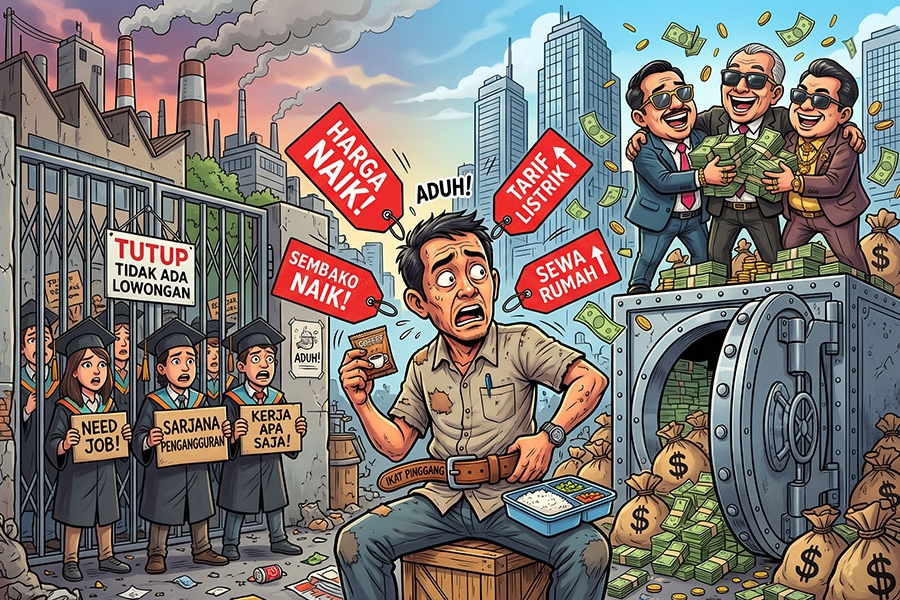
These massive incentive plans are a direct response to the crumbling purchasing power of the middle class, which currently bears the brunt of the nation's taxation on both income and daily consumption.
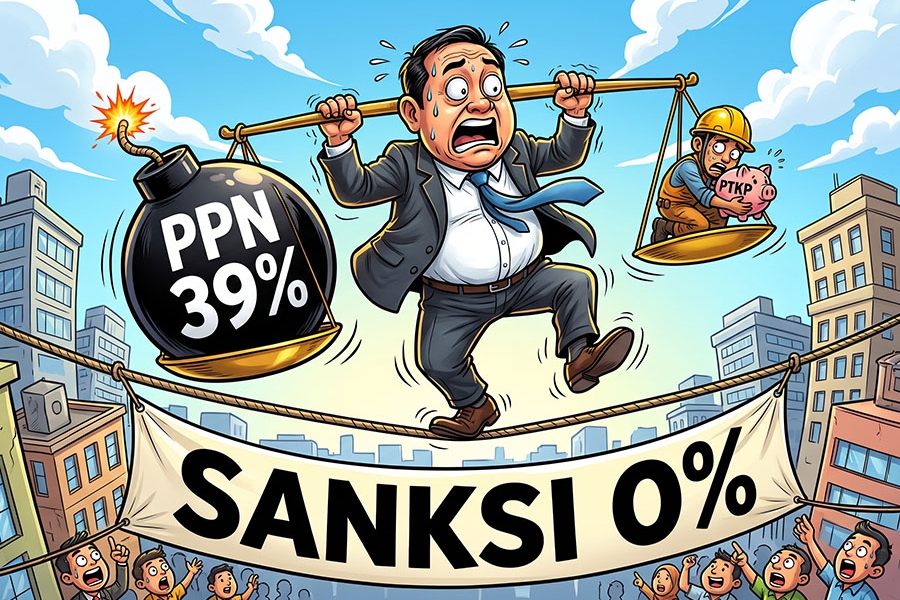
The middle-class tax burden stems primarily from Article 21 Income Tax (PPh 21) and Value Added Tax (VAT). Based on data through August 2026, PPh 21 revenue hit Rp171.5 trillion (surging 17.4% year-on-year), while self-paid individual income tax reached only Rp18.2 trillion. Staggeringly, income tax collected directly from employee paychecks is roughly nine times higher than self-paid individual income tax. This burden is particularly crushing because the PTKP baseline has remained frozen at Rp54 million since 2016. As inflation drives up nominal wages, more workers are shoved into higher tax brackets, resulting in heavier tax burdens without any actual increase in real purchasing power.
Beyond paycheck deductions, the middle class faces an 11% effective VAT on general goods and services—such as mobile credit, processed foods, clothing, vehicles, and digital services—and a full 12% VAT on luxury goods. The middle class and aspiring middle class collectively account for at least 81.49% of total national household consumption. However, tax observers note that based on Commitment to Equity (CEQ) studies, the proportional VAT burden relative to income between the middle and upper classes is not drastically different, largely due to VAT exemptions on basic necessities. Conversely, individual income tax is highly progressive, evidenced by data showing that over 50% of individual income tax revenue is paid by taxpayers in the Rp500 million and above income bracket. Therefore, any assessment of tax burden distribution must rigorously account for the specific income and asset characteristics of each societal tier.
Achieving true fiscal justice requires a ruthless balance between hunting down cross-border tax evasion and deploying decisive fiscal lifelines to the domestic workforce. The government must ensure the Indonesia-Singapore JTF operates with lethal efficiency through rapid information exchange and robust dispute resolution mechanisms like APA and MAP. Simultaneously, the government must immediately finalize the technical regulations for the 2027 PPh 21 DTP to ensure accurate targeting and absolute certainty for both employers and employees. The planned PTKP adjustment must also be mathematically rigorously aligned with cumulative inflation to restore genuine purchasing power. For corporate actors, strict adherence to the arm's length principle and meticulous transfer pricing documentation remain the ultimate defenses against escalating tax audits and legal uncertainty.











 tpc.consulting
 tpc.consulting
 info@taxindo.co.id