



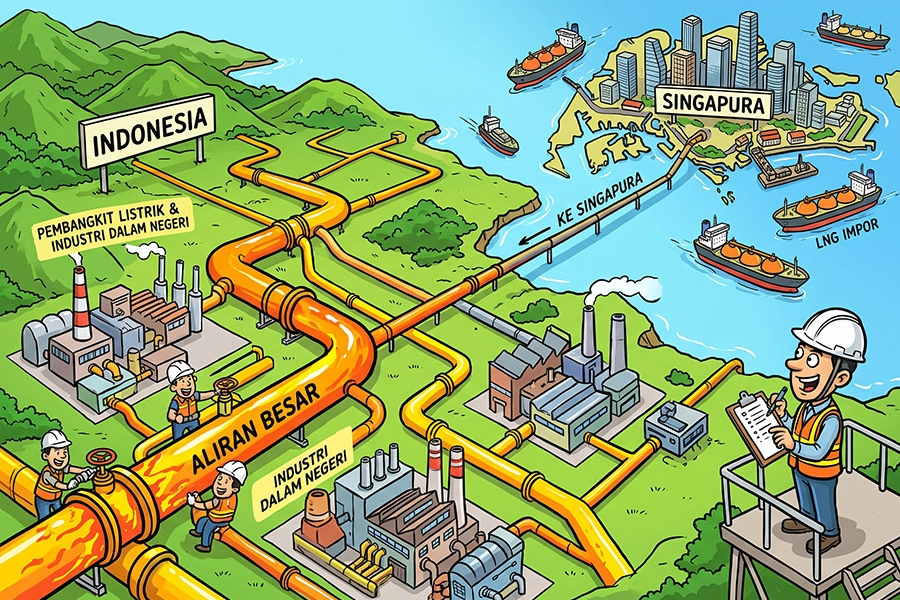
Indonesia officially slashed natural gas exports to Singapore by 31 BBTUD starting October 24, 2026, redirecting the supply to strengthen domestic electricity grids. While the National Energy Council (DEN) emphasized the importance of balancing domestic needs with binding sales contracts, Singapore’s energy authorities downplayed the impact, activating contingency plans to import liquefied natural gas (LNG) from alternative sources..
The Indonesian government initiated the reduction of natural gas exports to Singapore to secure domestic energy reliability amidst escalating regional tensions. The Head of the Special Task Force for Upstream Oil and Gas Business Activities (SKK Migas) detailed that the reduction amounts to 31 billion British thermal units per day (BBTUD). This comprises 15 BBTUD from Natuna, which is being redirected to PT PLN Batam via the WNTS–Pemping Island–Batam pipeline, and 16 BBTUD from Sumatra, reallocated for electricity needs in Batam, Bintan, and Sumatra through the PT Transportasi Gas Indonesia (TGI) pipeline.
SKK Migas stated that this policy is firmly grounded in Article 8 paragraph (1) of the Oil and Gas Law, which mandates the prioritization of natural gas utilization for domestic interests. The government has also opened the door to evaluating future gas export contracts, including the possibility of not renewing agreements with countries deemed uncooperative. The Minister of Energy and Mineral Resources noted that these evaluations aim to protect national interests and ensure domestic demands are met.
An element of caution was introduced by the National Energy Council (DEN). A DEN member supported the redirection to ensure electricity reliability and drive industrial growth—especially since natural gas is a cleaner power generation alternative to coal. However, DEN reminded the government and gas producers to carefully observe existing Gas Sales Agreements (PJBG), Domestic Market Obligations (DMO), and agreed-upon contract commitments to avoid unnecessary legal or commercial fallout during this diplomatic and economic maneuver.
Singapore responded swiftly, with its Energy Market Authority (EMA) stating that the supply reduction from Indonesia affects less than 2% of Singapore's daily gas requirement, which exceeds 1,000 BBTUD. Notably, EMA claimed the reduction is equivalent to only 17 BBTUD over an 18-day period—a stark discrepancy from the 31 BBTUD figure announced by SKK Migas. EMA confirmed that Singapore has contingency plans in place and can mitigate the shortfall by procuring gas from alternative sources.
Operationally, Singapore GasCo announced its readiness to ramp up liquefied natural gas (LNG) imports at any time. Power generation companies in Singapore are also mandated to maintain adequate fuel reserves, including diesel. Meanwhile, Singaporean gas importer Gas Supply acknowledged that the temporary reduction from Indonesian upstream suppliers is impacting customer deliveries. The company is actively coordinating with suppliers and affected clients, though it did not specify the number of impacted customers or the expected duration of the supply constraint.
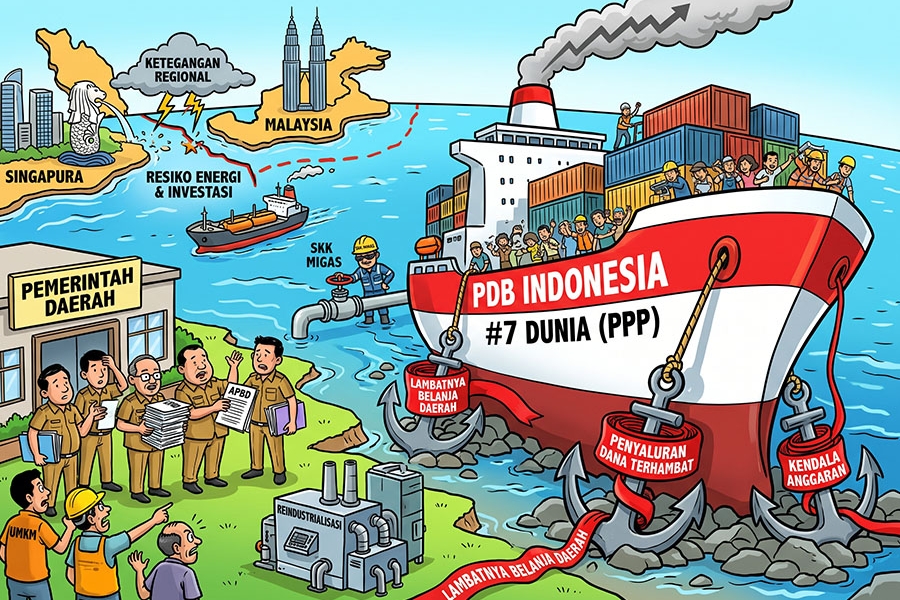
The reallocation of gas solidifies Indonesia's commitment to prioritizing its domestic energy grid to support rapid industrialization. However, the execution of this strategy requires meticulous contract management to ensure national interests do not trigger disruptive commercial disputes. For businesses on both sides of the strait, this development is a critical stress test of supply chain resilience, underscoring the urgent need to secure alternative energy sources and adapt to shifting geopolitical and trade dynamics.









 tpc.consulting
 tpc.consulting
 info@taxindo.co.id