Social Turmoil and Economic Threat: How Demonstrations Affect Investor Confidence and Fiscal Stability
Taxindo Prime Consulting
Monday, September 01, 2025 | 11:31 WIB
Optimized with Google Chrome
The recent surge of public demands and widespread waves of demonstrations has created uncertainty across various sectors. The serious impact of these demonstrations—ranging from infrastructure damage and negative investor sentiment to the potential for economic slowdown—highlights the interconnection between social stability and economic health. These various incidents have not only affected physical infrastructure but also investor confidence and macroeconomic stability.
The wave of protests, triggered by unanswered public issues, has fueled mass rallies, creating social instability that carries a serious impact on the national economy. The Ministry of Public Works and Housing (Kementerian PUPR) has allocated Rp900 billion to repair public facilities damaged by the anarchic actions, diverting vital development funds. This situation has sparked concerns among economists, who believe that violence and political uncertainty can make both domestic and foreign investors hesitant to commit capital, potentially reducing investment and slowing economic growth.
Furthermore, public dissatisfaction has also fueled the emergence of a tax boycott movement on social media, which could undermine the nation's fiscal foundation if the movement expands. Economists from INDEF also emphasize that investor confidence is heavily determined by how the government handles demonstrations; a persuasive and dialogue-based approach is key to maintaining stability.
Overall, these events demonstrate that the government must quickly take strategic steps to address public demands. An inadequate response risks an economic downturn, as political and social instability will hamper investment, affect state revenue, and disrupt development projects, which will ultimately harm all parties.
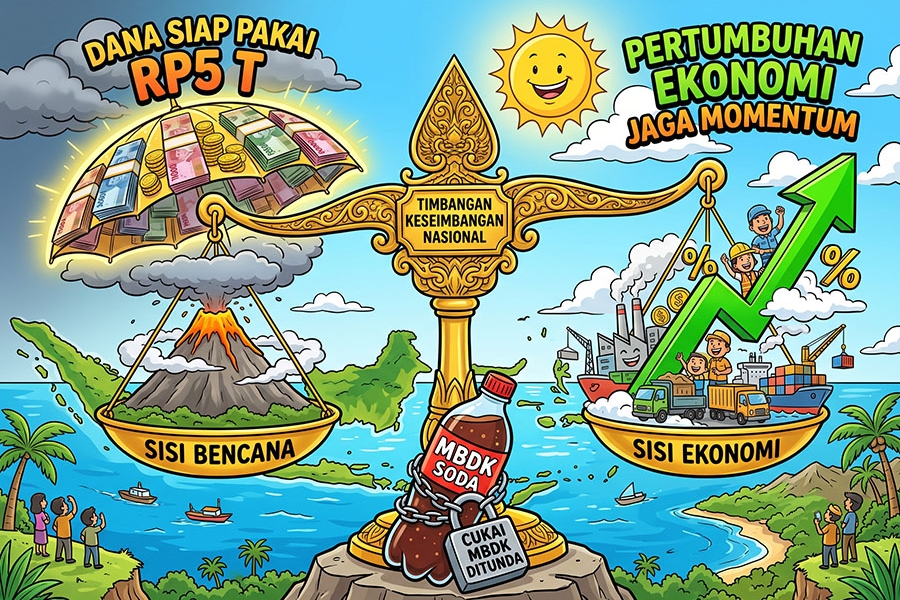
The rallies that culminated in anarchy have a complex and interconnected impact on the economy. Infrastructure damage forces the government to reallocate the budget, which should have been used for other development. On the other hand, negative sentiment from investors due to uncertainty and violence can hinder capital inflow and growth. The tax boycott movement, though still small, has the potential to damage the fiscal foundation. Therefore, the government must immediately take strategic action, not only to restore stability but also to substantively address public demands to prevent a more severe economic impact.
The gap between public expectations and current government policy poses a serious challenge to Indonesia's economic stability. The government must not only address physical damage and fiscal risks but also rebuild public and investor confidence. Appropriate handling of demonstrations and an effective response to public demands are key to maintaining the momentum of economic growth and attracting sustainable investment.


















 tpc.consulting
  tpc.consulting
  info@taxindo.co.id