




Current issues highlight fiscal policy adjustments aimed at strengthening the Micro and Small Enterprises (MSME) sector and regulating industry, amid scrutiny of public Consumption Pattern trends. The government establishes the Final Income Tax (PPh Final) rate for MSMEs at 0.5% without a time limit for individual taxpayers (OP) and single-person limited liability companies. Meanwhile, Finance Minister Purbaya Yudhi Sadewa opens the possibility of implementing special excise duties for illegal cigarette producers to transition them into the legal system. On the other hand, the lifestyle of Gen Z and Millennials drives public spending in October, even as Consumption among lower-income groups remains suppressed and the Free Nutritious Meals (MBG) program is deemed to potentially increase Inflationary pressure.
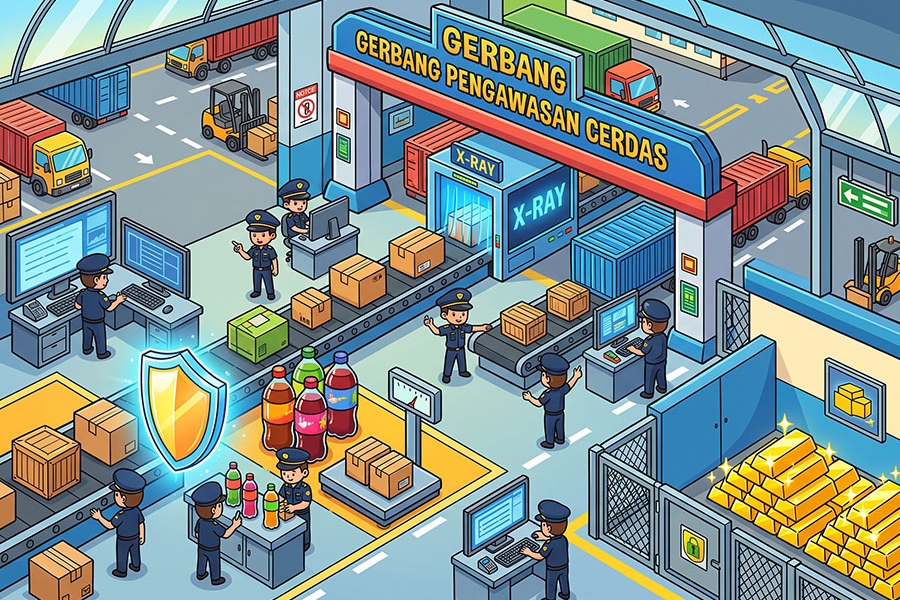
The government is making fiscal policy adjustments to provide legal certainty and increase State Revenue from the informal and illegal sectors. The government implements the 0.5% Final Income Tax (PPh Final) for MSMEs for individual taxpayers (OP) and single-person limited liability companies without a time limit. This decision aims to provide legal certainty and sustained tax incentives for MSMEs. In line with enforcement efforts, Finance Minister Purbaya offers the option of special excise duties for illegal cigarette producers. This policy aims to attract these illegal producers to enter the Tobacco Product Industrial Estate (KIHT) and legally contribute to State Revenue.
On the other hand, there is a significant challenge related to purchasing power and Food Price Stability. The Consumption Pattern as of October 2025 shows the middle class is impulsive, while lower-income communities have not yet recovered. This contrast explains the existence of an Economic Gap in economic recovery across income classes. This gap persists despite the fact that the lifestyle of Gen Z and Millennials drives public spending in October 2025, especially in the gadget category. This fact shows that the younger demographic segment is the main driver of discretionary consumption.
Apart from consumption challenges, the government also needs to be wary of the macroeconomic impact of social programs. The Free Nutritious Meals (MBG) program triggers Inflation, so the National Nutrition Agency (BGN) needs to create more diverse menus according to regional availability. This issue highlights the potential macroeconomic impact of a large social program on Food Price Stability and necessitates adjustments to the implementation strategy.
The government's decision to make the 0.5% Final Income Tax for MSMEs permanent provides stability for the small business sector. Meanwhile, the option of special excise duties for illegal cigarettes from Finance Minister Purbaya is a new approach in regulating the tobacco industry that aims to increase State Revenue. In terms of Consumption, although spending by Gen Z and Millennials drives total expenditure, the slow recovery of lower-income community consumption demands more targeted policies, especially since there are concerns that the MBG program may fuel Food Price Inflation.
The latest policy developments show the government's focus on fiscal adjustments through the permanent implementation of Final Income Tax for MSMEs and the excise plan for Illegal Cigarettes to strengthen State Revenue and the small business sector. The next challenge lies in ensuring that social programs like MBG do not create inflationary pressure, while simultaneously narrowing the Economic Gap in consumption recovery between income layers.















 tpc.consulting
  tpc.consulting
  info@taxindo.co.id