




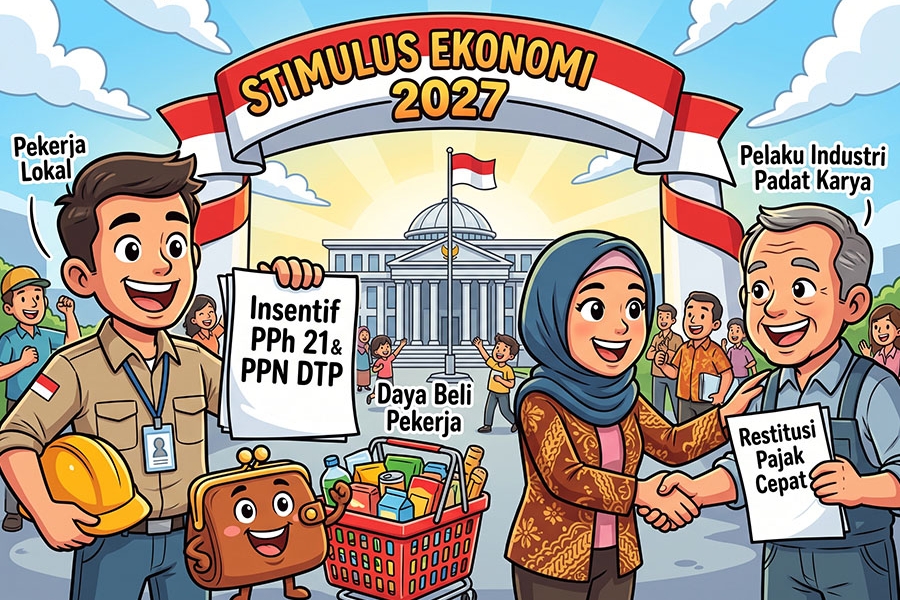
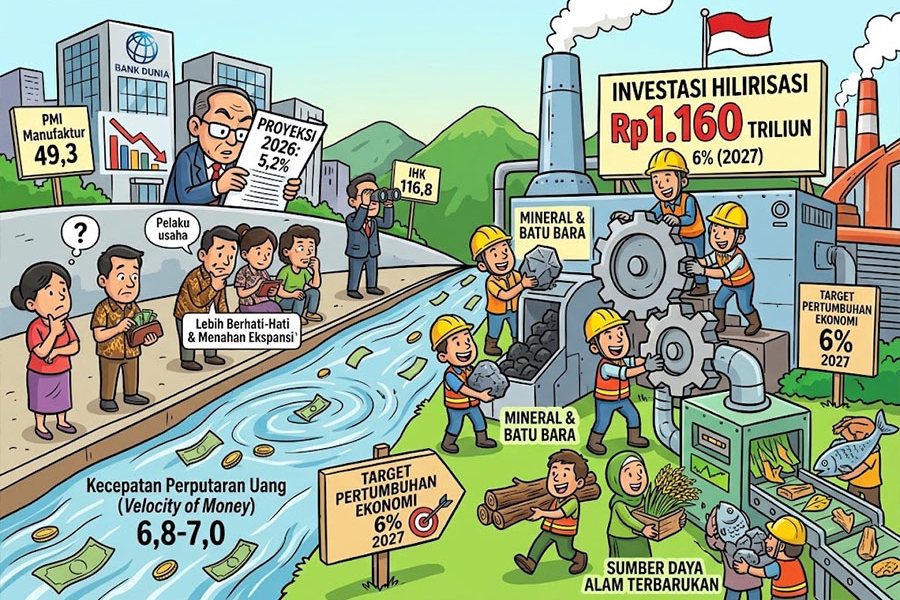
The latest developments highlight the government's crucial decision to delay the implementation of the E-commerce Tax until the economic growth target of 6% is reached, signaling a focus on the recovery of the digital sector. This step is taken amidst pressure on state revenue, increasing concerns over a potential tax shortfall, and a decline in the number of Tax Return (SPT) filers due to waves of layoffs (PHK) and declining public trust. On the other hand, the government is also starting to prepare long-term strategies for energy strengthening and export market expansion.
The government is taking strategic steps that sacrifice short-term revenue for growth, yet fiscal challenges are becoming increasingly apparent. The government delays the implementation of the E-commerce Tax until the economy grows by 6%. This decision is good news for digital business players, aiming to give the sector time to fully recover and avoid disruption in the digital market. However, with only 3 months remaining until the end of the fiscal year, a big question arises regarding whether Finance Minister Purbaya Yudhi Sadewa's strategy can close the Tax Shortfall. This condition demands more aggressive and effective fiscal policies from the Ministry of Finance (Kemenkeu).
The fiscal issue is also exacerbated by social problems and public trust. The number of 2025 annual Tax Return (SPT) filers declines, caused by factors such as Layoffs (PHK) and declining public trust. This drop indicates a challenge in Tax Compliance and requires the tax authority (DGT) to improve education and services.
Meanwhile, the government remains focused on long-term economic foundations through energy diversification and market expansion. Investment Minister Bahlil Lahadalia targets the policy of blending 10% ethanol into fuel (BBM) to commence in 2027. This plan is a strategic long-term step by the government to reduce reliance on fossil fuels. In the trade sector, the Ministry of Trade (Kemendag) encourages new trade agreements in Asia, aiming to expand Indonesia's export markets. This effort is carried out to mitigate the risk of dependency on traditional markets and boost international trade performance.
The decision to delay the E-commerce Tax shows that the government prioritizes the growth of the digital sector over short-term revenue targets. However, the fiscal challenge is becoming more real with the concern over a tax shortfall and the decline in SPT filers due to social issues (PHK) and governance (public trust). Meanwhile, the government is also preparing long-term economic foundations through trade agreements in Asia and the bioethanol 2027 policy, indicating a focus on energy diversification and export market expansion for more sustainable growth.
The current situation shows the fiscal authority is in a dilemma: delaying the implementation of the E-commerce Tax to support growth, but at the same time having to face the risk of a shortfall and a decline in SPT compliance. Minister Purbaya's success in maintaining revenue stability in the final quarter of the fiscal year will be a determinant of the fiscal direction going forward. On the other hand, businesses and the public need to pay close attention to the government's steps in expanding export markets and preparing the bioethanol 2027 policy as part of the long-term economic growth strategy.

















 tpc.consulting
  tpc.consulting
  info@taxindo.co.id